From a message board forum for estranged and alienated parents and grandparents-
For those adult children who have had loving, caring parents and the relationship was previously good, but you’ve taken the advice from people you hardly know and gone no contact, you really need to take a good look at yourselves and the impact you are having on your parents. Estrangement is a killer make no mistake. Parents have ended their lives or become ill and died.
■If you can sit and eat your Christmas dinner knowing your parents are facing the bleakest of days, the problem isn’t them.
■If you can ignore birthdays, Mothers and Father’s Day knowing the pain it will cause, the problem is not them.
■If you can tell your children that your parents are bad people or you simply deny they exist, or if you think you can talk your way through explaining the benefits of cutting your child off from knowing it’s own gene pool and tribal roots, the problem is not your parents.
■If you can snub, ignore, ostracise, dish out the silent treatment on an ongoing basis, sulk and then act as though you are the victim, it’s you that’s the narcissist, not your parents.
■If your parents loved you and did their best yet you can deal with knowing all these things above and yet still continue to hurt your them in this way, the problem isn’t them.
The answer to the above question is a resounding yes. Although, as Annie Wright observes in her article, “Brittle, Broken, Bent: Coping with Family Estrangement,” many consider even approaching the idea that family estrangement can feel good to be against all they believe.
The fact is that family estrangement can mean peace of mind that the survivor hasn’t known their entire life as they become released from the fear and drama that their family of origin has wrought upon them.
There is no doubt that family estrangement is painful, and one needs to grieve, but after a time, it becomes clear that staying away from family means freedom, independence, and safety.
It is far safer for many survivors to remain away from their family of origins because they have been guilted, invalidated, gaslighted, verbally abused, and sometimes risk their physical health being in their presence.
The Best Way to Cope, Finding a Family of Choice
Coping with family estrangement, especially during the holidays, is tough for survivors to face alone. This is why it is vital to find and form a family of choice (FOC). A family of choice offers welcome support to help from people who have your wellbeing at heart.
To be clear, a family of choice need not be a literal family as society sees it. Instead, a FOC can is a group of friends or work acquaintances, anyone who wishes to support you or needs support themselves.
A family of choice doesn’t need to be large; in fact, there are no limitations to the size of a new family. The only requirement is that you gather together as a group of people who have each other’s love and share each other’s burdens. Not only this but at Christmas time, a family of choice will also share the joy the season brings.
Forming a Family of Choice
A family of choice is a group of people who will empower you to build your self-esteem and with whom you can celebrate your life. But how do you create a family of choice? While choosing a different family to spend your time with other than your original may seem overwhelming, doing so can bring the peace of mind and joy you’ve missed all your life.
The easiest way to begin is to look at those around you. Sit down and think about the people in your life who mean the most to you, including friends, acquaintances, work relationships, and associates at your place of worship.
Once you’ve identified who you might include in your family of choice, begin to share your life with them and to show how much you care for them. You might ask the people you have identified to be your family of choice offering your support and love in return.
Be cautious not to overwhelm people or to choose people that echo the terrible behaviors of your family of origin. It would be too easy to fall prey to folks who do not deserve to be your family of choice if you are not careful because survivors, like all humans, tend to go with what they know.
The Advantages of Having a Family of Choice
No matter what, the advantages of having a family of choice when your family of origin is toxic are enormous. Having someone to stand beside you through thick and thin, when you feel lost, or when you are enjoying an accomplishment is incalculable in its value.
There are at least six advantages to having a family of choice, including those listed below.
A family of choice will make their relationships with you a high priority and not let you down. They will not make you feel guilty, show you dispassion, or ignore your needs.
A family of choice will spend time with you talking about issues both big and small, plus engaging with you so that you feel you have a voice.
A family of choice will deliberately seek opportunities to spend time with you. These activities may include shopping and taking a meal together.
A family of choice will promote spiritual and emotional wellness. They will believe in you sharing their faith and offer healing actions that show they care. This promotes improved mental health and a chance for spiritual fulfillment as well.
A family of choice will appreciate you and show you so whenever you come together with them. They will show you through behaviors, words, and gestures that prove you are worthwhile and that they love being with you.
A family of choice is capable of facing times of crisis and stress together coping with difficulties as they happen.
Finding the Positive Side of Family Estrangement by Forming a Family of Choice
Family estrangement is an incredibly painful event to experience alone. By forming a family of choice, you can open your heart and allow someone else to help you conquer the loneliness and disappointment.
Forming a family of choice means allowing others into your life and celebrating their lives with them. It means not being alone during the crisis of family estrangement and trusting someone else to be there for you.
These concepts are challenging for those of us who are survivors and have had horrific experiences with our families of origin. However, to not reach out and form relationships with others, we risk allowing our souls to suffer unimaginable harm that need not happen.
I encourage you to reach out to others around you and share your life with them. Allow them to love you and show you unconditional positive regard and show them your affection freely. After all, a family is a supportive group of people who will lift you up when you are down and celebrate your accomplishments, not necessarily those whose home into which you were born.
We sincerely hope you will include the CPTSD Foundation into your family of choice
“The family is the test of freedom; because the family is the only thing that the free man makes for himself and by himself.” ~ Gilbert K. Chesterton
When is it okay to lie to the media? by Melissa F Daly
Image – Dreamstime
The answer is: Never. Really. Lying to the press is essentially an open invitation to become an even bigger target for both journalists and the public. One of the easiest ways to give a bad story a longer shelf-life is to lie to a journalist. Equally important, lying to the press ruins your own reputation as a communications professional and that of the organization or person you are representing.
Although there are times when lying, or misleading a reporter, may seem easier and you may think it will yield a positive result, the long-term effects can be detrimental. Here, we will address three topics that may lead you down the wrong path of being dishonest with the press and how to better handle these issues.
Answering every question from the media: Depending on the whether your company is public or private, and for an individual, if you are an elected official or private citizen, every question that is asked does not have to be answered. In some cases, there are legal or regulatory reasons to choose to or not to respond. But in every instance, the answer needs to be true and consistent over the long-term. If you cannot be honest, then decline to comment. The right PR guidance and media relationship can only serve to benefit you.
You don’t want the facts to get out: The reality is that if a reporter has verifiable facts, they have the right to share what they have with the public. Facts are different than opinions or rumors and reporters work hard to adhere to the standard of presenting facts. At times, data can be manipulated to highlight a certain element of a story, but it would serve you to present your interpretation and explanation, or an updated set of facts if they are relevant. But the underlying information needs to be truthful.
A crisis or sensitive situation is gaining traction: When we get early signs that a bad story is about to come to light, it is critical that the organization’s leadership and communicators spring into action quickly. We cannot kill a story by denying the very existence of the issue or overtly downplaying what is happening. No matter the size of your organization, planning ahead with a crisis plan, including a working group, is crucial. Keep your eyes open to social media, industry events and regulatory issues that may impact your firm. Be prepared with the right messaging, supporting information and a plan of action as to how to communicate with your key stakeholders, not just the press. It is imperative to be honest and accurate with the information that you decide to divulge. Having a positive and trusting relationship with the media will go a long way in helping you and your firm.
Whether you are a spokesperson or a source working for a business, person, government entity, or non-profit, building honest and positive relationships with journalists will be the one of the best ways to ensure that your side of the story will be heard. Lying to the media will put you further under the microscope and undermine your own efforts to get a better story in the press.
The world is consuming and interacting with social media at increasingly high rates. According to 2018 data from the Pew Institute [1], the majority of U.S. adults now use YouTube (73 percent) or Facebook (68 percent); of those who use Facebook, more than half check this platform several times a day.
As we engage on social media with greater frequency, we find ourselves sifting through photos of children, commentary about food, and explosive reactions to current political events. This increased media usage and exposure poses the question: How accurate is the information we are getting? More specifically, how honest are people on social media sites?
Honesty and Lying on Social Media
The truth is that people tend to lie on these platforms. How? First, people directly lie about their lives, which is often an effort to make themselves look more desirable or positive. In a study examining 80 online daters, Hancock, Toma, and Ellison [2] found that two thirds of participants lied about their weight by five pounds or more. In a large sample of over 2,000 people in England conducted by Custard.com [3], 43 percent of men admitted to making up facts about themselves and their lives that were not true online.
Even more commonly, people “lie” by presenting an image of themselves and their lives that is imprecise or less than comprehensive, leading the viewer to believe falsehoods. For example, in the Custard.com [4] study, only 18 percent of men and 19 percent of women reported that their Facebook page displayed “a completely accurate reflection” of who they are. Most commonly, participants said that they only shared “non-boring” aspects of their lives (32 percent) and were not as “active” as their social media accounts appeared (14 percent).
How and Why Does Dishonesty on Social Media Affect Us?
Although selective self-presentation and lying about ourselves on social media may not seem like a surprise (or even a big deal), it can affect us greatly. Why? Humans are naturally social creatures—we crave relationships and social interaction. According to some of the most prominent theories of human nature (e.g., Adlerian psychotherapy) and a large body of research, social interaction and feeling a sense of belonging to a community are two of the most important predictors of psychological and physical health [5]. Given our social nature, we want to feel connected to people and “in the know” about our friends, family, and even celebrities.
In addition to being social, we appear to have a natural propensity to trust that others are being honest with us. A large body of research suggests that we are programmed to trust others [6]. Although the reasons for our tendency to trust are complex, without interpersonal connectedness and a fundamental belief that those around will support you, protect you, and treat you respectfully, we feel unsafe. In essence, trust is developmentally essential to our feelings of safety and security.
When we engage on social media and our propensity to trust is met with overt lying and less than honest presentations, it can be problematic because we internally presume that what is presented is true. That people are naturally as good-looking as their photos appear on a daily basis. That people’s daily home life is as perfect as the pictures depict. That others have very few gut-wrenching struggles. That people around us are in a habitual state of going on vacation, eating out, and parenting blissfully. This is clearly not true. But although we are less aware of the realities of other peoples’ lives, we are well aware of the ways in which our own lives are NOT ideal.
Social Comparison in Social Media
To make matters more complicated, when we internally believe that what we see in social media is true and relevant to us, we are more likely to compare ourselves to it in an internal effort to evaluate ourselves against those around us (e.g., regarding our looks, wealth, significant other, family, etc.). As we do this against the idealized images and unreasonably positive life accounts that tend to permeate social media, we are likely to feel more poorly about ourselves and our lives.
Indeed, a growing body of research suggests that social media use can negatively affect your psychological health, particularly if you compare yourself to the positive images you see online. In a study of 339 college women (Puglia, 2017), the tendency to compare oneself to others was associated with poorer body esteem. Furthermore, in a sub-sample of 58 women in the Puglia study, those with higher levels of Facebook usage displayed lower body satisfaction than those with lower Facebook usage [7]. Similarly, in an experimental study by Vogel and colleagues [8], participants who tended to compare themselves to others more regularly had lower self-esteem, more negative emotions, and a poorer view of themselves after using Facebook than participants who did not tend to compare themselves to others.
The naked truth is this: Most of us now use some form of social media. Research suggests that what people post on social media is not an accurate representation of their lives or who they are. In fact, it may be blatant lies.
Consequently, when engaging with social media, it is critical to remind yourself that what you see is not an accurate picture of reality. Don’t compare yourself to the images of friends, colleagues, or celebrities. Remind yourself that it is just a snapshot of their life—and one that they want you to see.
From the mesmerizing allure of charismatic leaders to the dark depths of psychological manipulation, the cult of personality phenomenon has left an indelible mark on history and continues to shape our modern world. It’s a captivating dance of power, influence, and human psychology that has fascinated scholars and laypeople alike for generations. But what exactly drives this phenomenon, and why do some individuals seem to possess an almost supernatural ability to captivate the masses?
Let’s dive into the intriguing world of cult of personality psychology, where the lines between admiration and obsession blur, and the human mind becomes a playground for those who know how to pull the right strings.
Unravelling the Cult of Personality: A Psychological Tapestry
At its core, a cult of personality is a form of intense adoration and devotion directed towards a single individual, often a political or religious leader. It’s not just about liking someone; it’s about elevating them to an almost godlike status. Think of it as fandom on steroids, with a dash of blind faith thrown in for good measure.
This phenomenon isn’t new. Throughout history, charismatic figures have emerged, capturing the hearts and minds of the masses. From ancient pharaohs to modern-day politicians, the ability to cultivate a cult of personality has been a powerful tool for those seeking to consolidate power and influence.
But why does this matter in our modern, supposedly enlightened society? Well, my friend, the cult of personality is alive and kicking, and it’s not just limited to totalitarian regimes or fringe religious groups. In fact, you might be part of one without even realizing it. From tech moguls to social media influencers, the psychology behind cult of personality continues to shape our world in subtle and not-so-subtle ways.
The Secret Sauce: Charisma and Social Influence
At the heart of every cult of personality lies a crucial ingredient: charisma. It’s that je ne sais quoi that makes some people irresistibly magnetic. But what exactly is charisma, and how does it work its magic on our brains?
Charisma is like a psychological superpower. It’s the ability to connect with others on an emotional level, to inspire and motivate, and to make people feel seen and understood. Charismatic leaders often possess a unique combination of confidence, eloquence, and empathy that draws others to them like moths to a flame.
But charisma alone isn’t enough. The real power comes from understanding and leveraging psychological influence. These leaders are masters of persuasion, using a variety of techniques to sway opinions and shape beliefs. They tap into our deepest desires and fears, offering simple solutions to complex problems and promising a better future if we just follow their lead.
It’s like a magic trick, really. While we’re busy being dazzled by their charm and grand visions, these leaders are subtly reshaping our perceptions and beliefs. And here’s the kicker: we often don’t even realize it’s happening.
The Perfect Storm: Cognitive Biases and Group Dynamics
Now, you might be thinking, “I’m too smart to fall for that kind of manipulation.” But here’s the thing: our brains are wired in ways that make us surprisingly susceptible to cult of personality dynamics.
Enter cognitive biases, those pesky mental shortcuts that can lead us astray. Take confirmation bias, for instance. We tend to seek out information that confirms our existing beliefs and ignore evidence that contradicts them. So once we’ve bought into a leader’s narrative, we’re more likely to dismiss any negative information about them.
Then there’s the halo effect, where we attribute positive qualities to someone based on one favorable trait. If a leader is charismatic and confident, we might automatically assume they’re also intelligent, honest, and competent, even without evidence to support those assumptions.
But it’s not just about individual psychology. The psychology of the masses plays a crucial role too. Humans are social creatures, and we’re hardwired to seek belonging and acceptance. When we become part of a group that follows a charismatic leader, we experience a sense of community and purpose that can be incredibly powerful.
This is where things can get a bit dicey. As we become more invested in the group, our individual identity can start to blur with the collective identity. We might find ourselves adopting beliefs and behaviors that we wouldn’t normally agree with, all in the name of fitting in and maintaining our place in the group.
The Dark Side: Narcissism and Manipulation
Now, let’s talk about the elephant in the room: not all charismatic leaders have our best interests at heart. In fact, many individuals who cultivate cults of personality share some rather unsavory psychological traits.
Narcissism is often at the top of the list. These leaders tend to have an inflated sense of self-importance, a deep need for admiration, and a lack of empathy for others. They’re like emotional vampires, feeding off the adoration of their followers while giving little in return.
But it doesn’t stop there. Many cult of personality leaders are skilled manipulators, using a variety of tactics to maintain control over their followers. They might employ love bombing, showering new members with affection and attention to create a sense of belonging. Or they might use gaslighting, making followers question their own perceptions and memories.
These leaders often create a compelling ideological narrative, offering a simple worldview that explains complex problems and promises utopian solutions. It’s like a soothing balm for our anxieties about the world, providing a sense of certainty in uncertain times.
And here’s where it gets really insidious: these leaders are experts at exploiting their followers’ vulnerabilities. They tap into our deepest fears and insecurities, positioning themselves as the only solution to our problems. It’s a psychological trap that can be incredibly difficult to escape once you’re caught in it.
The Follower’s Journey: From Devotion to Disillusionment
So what happens to the people who fall under the spell of a cult of personality? The psychological impact can be profound and long-lasting.
One of the most striking effects is identity fusion. Followers begin to see their own identity as inseparable from the leader or the group. It’s like their sense of self gets absorbed into this larger entity. This can lead to a loss of individuality and critical thinking skills.
Cognitive dissonance is another common experience. When faced with information that contradicts their beliefs about the leader, followers often experience mental discomfort. To resolve this, they might engage in elaborate mental gymnastics to rationalize away any negative information.
Emotional dependence is also a hallmark of cult of personality dynamics. Followers come to rely on the leader for their sense of self-worth and direction in life. This can create an intense loyalty that persists even in the face of clear evidence of wrongdoing.
But what happens when the bubble bursts? When followers become disillusioned with their leader, the psychological consequences can be severe. It’s like waking up from a dream, only to find that reality is far harsher than you remembered. Many ex-cult members describe feelings of shame, confusion, and a profound sense of loss.
From Stalin to Social Media: Cults of Personality in Action
Religious figures have also been known to cultivate powerful cults of personality. From charismatic televangelists to leaders of new religious movements, these individuals often inspire intense devotion from their followers. The psychology of cults shares many similarities with political cults of personality, highlighting the universal nature of these dynamics.
And let’s not forget about the brave new world of social media influencers. These digital-age celebrities have the power to shape opinions and behaviors on a massive scale. While not all influencers cultivate cults of personality, the potential for such dynamics in the online space is significant and worthy of attention.
Fighting Back: Safeguarding Against Cult of Personality Dynamics
So, how do we protect ourselves and our society from the potentially harmful effects of cults of personality? It’s not easy, but there are steps we can take.
First and foremost, critical thinking is our best defense. We need to cultivate the habit of questioning our beliefs and assumptions, especially when it comes to charismatic leaders. This doesn’t mean becoming cynical or distrustful of everyone, but rather developing a healthy skepticism and willingness to consider alternative viewpoints.
Media literacy is also crucial in our information-saturated world. Learning to evaluate sources, spot manipulation tactics, and understand the broader context of news and information can help us resist the allure of simplistic narratives peddled by cult of personality leaders.
On a societal level, we need to foster healthy leadership models that prioritize accountability, transparency, and genuine service to others. This means moving away from the “great man” theory of leadership and towards more collaborative, inclusive approaches.
For those already caught in the grip of a cult of personality, psychological interventions can be helpful. Counselling and support groups can provide a safe space for individuals to process their experiences and rebuild their sense of self.
Finally, we need robust societal safeguards against authoritarian tendencies. This includes strong democratic institutions, a free press, and an educated populace capable of holding leaders accountable.
The Road Ahead: Understanding for a Better Future
As we wrap up our journey through the fascinating world of cult of personality psychology, it’s clear that this phenomenon is far more than just an interesting quirk of human behavior. It’s a powerful force that has shaped history and continues to influence our world in profound ways.
Understanding the psychological mechanisms behind cults of personality is crucial for navigating our complex social and political landscape. By recognizing the signs of unhealthy leader-follower dynamics, we can better protect ourselves and others from manipulation and exploitation.
But let’s not forget that charisma and strong leadership aren’t inherently bad things. When combined with genuine empathy, integrity, and a commitment to the greater good, these qualities can inspire positive change and bring out the best in people.
As we move forward, there’s still much to learn about the psychology of cults of personality. How do these dynamics play out in different cultural contexts? What role will emerging technologies play in shaping future cults of personality? These are just a few of the questions that researchers will grapple with in the years to come.
In the end, understanding cult of personality psychology isn’t just an academic exercise. It’s a vital skill for anyone who wants to navigate our complex world with clarity and purpose. By sharpening our critical thinking skills and fostering healthy leadership models, we can work towards a future where the power of charisma is harnessed for the benefit of all, rather than the glorification of the few.
So the next time you find yourself captivated by a charismatic leader or swept up in a movement, take a moment to pause and reflect. Ask yourself: Is this genuine inspiration, or am I being swept along by the currents of a cult of personality? Your answer might just make all the difference.
Exploring the fascination with Idols and Icons by Social Psychology.
Image – My Weekly Preview
The Psychological Foundations of Hero Worship
At its core, hero worship is deeply rooted in how we form attachments and learn from others. Remember when you were a kid, and you wanted to be just like your mom or dad? That’s attachment theory in action, baby! As we grow, we start to look beyond our immediate family for role models, and that’s where heroes come in.
Attachment theory suggests that we’re hardwired to seek out strong, protective figures. It’s an evolutionary thing – back in the day, attaching yourself to the strongest member of the tribe meant better chances of survival. Today, we might not need someone to protect us from saber-toothed tigers, but we still look for figures who embody strength, success, and security.
But it’s not just about feeling safe. Social learning theory tells us that we learn by observing and imitating others. Heroes serve as powerful role models, showing us what’s possible and how to behave. When you see an activist standing up for what’s right or an entrepreneur building a successful business from scratch, it’s not just inspiring – it’s educational.
Here’s where it gets really interesting: hero worship can actually boost our self-esteem. By identifying with a hero, we can feel a sense of connection to their greatness. It’s like basking in reflected glory. When your sports team wins, don’t you feel like you’ve won too? That’s your brain playing a neat little trick on you, helping you feel good by association.
But our brains aren’t always playing fair. Cognitive biases can skew our perception of heroes, making them seem even more impressive than they really are. The halo effect, for instance, makes us attribute positive qualities to someone based on one outstanding trait. So if an actor is really good-looking, we might assume they’re also kind, intelligent, and talented – even if we don’t have any evidence for those other qualities.
Types of Hero Worship and Their Psychological Implications
Now, hero worship isn’t a one-size-fits-all deal. It comes in different flavors, each with its own psychological quirks. Let’s break it down:
Celebrity Worship Syndrome: This is the big kahuna of hero worship in modern times. It’s that feeling when you just can’t get enough of your favorite star, hanging on their every word and action. The Celebrity Obsession Psychology: Unraveling the Fascination with Fame explores this phenomenon in depth. At its mildest, it’s harmless fun. But taken to extremes, it can lead to an unhealthy obsession that impacts daily life.
Political Figure Idolization: Ever seen someone defend their favorite politician with the fervor of a religious zealot? That’s political hero worship in action. It can lead to a sort of tribalism, where the idolized figure can do no wrong in the eyes of their followers. This type of hero worship can have significant implications for democracy and critical thinking.
Sports Hero Adoration: From little league to the big leagues, sports stars often find themselves the object of intense admiration. This form of hero worship can be particularly powerful because it often starts in childhood and is reinforced by shared experiences and community bonding.
Religious Leader Veneration: This is perhaps the oldest form of hero worship, dating back to the earliest human societies. Religious leaders are often seen as conduits to the divine, imbuing them with an almost supernatural aura in the eyes of their followers.
Before we start wagging our fingers at hero worship, let’s give credit where it’s due. This psychological phenomenon isn’t all bad – in fact, it can be downright beneficial when approached in a balanced way.
First off, heroes can be incredibly inspiring. When we see someone overcome great odds or achieve something remarkable, it lights a fire in us. It makes us think, “If they can do it, maybe I can too!” This inspiration can be a powerful motivator, pushing us to reach for our own goals and dreams.
Take the story of Malala Yousafzai, for instance. This young Pakistani activist stood up for girls’ education in the face of terrifying opposition. Her courage has inspired countless people around the world to fight for education and equality. That’s the power of a hero – they can motivate us to be better versions of ourselves.
Heroes can also serve as catalysts for personal growth and self-improvement. When we admire someone’s qualities or achievements, we often try to emulate them. Maybe you start hitting the gym after being inspired by an athlete’s dedication, or you pick up a book on leadership after admiring a successful CEO. In this way, hero worship can be a stepping stone to self-improvement.
Another positive aspect of hero worship is its ability to build communities and foster shared values. Think about fan communities – whether it’s Trekkies bonding over their love for Captain Kirk or Harry Potter fans united by their admiration for Hermione Granger. These shared heroes create a sense of belonging and connection.
Lastly, heroes can provide us with resilience and coping mechanisms. In times of hardship, we can draw strength from the stories of our heroes who faced adversity and triumphed. It’s like having a mental toolkit of inspiration to dip into when the going gets tough.
The Dark Side of Hero Worship
Now, let’s flip the coin and look at the potential pitfalls of hero worship. Like that extra slice of pizza, too much of a good thing can lead to some uncomfortable consequences.
One of the biggest dangers of hero worship is the development of unrealistic expectations. When we put our heroes on pedestals, we often forget that they’re human too. They make mistakes, they have flaws, and they sometimes let us down. When reality doesn’t match up to our idealized version of a hero, it can lead to crushing disappointment.
Remember the shock and disillusionment when Lance Armstrong’s doping scandal came to light? Fans who had idolized him as the epitome of perseverance and athletic excellence were left reeling. It’s a stark reminder that our heroes are fallible, and placing too much faith in them can set us up for a hard fall.
Hero worship can also lead to a loss of critical thinking and autonomy. When we’re too enamored with a figure, we might start to accept everything they say or do without question. This can be particularly dangerous in the realms of politics or religion, where blind faith can lead to manipulation and the suppression of individual thought.
Speaking of manipulation, hero worship can create opportunities for exploitation. Unscrupulous individuals who find themselves the object of adoration might use their influence for personal gain or to push harmful agendas. History is littered with examples of charismatic leaders who exploited their followers’ devotion with disastrous consequences.
On a more personal level, intense hero worship can have a negative impact on self-worth and identity. When we’re constantly comparing ourselves to idealized figures, it’s easy to feel like we don’t measure up. This can lead to feelings of inadequacy and a distorted sense of self.
Hero Worship in the Digital Age
Now, let’s zoom in on hero worship in our hyper-connected, digital world. The internet and social media have fundamentally changed the way we interact with our heroes, bringing new dimensions to this age-old phenomenon.
Social media has made heroes more accessible than ever before. With a few taps on your smartphone, you can see what your favorite celebrity had for breakfast or get real-time updates from a political figure you admire. This unprecedented access can make us feel closer to our heroes, intensifying the sense of connection and potentially amplifying the effects of hero worship.
The rise of influencer culture has also created a new breed of heroes. These aren’t traditional celebrities or historical figures, but everyday people who’ve gained followings through their social media presence. The Psychology of Fandom: Exploring the Mind Behind Fan Culture sheds light on how these new types of heroes are shaping modern fan behavior.
One fascinating aspect of digital-age hero worship is the development of parasocial relationships. These are one-sided relationships where a fan feels a deep connection to a media figure, even though they’ve never met in real life. Social media can intensify these parasocial bonds, making fans feel like they truly know and understand their heroes.
But with great power comes great responsibility (thanks, Spider-Man!). The digital age presents both challenges and opportunities in managing hero worship. On one hand, the constant exposure can fuel obsessive behaviors and unrealistic expectations. On the other hand, social media allows for more direct communication between heroes and their admirers, potentially fostering more realistic perceptions.
Balancing Admiration and Critical Thinking
So, where does all this leave us? How do we navigate the complex waters of hero worship in a way that’s healthy and beneficial?
The key lies in striking a balance between admiration and critical thinking. It’s okay to look up to people who inspire us – in fact, it can be incredibly motivating and enriching. But it’s crucial to remember that our heroes are human, with all the complexities and flaws that entails.
Cultivating a nuanced understanding of our heroes allows us to appreciate their strengths while acknowledging their weaknesses. This balanced approach can actually deepen our admiration, making it more genuine and grounded in reality.
It’s also important to diversify our sources of inspiration. Relying too heavily on a single hero can limit our perspectives and make us vulnerable to disappointment. By drawing inspiration from a variety of sources, we can create a more robust and resilient framework for personal growth.
The Future of Hero Worship
As we look to the future, it’s clear that hero worship isn’t going anywhere. It’s too deeply ingrained in human psychology and culture. But the forms it takes and how we engage with it will likely continue to evolve.
We might see a shift towards more diverse and inclusive heroes, reflecting changing societal values. The rise of artificial intelligence could even lead to the emergence of AI heroes or mentors. Imagine having a personalized AI role model tailored to your specific needs and aspirations!
Understanding hero worship psychology is crucial not just on a personal level, but in a broader social context too. It influences everything from our personal development to our political choices, from our consumer behavior to our cultural productions.
By developing a more nuanced understanding of hero worship, we can harness its positive aspects while mitigating its potential drawbacks. We can use it as a tool for inspiration and growth, rather than falling into the trap of blind idolization.
In the end, perhaps the most heroic thing we can do is to recognize the potential for heroism within ourselves. As the saying goes, not all heroes wear capes – sometimes, they’re ordinary people doing extraordinary things. And who knows? Maybe someday, someone will look up to you as their hero.
So the next time you find yourself starstruck by a celebrity or in awe of a historical figure, take a moment to reflect. Appreciate their qualities, learn from their experiences, but remember – you’ve got your own heroic journey to embark on. And that, my friends, is where the real adventure begins.
Mothers tend to see their daughters through the lens of unconditional love instead of owning up to the clear signs of a bad mother-daughter relationship.
Having a toxic daughter isn’t about assigning blame.
Understanding a Toxic and Mean Daughter
For every positive trait a mother tries to instill in a daughter, there’s an ugly side. A mother who spoils a child could be furiously complaining, “My daughter treats me with contempt!”
Let’s start with the obvious: you are not a bad mom. You did the best you could with what information you had. But where is all that toxicity coming from?
Mental Health Issues: One in five adults lives with a mental illness. 20% of children with ADHD are misdiagnosed or not diagnosed at all until adulthood. A chemical imbalance in the brain could be a sickness wrongly identified as toxic.
Independence: Mothers struggle to balance raising an independent child and “helicopter parenting” their kids. A daughter who feels she doesn’t have the space to grow on her own will resent her mother for getting in the way.
Friendship vs. Parenting: Mothers who try to be their daughter’s best friend are bad at establishing boundaries. This sends the daughter into the adult world feeling entitled to whatever she wants
Neglect: A child who doesn’t think their needs are being met or their cries for help aren’t heard can resent their parents.
13 Heartbreaking Toxic Daughter Signs
Approach this list with an open mind and a place of self-awareness. Some toxic habits could’ve been learned in your home, while others could be societal influences.
Then there’s the generational gap that always fuels a fiery relationship. These are not excuses. These are discussion points.
1. She’s Immature
The 18th birthday only makes you an adult in the eyes of the law. Turning 21 doesn’t have a magic transition to a fully independent adult, either.
The more your teenager relied on you for guidance, finances, and life skills, the more she will depend on that into adulthood.
If she’s coming to you with the expectation you will still do things for her, despite your efforts to teach, she’s in toxic trouble that will impact every corner of her life.
2. She Likes Someone Else’s Mom Better
Whether it’s her new mother-in-law or the mother of her best friend, toxic daughters can make their own mothers feel like crap when they are constantly praising another mother.
While you are left with memories of staying awake with her seven nights straight when she had the flu, she wishes you were more stylish “like Jessica’s mom.”
When a daughter is directly or indirectly comparing you to someone else, you really need to figure out the line between your sensitivity and her toxicity.
3. She’s Bossy
We know, we know – calling someone “bossy” isn’t politically correct anymore. It feels like such a betrayal when you raised a daughter to have a strong voice, and now she’s telling you what to do like you’re a hired helper.
As with any pushy, bossy, or dominating personality, you control how much they get away with it.
When toxic levels of pushiness extend to disrespecting wait staff, parking attendants, or strangers in public, you’ll really see how she lacks respect and empathy for other people.
4. She’s Obsessed with Herself
Raise your hand if you’ve ever said, “I’m so glad social media wasn’t around when I was a teenager!” When your daughter is too focused on herself, she won’t care who she hurts along the way to the next selfie.
She can even twist that pushiness and immaturity onto you as she tears down your makeup routine or fashion choices.
Self-obsession can be formed in childhood with constant praise from parents and the social circle that demanded a picture-perfect lifestyle. Extremely toxic egotistical daughters will even tear others down to put themselves higher on their own pedestal.
5. She Plays You Against Your Husband or Ex
A daughter who uses her manipulative techniques to get her way can play one parent off the other. She might outright call you on the carpet in front of your hubby or secretly tell her dad that you are being mean to her.
Keep in mind your daughter has built up this practice over the years, and it’s not a trait that will go away on its own.
Toxic goes into overload when she outright tells you she likes her dad/mum or step-dad/step-mum better than you.
She might even treat you poorly while praising your husband, making you wonder if you did something wrong.
6. She Doesn’t Respond to You
It’s been days, and your daughter hasn’t called or texted you back. You are torn between being hurt and wondering if this is the start of a Lifetime Movie, “My Daughter Is Missing.”
She could up the ante by answering the phone when you call with a hefty sigh and demanding you don’t respect her busy schedule.
It’s normal for a daughter not to have the same time to spend with you as she transitions to the adult world. It’s not normal to act like she doesn’t see you in the grocery store.
7. She Got Married and Divorced You
As if your daughter leaving the nest wasn’t hard enough, now she’s married and busier than ever. It’s especially challenging for a mom who spent months planning the wedding with her daughter (if they havent already married without your knowledge).
A daughter who dismisses a mother after getting married likely lacks empathy and is too self-absorbed to know that it hurts.
A mother can also have a hard time letting go during this transition. Your new son-in-law could also be more controlling than you realized.
She could be separating herself from the reliance on you and your (awesome) advice.
8. She Makes You Feel Stupid
The power of the eye rolls when parents ask kids about TikTok could fuel New York City for two days. Toxic daughters have no interest in helping parents learn about trending technology.
They seem to forget how it took them six months to tie their dang shoes while you patiently helped.
A toxic daughter will make no qualms about embarrassing a mother at every opportunity, mostly to make herself look better. If she keeps doing it even when you’ve been honest about how you feel, she’s toxic times two.
9. She’s Always the Victim
Your daughter comes crying to you that she got fired for “only” being late to work five times in the past month. She might even blame you for not teaching her how to change a flat tire and “she almost died” when her car broke down late at night.
A mother’s nature is to calm and coddle an upset daughter, but you could just be feeding the beast. She gets extra toxic points if you become the enemy when you disagree with her latest victim volume of social posts.
10. She’s a Liar
As an adult, your daughter is far beyond claiming her eyes are red because of allergies and not the joint she smoked at a party.
Toxic daughters lie for many reasons – to get their way, to gain an advantage, to play to your sense of guilt, and to avoid talking about a topic.
Toxic daughters who lie will only keep doing it if it benefits them. By confronting her, you do run the risk of her giving you the silent treatment.
11. She’s Overly Emotional
You’ve been given the silent treatment before, so you’re likely not too upset about that. Suppose your daughter’s emotions are always toxic, and every discussion ends with her yelling, crying, or slamming your cabinets.
In that case, she’s definitely lacking respect for you and dealing with some mental health issues.
You should also examine how often her emotional outbursts get her to manipulate you. You can’t control her reaction, but you can control your response.
12. She Has an Addictive Personality
Overachieving daughters likely have a knack for becoming obsessed or addicted to the chemical rush of something positive.
That tenacity was great when she was studying for the LSAT, but her addictive behaviours can also lead to eating disorders, substance abuse, and loss of reality.
Especially if her addictive personality pairs with an overly emotional mindset, you could experience her wrath when you ask simple questions about sudden weight loss or slurred speech.
13. She Never Apologizes
You’ve likely made some motherhood mistakes that you’ve beaten yourself up over for years.
Mothers are quick to apologize, even if it’s not their direct fault. Toxic daughters feed into this by assuming mom is always to blame and escape any fight without owning up to their role.
Even if your daughter will make up with you after a fight, ensure you get the apology before you part ways. If she refuses to apologize, her toxic trait could be as permanent as that tattoo you don’t know about.
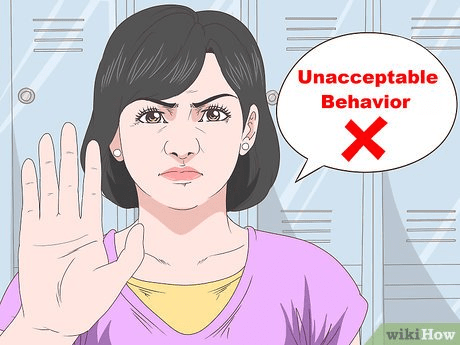
Abusive adult children influence parents’ self-image
Image – Wikihow
Abusive adult children: a scary reflection
Have you ever looked in one of those magnifying mirrors that highlights every imperfection? Fine facial hair looks forest-thick, and skin pores appear as large as craters. But there’s a value in looking closely—even if, as a friend says, “Those magnifying mirrors are scary.”
Whose Mirror?
The perverse opinions of abusive adult children can make parents see themselves in a warped mirror. One that distorts them so much they no longer recognize themselves. This might have happened over time, or overnight.
“All I could see were my failures,” recalls Barbara. “My own daughter told me I ruined her life, and she had a million detailed memories of how I did everything wrong.”
Imagine waking up one day and seeing a monstrosity reflected. That’s how parents can feel when an adult child’s abuse includes blame, accusations, and twisted memories.
In the beginning, Barbara spoke up. “It was as if my daughter woke up one day and had brand new memories,” Barbara explains. “She recounted her life with a black cloud of doom over her head, and the cloud was me.”
Because the vast majority of parents want their children’s happiness above all else, they reevaluate themselves through the son or daughter’s perspective. They’re willing to look at how their choices may have been seen through their child’s eyes. All parents make mistakes. Also, it’s possible a child didn’t understand a parent’s choices, the motivation driving them, or what might have been happening behind the scenes. Those sorts of things can be discussed and worked out by willing parties.
Unfortunately, of the one hundred or more emails I receive from parents of estranged or abusive adult children each week, many of them have tried—unsuccessfully. Barbara certainly did. Offers for mediation, counselling, or to just sit down and talk, have been met with such things as flat-out refusals, silence, or more abusive rants.
Seeing the real you
Many parents are surprised to find that there are so many like them who have suffered from cruelty, abandonment, put-downs, and endless blame. And because it’s a controversial subject, they’ve been afraid to tell anyone for fear of judgment. Or, as is often the case, they’re keeping quiet to protect their adult child’s reputation.
Barbara knew she had done her best. She’s like other parents whose self-image can get lost to a flawed reflection provided repeatedly by abusive adult children. I routinely hear from parents convinced they’re failures, deserving of the pain or abandonment their sons and daughters inflict. After all, they reason, if they were a good mother or father, their children would love them.
They may try everything to maintain a relationship. Barbara’s daughter threatened to keep her grandchildren away, so she walked on eggshells. “If I said anything out of line, which could be anything depending on her mood, then the tirade would begin.” Eventually, Barbara’s then 36-year old daughter began posting lies on Facebook about her. At the time, Barbara was recovering from surgery. At her breaking point, she replied, publicly asking her daughter why she’d lied. The postings were deleted, but Barbara’s daughter went no-contact. “It wasn’t the first time,” says Barbara. “But it has been the longest estrangement so far.”
With a health scare that became a turning point, Barbara knew she had to make a change. That’s when she began to look for help. But after years of warped opinions from an abusive adult child, she had little self-confidence. “If I raised this person who turned out to be so cruel, then how could I be a successful mother?” she asks. “My daughter had reminded me what a failure I was every chance she got.”
Take a closer look.
When suffering parents discover my book, they tell me they’re shocked to read so many experiences that mirror their own. And although it’s sad to know there are so many suffering, the knowledge is also heartening. They’re no longer alone. In reading other parents’ accounts, they get a clearer view. They see themselves in others’ stories, and recognize they were also good parents who did their best.
Once parents have a clearer reflection, they can explore positive changes to help themselves move forward in their own lives. One of the first steps is to look more closely at how much an abusive adult child has affected their lives. The inflicted suffering entails more than sadness and grief. Bitterness, lack of confidence, anger, fear, and anxiety have often crept in. In Done With The Crying: Help and Healing for Mothers of Estranged Adult Children, there are many exercises, and one designed specifically to help with this vital step. Holding the magnifier up to examine changes in themselves is one of the first steps to making positive, concrete plans to regain confidence, find meaning, and happiness again.
Take action.
One woman who found this website and my book after 20 years of grief described her life as a “living death.” Now, she’s glad to have found a way out of the roller-coaster of emotions, the shame and sorrow, and to stop crying and to start celebrating life.
Barbara says it’s too late to reconcile with her daughter. There has been too much heartbreak, and her daughter has refused any sort of counseling or mediation. “I miss my grandchildren,” she says, “but I’m hoping to one day see them again.”
Barbara’s expresses the sentiment of many grandparents who, due to estrangement, have lost touch with precious ones. But I sometimes hear from grandparents who have received their wish. There’s a knock at the door one day, and it’s a grownup grandchild with that same sweet smile, wanting to reconnect. When that happens, you’ll want to be ready, so take care of yourself. As one grandmother recently advised, “Get dressed and put on lipstick every day.”
Don’t wait and hope, mired by inaction that only adds to your grief. You can clean the mirrors of guilt and shame and see yourself for the loving parent you have always been. Like thousands of parents who are learning to accept what they cannot change, and see their goodness again, you can be done with the crying. Take action for yourself and your happiness by reading more of the articles at this site, getting Done With The Crying: Help and Healing for Mothers of Estranged Adult Children and committing to the included exercises. Subscribe to my email newsletter (below) and take the survey. By taking action, you can be like so many parents who have recovered from the sadness and pain caused by abusive adult children, on-and-off or full-on estrangements. Treasure your life. You can find happiness and meaning again.
Everyone lies. It’s a part of life, for better or for worse. Some people find peace in white lies and don’t feel bad about occasionally avoiding the truth to spare a loved one’s feelings. Others, however, see lying, even major lies, as something completely inconsequential.
Pathological lying goes far beyond the standard lies most people tell. Pathological liars lie about all kinds of things, big and small, for seemingly no reason whatsoever. Individuals with this personality trait may lie about innocuous things, like weekend plans, or larger topics, like past experiences, work, schooling or relationships. This may seem like nothing more than an obnoxious personality trait — and in some cases, it is — but lying to this level can also be a symptom of a larger problem. When narcissistic pathological lying begins to interfere with someone’s personal life or the lives of those around them, it may be time to consider a conversation with a therapist or other trained mental health professional.
Defining Pathological Lying
Pathological lying is a behavior pattern in which individuals lie chronically or compulsively. Sometimes referred to as mythomania or pseudologia fantastica, pathological lying generally manifests as lying for lying’s sake. In some cases, individuals may lie to make themselves look better, but in others, they may have no good reason to lie or gain nothing from the act of lying. Being the friend or family member of a pathological liar can be very frustrating, as it’s hard to tell what’s a lie and what isn’t or when a liar can be trusted.
There may be biological drivers behind pathological lying. One study found that central nervous system behavior may influence a propensity for lying, and another found evidence of lying due to an imbalance in the hormone-cortisol ratio. However, due to the differences in the nature of lying and the purposes of lying from one individual to another, there’s not always clear logic behind when or why pathological lying occurs.
“Sometimes lying can be a coping response, often starting in childhood, for some psychological or personality issue that may not be at first visible, it is important to see past just dealing with the lying to uncover the cause,” shares Dr. Beau A. Nelson, DBH, LCSW, Chief Clinical Officer at FHE Health.
Mental Health Disorders
Mental health disorders can and do play a role in pathological lying and may be a contributing factor. In many instances, getting a diagnosis can be the first step to addressing chronic lying.
Determining the difference between lying for social or personal reasons and lying due to mental illness can be a challenge. However, there are often differences in the manifestation of lying in those with mental illnesses versus those who lie for other reasons. For example, there are links between mental illness and believing your own lies; liars with other motivations often don’t believe what they’re saying.
Narcissistic personality disorder. Also called NPD, narcissistic personality disorder manifests as arrogant and self-centered behavior with little regard for other people’s feelings. Narcissistic pathological liars may lie for attention, to make themselves feel better, to feel superior to others or to manipulate others for the purposes of self-gain.
Obsessive-compulsive disorder.Obsessive-compulsive disorder, or OCD, is a mental disorder that features intrusive thoughts and feelings, or obsessions, and a strong urge to perform certain behaviors, or compulsions. In some cases, there are ties between OCD and compulsive lying. Lying can be a true compulsion in a person with OCD experiences, or it can be a negative coping method.
Anxiety disorders. Anxiety can manifest in numerous ways, from acute episodes to more generalized anxiety. While pathological lying isn’t a defining feature of anxiety as it is with other disorders, such as NPD, anxiety and compulsive lying can sometimes go hand in hand. People with anxiety disorders may lie to protect themselves from anxiety triggers or to handle things like a fear of rejection.
Antisocial personality disorder.Antisocial personality disorder is a serious diagnosis that often involves manipulation and cruelty toward others for the sake of personal amusement. It’s often associated with psychopathy. Those with APD might compulsively lie to manipulate the people around them, hurt others’ feelings or otherwise cause harm.
Other Reasons for Pathological Lying
While pathological lying can be linked to mental health disorders, it isn’t always. There are numerous other reasons people may lie with abandon, including:
Insecurity. Some people feel very insecure about who they are and might lie in an effort to make themselves feel better or inflate their own sense of self-worth. Lying may also be a defense mechanism to prevent ridicule or social exclusion. Lying under these circumstances is often quite transparent.
Social status. For those who value social status, lying may be a way to maintain a reputation. For example, communities focused on looks or financial status may look down on behaviors they perceive as lesser. Participants in these kinds of communities, like country clubs or prestigious social organizations, may lie to fit in with their desired peers.
Humor. Though less common than other reasons, some people may lie often because they find it funny. They may not understand the frustrations that come with being lied to or may believe their lies are so egregious that no one would believe them.
Substance abuse. Many substance abusers have issues with honesty, but this is generally inspired by a desire to hide signs of abuse rather than lying for attention or sympathy.
Pathological lying can seem harmless, albeit annoying, but it may be the sign of a bigger problem. Compulsive lying can be a symptom of a mental health disorder or even substance abuse. If pathological lying is a problem in yourself or others, therapy can be a good place to start in getting to the bottom of an issue. Confronting another person about their lying can be challenging but may be a good way to bring a problem to light. When addressing a friend or loved one’s lying, be prepared with a plan, including examples of lies that have harmed relationships or other life circumstances.
How to Cope With a Pathological Liar
It can be challenging, even overwhelming, to maintain a close and trusting relationship with someone prone to pathological lying. The constant uncertainty and broken trust make it difficult to have such a person in your life. If the pathological liar is a close friend or family member or even a spouse, learning to cope with them is crucial to your own well-being.
First, it’s important to recognize that pathological lying is often a compulsion rather than a deliberate act of deceit. Much like a compulsive overeater who might not make a conscious choice to stuff themselves to the point of getting sick or causing health problems, the pathological liar probably isn’t choosing to intentionally spew falsehoods but is instead struggling with an overwhelming urge to fabricate.
You should also understand that pathological lying is usually not the underlying issue. Rather, it’s typically a symptom or manifestation of an underlying mental health condition. If you share a close relationship with someone who compulsively lies, consider gently encouraging them to seek professional help. If you can compel them to address the root cause of the issue, you can play an active role in their healing process.
Treatment for Pathological Lying
Because it isn’t a standalone medical condition, pathological lying doesn’t have a specific treatment. That said, it can often be treated by addressing the underlying mental health issue that causes it. For instance, if pathological lying is the result of a personality disorder, such as dissociative identity or borderline personality, treatments such as medication and cognitive behavioral therapy can make a major difference.
Getting help for mental health issues, including conditions that may lead to pathological lying, can be a critical step. Contact FHE Health today to learn more about our comprehensive treatment options.
Isnt it bad enough, that after you get the strength and courage to leave your narcissist, and after youve already lost your self-worth, your youth, your time, lots of your money, your sanity, and whatever else you lost because of being in a narcissistic relationship, now you have to lose your kids too? It just isnt fair; and it isnt right.
Youve watched your narcissist manage to convince joint friends and other community members and sometimes even family members that you are the crazy one and he/she is the victim, by his/her masterful manipulation strategies. People are hoodwinked and dont even realize it. Your good name is slandered. You feel alone, humiliated, discouraged, disheartened, and vengeful.
Now, your kids are subjected to the smear campaign against you and you find it is actually working. It is enough to make you either curl up in the fetal position and give up, or rage with anger like an erupting volcano. Of course, to do either would confirm the reality of the premise of the smear campaign that you are deranged and crazy.
And if you talk about the situation, others will not understand and will simply conclude on their own that the other party must be right you are psychotic. Its a no win situation. Say nothing and your name is tarnished. Say anything and your craziness is confirmed.
And if you talk to your own kids about the situation you are drawing them into the middle of your relationship problems with their other parent which is a big no no.
Does going no contact include going no contact with your own children as well?
When you seek help from a therapist, you often find that he/she is just as much at a loss as you, because those in the counseling community are often not well-equipped to handle such relationship dynamics. No one is, really.
The courts rarely help and often exacerbate the problem. And if your children are not minors, then court involvement is pointless. Besides that, you cant legally force anyone to see the truth. Denial is denial and brainwashing is not easily countered.
So, what is a parent to do under these circumstances? Here are some helpful suggestions:
Do not be defensive. I know this is hard, but it is essential for your own peace of mind. Remember, during your entire relationship with the narcissist you were always put on the defense. Dont let him/her continue to keep you on that course, even through your children. You dont have to defend yourself. You dont have to be a perfect human being, always showing others why you are worthy.
In practical terms, the way you do this is to change course whenever you have the feeling of defensiveness. If you feel defensive, then dont talk, dont try to get anyone else to see the truth. Go for a walk. Write in your journal. Call a friend and vent. Do something else until the feeling is no longer pressing you.
Be strong. Do not give into the feeling of hopelessness and defeat. You have no leverage if you give up and give in to your weakest self. Your children are best served by feeling your strength and by not seeing you being manipulated by the other parent. You are best served by remaining steadfast, stable, strong, and resolute.
Do not give in to the need for approval from your children. Hustling for the approval of any person is not healthy or wise, even if the person happens to be your offspring. Once you need your children to approve of you then you have given your power away to them (and by proxy, to the other parent.)In order to do this you must keep validating yourself and getting external validation from your safe relationships and from your spiritual resources.
Realize you are not alone. Other parents struggle too. While, being among company with other parents is not a solution to the problem, it is important for keeping a proper perspective. What I mean by this, is that other parents, even those not in narcissistic relationships, also struggle with relationship (and other) problems with their children.
Many parents have children that reject them or turn to drugs or unhealthy relationships despite their parents desires. Adult children often choose a lifestyle or belief system that is against everything their parents stood for while raising them. There will be no good end to trying to force your children to see things your way.
Many parents also struggle with other difficult parenting conditions, such as having their children face some personal problem where the parent was unable to help such as a health problem, bullying or criminal or other out of their control situation.
Keep a healthy perspective.As mentioned above, it is important to keep the proper perspective. Having a balanced perspective is necessary for keeping your sanity. The best way to do this is to not react on your feelings, but rather to think things through with balance and maturity.
In essence, don’t horriblize the situation, remain calm, and be a problem solver. Reacting with strong emotions will not help you, thinking things through unemotionally will help you in the end. Look at the big picture, and resist the urge to join, “The War of the Roses” with your ex.
State your position once and then move on. It is fair for you to state your position on a matter to your children in order to shed light on the truth. Having your own voice is important for recovery from narcissistic abuse. That being said dont be a broken record; state your position once, and move on.
Practice Acceptance. Dont dwell on the negativity of it all. Narcissists do nothing but create a vortex of drama that leads your life into a cesspool. Drag yourself out of the cesspool and land on solid ground, where peace and sunshine abound. Dont allow the narcissist to steal your joy, even if he/she manages to manipulate your children into his/her web of deception and ugliness.
Attention-seeking behaviour refers to actions or behaviours individuals engage in to gain the attention, validation, or sympathy of others. This can manifest in various ways, and sometimes individuals resort to falsely claiming to have a mental illness as a means to fulfil their need for attention.
Sometimes people who want others to notice them might tell big, made-up stories or make their experiences sound more exciting than they really are. They might make up things about their feelings and struggles with their mind, and the things they’ve been through, just to get more people interested in what they’re saying. When they receive attention or sympathy as a result, they might feel validated and encouraged to continue the behaviour. Positive responses from others can reinforce their belief that faking a mental illness is an effective way to gain the attention they desire. Some people that experience boredom or satisfaction with their daily routine, falsely claiming a mental illness can introduce an element of excitement and unpredictability into their lives. Attention-seeking behaviour can provide a temporary break from the monotony and routine they might be experiencing.
When someone is doing things to get attention, it’s not always simple. It’s good to be kind and try to understand them. They might be doing this because they need something emotional that they’re not getting. Being there for them and connecting with them can help with these feelings.
We should also be careful not to mix up people who really need help with those who just want attention. It’s not good to ignore someone’s feelings without thinking about it. That can make things worse instead of better.
Avoiding responsibilities
Some people pretend to have a mental illness so they don’t have to do things they don’t want to do. They use the idea of being mentally unwell as an excuse to avoid tasks, responsibilities, or things they don’t like or find difficult.
Faking a mental illness might provide individuals with temporary relief from the pressures of their responsibilities. They might believe that claiming a mental health issue allows them to take a break or receive understanding from others, offering them a respite from their obligations. also can be used as a strategy to avoid accountability in cases where they’ve made mistakes or neglected their duties. Presenting themselves as mentally unwell can act as a temporary shield from repercussions.
When people make it seem like they’re really struggling mentally, they might hope that others will be nicer and more forgiving when they don’t do well at something. This can happen in places like school, work, or with friends or family. They think that if they act like they’re having a hard time, people will feel sorry for them and be more patient with their mistakes or problems.
Wanting to avoid responsibilities can also come from different reasons like being scared of failing, feeling not so good about oneself, wanting things to be easy, or not feeling motivated. Pretending to be mentally ill is a way to explain why they’re avoiding things, and they might think that doing this will make people feel bad for them and help them out.
Personal Gain
Sometimes, people might pretend to be mentally ill to get things for themselves. They might want special treatment, attention, or help that they wouldn’t get if they were honest. They might believe that acting like they have a mental illness will make people feel sorry for them and give them what they want.
One reason for this could be that they want others to notice and care about them. They might think that if they act like they’re struggling mentally, people will pay more attention to them and offer help. This attention could make them feel important and liked.
But even though this might seem like a good idea at first, it can cause problems in the long run. People might stop trusting them, and they could hurt their relationships with others. It’s better to be honest and find real ways to deal with challenges.
Manipulation
Manipulation is when someone tries to control or influence others in sneaky or unfair ways. It’s like trying to make people do what you want by using tricks or lies. People who manipulate might pretend to be your friend, but they’re really trying to get something from you.
One way manipulation can happen is by playing with your emotions. Someone might make you feel guilty or sad on purpose so that you’ll do what they ask. For example, they might say things like, “If you really cared about me, you would do this for me.” This makes you feel like you have to do what they want, even if it’s not right or fair.
Another way is by giving you compliments or being extra nice, but only when they want something. They might act really friendly and say nice things to make you like them and trust them. Then, when they need help or want you to do something, you might feel like you owe them because they were so nice before.
Sometimes, people who manipulate will twist the truth or make up stories to get sympathy. They might lie about being in a tough situation or having a hard time just to make you feel sorry for them. This can make you want to help them, even if they’re not being honest.
In the end, manipulation is not a good way to treat others. It can hurt your relationships and make people not trust you. It’s better to be honest and ask for things in a fair and respectful way. And if someone is trying to manipulate you, it’s okay to stand up for yourself and say no.
Stigmatisation of mental health
Stigmatising mental health means treating people with mental health problems unfairly because of misunderstandings and wrong ideas. This can make it hard for folks to ask for help and can lead to less understanding about mental health. One way this happens is when some people pretend to have a mental illness when they don’t really. This can make others believe wrong things about mental health and make it even harder for people who need help.
When people fake mental illnesses, it can make it tough for those who are really struggling. Others might not believe them or think they’re just pretending. This can make it lonely for people who need care and support.
Faking mental illnesses can also make real mental health problems look less serious. It can make others think these problems aren’t as important as physical health problems.
Stigmatising mental health can also stop people from talking about their feelings. When they’re worried others might judge them, they might not want to say what they’re going through. This means they might not ask for help when they need it.
To stop this, we need to be kind and learn about mental health. We can share real information to help people understand better. By being understanding and talking openly about mental health, we can make it easier for everyone to get the help and support they need.
Soufiane N. is a passionate writer and mental health advocate. Soufiane is the founder of The Mindful Messenger.





 , there are many exercises, and one designed specifically to help with this vital step. Holding the magnifier up to examine changes in themselves is one of the first steps to making positive, concrete plans to regain confidence, find meaning, and happiness again.

 Taking The Helm