We know that facing Christmas alone, or whilst grieving, can be a daunting prospect. This year it is going to be harder than ever. Whether you were bereaved in 2020 or many years before, ongoing Covid restrictions mean it is going to be difficult for many of us to be with the people we would most want to see. The virus is adding an extra layer of anxiety to the planning for so many people. It is going to be more important than ever to try and look after yourself and work out the best ways to cope.
Here are some practical ways to cope with the loss of a loved one over Christmas.
1. Consider different ways of celebrating
One of the things that can help can be to spend some time trying to work out, well in advance, which arrangements will best suit your needs and the needs of others who share your loss. Some bereaved people find that they do not wish to celebrate Christmas at all, whilst some find that simply maintaining their routine and celebrating as normal is the best tribute they can pay their loved one. It may feel important to make a special effort to remember the person who has died. This can be as simple as ‘speaking’ to the person, silently or out loud, or it may involve visiting their grave, or a place that was special to them. These can be things that we do alone, or with friends or family. You may have photos or particular memories which you treasure; sharing these with others may be something that brings you together.
2. Accept that others may have different ways of mourning
We know that people remember and mourn in different ways. Conflict within a family can sometimes arise when we have expectations of how others should grieve, so try to be sensitive to others’ needs, and to talk openly about what will be best for you.
3. Try to maintain a routine
The Christmas period may mean that your normal routine is disrupted, and this can make it easier to forget to look after yourself. Trying to keep to regular patterns of sleeping and eating are small things that can make a difference. Seeing friends or family, or volunteering for the day, can all help.
4. Go easy on the drink
It’s tempting to drink more on festive occasions, and it can feel like a drink might help numb any difficult feelings. But it’s important to remember that using alcohol to escape the pain of loss provides only very temporary relief. If you find you’re relying heavily on drinking alcohol, consider taking some drink free days. You can also find advice from Drink Aware on how to reduce your alcohol consumption.
5. Remember the happy times
Even many years after someone dies Christmas can be a difficult, intensely emotional time when we need to look after ourselves and those around us. But as time passes, special occasions like Christmas can help us remember happy memories of good times shared in the past.
6. Skip the Christmas films
It can be tough when you are bombarded by images of people enjoying happy family times. If it’s getting too much, consider taking a break from the Christmas TV and social media and maybe take a walk or get some fresh air in any way you can.
7. Talk to someone
If you’re struggling to deal with the grieving process over Christmas, you can message a trained grief counsellor on this website or the link below.
Many people believe narcissists aren’t born that way. Psychologists aren’t sure the exact cause but think children become this way due to their environment. We have a more in-depth look into what causes children to become narcissists.
WHAT IS NARCISSISTIC PERSONALITY DISORDER?
Let’s look at the clinical definition of Narcissistic Personality Disorder (NPD). This is a diagnosed mental health condition, not just a term to toss around lightly.
Mental health professionals look for signs like the following: arrogance, chronic attention-seeking, manipulation, entitlement, fascination for wealth and power, and hate for criticism.
Narcissistic Personality Disorder is hard to diagnose in children or teenagers. At younger ages, humans are always growing and changing. The personality traits of a narcissist usually worsen with age.
So just because a person feels the need always to be right or is selfish, those actions do not mean that they have a mental illness, necessarily.
THE STUDY OF NARCISSISM IN CHILDREN
There was a study in Psychological and Cognitive Sciences done by the University of Amsterdam on narcissism in children. This study helped figure out the levels of children’s self-esteem due to parental involvement. The researchers concluded that narcissism was predicted more by parental overvaluation than by the lack of parental warmth.
PSYCHOLOGISTS’ VIEW OF WHAT TRIGGERS NARCISSISM IN CHILDREN
Psychologists do agree parental behavior is a contribution to developing a narcissistic child. This doesn’t mean all narcissists are created by their parents. We’ll also examine some people are just born with that personality. Some psychologists believe children are more likely to show these traits when parents throw praise on them. Others think they show these traits because they don’t shower them with love and affection. We’ll dive into both of these views.
NEED FOR APPROVAL
There are a few things that can cause children to become narcissistic. It’s normal for children to want their parents’ approval and their attention. Sometimes when a child cannot get that attention because the family is very competitive and only values high achievement, the child gets left behind. Sometimes the child only feels loved when they win. If they don’t get recognition for second place, they feel like a disappointment.
If a child grows up in a narcissistic family, they only see these values. They set up a lifelong pattern of chasing happiness. Other times the child feels defeated as they’re told over and over again that they aren’t good enough. They decide to love themselves and make the world like them since their parents don’t show them enough love.
Sometimes they go as far as to do outlandish things because they crave attention. When they don’t get approval, they push the bar further and further until someone has to “see” them and approve them. It becomes a vicious cycle.
2 – STRIVING TO BE PERFECT
When children believe they are only loved and praised when they “win,” they start to feel insecure. They think they’re only valued when they are unique. The child begins to try to be “perfect” to be seen. They strive for perfection to prove they don’t have flaws. The parent continues to put them down when they don’t get all A’s or score goals in a game.
If the child isn’t good enough in their eyes, they are set in a hypothetical corner of the room. The problem with this is the child loses touch with themselves. They don’t even know who they are at the root. They spend their time trying to perfect every activity instead of concentrating on their development as a person. A child should be able to be imperfect at times.
They cannot always score the winning goal. If a parent doesn’t tell them it’s okay to miss a goal, they’ll feel defeated at all times.
PARENTS WHO MAKE KIDS THE CENTER OF THE UNIVERSE
Many parents make their children the center of their universe. This doesn’t mean the child will suddenly become a narcissist. Toddlers go through a stage that many call “The Terrible Twos.” If a toddler is neglected through this stage, they sometimes leave the stage without completing it. This scenario may sound like a dream to a parent, but it’s a negative thing.
They will mature into adults with this same perception of the world. During this stage, they should realize there are other people in their world. They understand they need other people, but they want to be independent. This is just a normal stage. Young children need boundaries.
If they aren’t allowed to fail and know their limits, they grow up without any expectations. They learn these limits by throwing tantrums, screaming, manipulating, and making up emotions. If they don’t learn any of these things, they might become narcissists. They expect the world does revolve around them, and they should get what they want.
The scary part is that this toddler then becomes an adult having a tantrum. They think they deserve attention.
PARENTS HEAP ON TOO MUCH PRAISE
Many parents overly praise their children. It’s the world of participation trophies we live in. You can work with your child to ensure they don’t go down this path.
As a parent, you have to help them realize they are going to fail. It’s okay to fail. Teach them empathy and kindness to others. Show them with your actions. Set boundaries for them daily. There are a million different “rules” on parenting in the world. Some say you praise too much. Some say you don’t praise enough.
The most important thing is to work with your child, so they understand you love them, but you have to set boundaries for them as well.
PARENTAL MIRROR IMAGE
Many times narcissists as children learn from their parents. When the parents treat the child as if they are perfect, the child starts to believe it. Praise is lovely to a child, but praising their every move can be detrimental to their development. When the parent shows narcissistic tendencies, the child might start to act the same way.
NATURE VS. NURTURE
Some children are born with a tendency to fell less emotional empathy than others. By nature, they are simply not as empathetic as other people. They don’t feel much emotion. This doesn’t mean they are a narcissist. It just means they don’t have this emotion as much as others.
They see the parent showing off, living like the rules don’t matter, and treating people with disrespect. Children often mirror what they see in their parents. They start to do these same things without realizing it.
Nurture is a learned habit. If narcissists have a mental illness of this sort, they usually are taught relationships aren’t as meaningful. They see people as objects at times because it is learned. They were born with the ability to love, yet don’t feel it because they aren’t shown enough love. Note that this does not mean that every child who isn’t nurtured with love will become a narcissist.
NOTICING NARCISSISTIC TRAITS IN CHILDREN
It’s important to watch out for ways the child shows narcissistic tendencies.
When they start to act entitled, it’s time to step in and show them who’s boss.
They also may become aggressive.
When they don’t get their way, watch out. Many times the worst parts of a narcissist will show when they are threatened. Their ego is their protection.
Once you push it, they sometimes crumble under stress.
They do not like it when their self-esteem is damaged. When they feel failure, they often lash out.
THE TOUGH TRUTH
It can be tough to see these traits in children. Narcissists don’t seem contrary to the exterior. They act how you think they should. A person might seem to have all of the right intentions but always has an angle.
They often deflect blame onto anyone around them. Furthermore, they charm you with their angelic actions, only to later show their true selves. Children and teenagers often show all sorts of these traits just because of their age. They might not have a mental health issue but are just everyday kids. It’s important to watch them closely over time to see if their personality changes in a positive way.
HELP FOR A NARCISSISTIC CHILD
The problem with narcissistic people is that there is no cure for their behavior. If it’s changed and worked within childhood, they can hopefully let the other positive parts of their personality shine. They have to want to change. Adults must work with children that have these tendencies to protect their future social relationships. Many claim it’s almost impossible for them to have intimate relationships because they see affection as a means to an end.
FINAL THOUGHTS ON WHY CHILDREN GROW UP TO BECOME NARCISSISTS
Overall, a narcissistic child can change if they get intervention at a young age. Changing an adult’s perspective is much harder. Children grow and learn by those that guide them through life. It’s great to praise their strange artwork, but only if you do it to an extent. There’s a balance between neglecting your children and overpraising them.
Narcissists create an unfavorable environment for anyone in their path. Therefore, it’s essential to work with children to ensure their future is positive and healthy.
Just thinking about therapy for the first time can be quite a daunting experience. I know, from my own experience how confusing it can be looking through the long list of counsellors and range of therapies available. Often people who are coming to counselling for the first time may feel anxious, embarrassed, or scared. Knowing more about the process can help you to feel reassured.
Today there are more options available to you than just the traditional face to face format – such as telephone, email and Skype. Face to face remains the most popular method, with many clients enjoying the feeling of closeness to another person. However some clients prefer the anonymity that telephone and email counselling provides, and how it fits into a busy schedule. This is a matter of personal preference and you will know which feels right for you.
Common misconceptions about counselling:
“Counselling is for the raving looney”
Some people still think that counselling is only for people with serious mental health issues. Counselling can help with difficult life experiences such as relationship breakdown, bereavement, redundancy, low self esteem and feelings of guilt, fear, sadness, and anger as well as problems such as depression and anxiety. Visiting a counsellor can help you feel listened to, less alone with your problem or feelings, as if a weight has been lifted, helping you to cope during a difficult time.
Some people may worry that their problem isn’t really important enough and feel that they would be wasting the counsellor’s time. This is never the case as every problem is important, and anything that is causing you distress or impacting on your daily living is a good enough reason to seek counselling.
Help is also available with more specialist treatments for eating disorders, phobias, personality disorders, post-traumatic stress, and obsessive compulsive disorder.
“Seeking help is a sign of weakness”
Coming to therapy can involve a lot of bravery on the part of the client and is certainly never a sign of weakness. It can be difficult to find the right therapist. Getting to know and trust them enough to discuss what is troubling you can feel like a big risk.
Finding the right therapist
Lots of information can be found on the many types of therapy but recent research shows that the most important factor in counselling is the relationship between the client and the counsellor.
If you are able to trust your therapist and feel really comfortable with them, then you have a much greater chance of successful counselling. Trust your instincts and shop around. Do not settle for a counsellor you do not feel comfortable with.
Some counsellors offer a free first appointment. This can be a great opportunity for you to meet the counsellor and gauge if they feel like the right person for you. You should get the opportunity to ask questions and get a taste of what counselling is like. The first session is an assessment which can be a little different to further sessions with information being taken, helping the client and therapist to check their compatibility.
You should never feel pushed into counselling or under any obligation to start sessions immediately. You may want to contact several therapists before choosing.
The first session
At the first session the counsellor may ask you questions such as what is troubling you at the moment, what you hope to achieve from counselling, your personal history, and about your current symptoms.
Don’t be put off as this first session can involve some note taking and form filling, for example details such as contact and GP details will be required, and information such as any medication you are currently taking.
Remember this first session is also an opportunity for you to ask any questions, and your counsellor should be happy to explain anything you are concerned about.
During this first session the counsellor is likely to talk to you about confidentiality and inform you about the times when they may need to disclose information to another professional. This is usually if your counsellor has any real concerns that you are at serious risk of harm, or that another person may be harmed. Don’t be afraid to ask if you don’t understand or they fail to mention their policy on disclosure.
I hope this article may have helped in some way and I wish you well with your future counselling.
There are valid points raised in the article, however this applies to a Therapist not speaking about themselves within counselling sessions.
When a Therapist is interviewed about their work, they will be asked why they chose to specialize in a particular subject and what personal experience they have had to enable them to do this. It is essential for a client to feel that they are understood.
Image – Shutterstock
It’s become a cliché – you ask your therapist a question and they reply with another question.
For many new clients the lack of self-disclosure by the therapist can be unsettling, as the relationship can feel very one way. The therapist gets to know the most personal details of the client’s life, while the client knows very little about the therapist’s.
While the lack of self-disclosure may feel frustrating, at times, for the client, there are several reasons for it.
These include:
The therapist’s issues can dominate: the therapy is for the benefit of the client not the therapist, so a therapist talking a lot about their own lives could start to dominate the sessions and make it more about the therapist’s needs rather than the client’s.
A client taking care of the therapist: the client may end up feeling they need to ‘take care of’ a therapist who talks about their own problems or issues in sessions.
Therapist protection: While the client has confidentiality, the therapist does not. Whatever the therapist tells the client may be repeated to others, including future therapists the client sees.
The transference: part of the way many counsellors and therapists work is in exploring the ‘transference’ , which means the unconscious projections that all clients bring to their therapist and to other relationships. Helping the client see how they are projecting certain expectations can help them improve their other relationships. Too much self-disclosure by the therapist can dilute this way of working.
Despite these factors, some therapists will choose to disclose more than others. They argue that developing a warm and genuine relationship with the client means disclosing, appropriately, some information about their personal lives and experiences.
How much a counsellor or therapist reveals about their personal life will partly depend on their personality and partly on the kind of counselling or therapy they practise.
It is a generalisation, but at the least revealing end of the spectrum tend to be psychoanalysts and those working in a psychodynamic way, where exploration of the transference is usually prioritised.
At the more disclosing end of the spectrum are many humanistic and existential therapists, who believe that being more open is good for the alliance between therapist and client and helps demystify the therapist’s role.
Irvin Yalom, an existential therapist and author, says that many therapists fear that if they disclose aspects of their personal lives the client will demand more. But he adds: “In my experience the overwhelming majority of patients accept what I offer, do not press for more or for uncomfortable disclosure, then go about the business of therapy.”
Integrative psychotherapist Michael Kahn takes a less self-disclosing approach and describes a client who continually wanted to know if he was gay. In this case Kahn decided not to answer the question and, at the end of the therapy, the client said he was glad about this as it had allowed him to explore his hopes and fears about the therapist and his own complex feelings about his own sexuality.
Of course, all therapists communicate information about themselves without explicitly stating it. Where they work, how they dress, how they respond to the client’s words will all say something about their lives and values.
What is important is that, if there is self-disclosure it needs to be in the client’s interests. And if the therapist chooses not to disclose something a client is asking about he or she needs to do this in a non-punishing way.
As Kahn says: “When I refuse to answer a question , I try hard not to look as though I were playing, ‘I’ve got a secret, so I’m one up on you’. I explain as fully as I can why I’m taking this stand.”
There are many articles on parents with estranged adult children. This article however will touch on adult children with estranged parents.
When people hear about the loss or the impending loss of an estranged parent some people feel shocked and unprepared to experience the range of emotions of grief. They may struggle with a wide variety of things that they will have to be consider in a very short period of time. Funeral attendance, flights across the country, other people’s feelings and their own feelings. The loss may leave them mourning not only their estranged parents death but also the loss of an imaginary, what-may-have-been relationship.
Sometimes people find out about the death of their parent in an insensitive way. Maybe they found out after the fact in obituaries or through the “grape-vine” of other estranged family members. Communication in estranged family relationships are sometimes non-existent. It is not unusual for major events – even a death – to not be communicated. They may assume that they were left out with evil intent when it’s possible that the family of the estranged parent has perceived the relationship to be so strained that the person wouldn’t want it communicated.
Reasons people may grieve an estranged parent:
Grieving that the relationship now has no chance of mending. Often at some level there is an unspoken hope that the relationship might be restored. Death closes the door on reconciliation. Words are left unsaid and the feelings still remain, sometimes without closure.
Grieving the loss of a part of heritage. Even though the relationship with the parent wasn’t strong, the death involves someone who is a part of their lineage and the chance to learn about the other half of their family may be gone.
Grieve what might have been. People reflect on a time when they loved the parent, or wanted to love them. Although there may not be a longing for things to change, there is a feeling of melancholy that things were not different. The death of the parent brings to mind ideas of how the relationship should have been. After the loss, the dream for a better relationship remains only a dream, and in many cases people grieve the death of the dream rather than the loss of the person.
Some people experience apathy to the loss of the non-existent parent in their lives. It is entirely possible that they dealt with the grief of loss when they were first estranged. The length of time and purpose of the estrangement greatly affects each persons response.
Ways to help someone with the loss of an estranged parent:
Regardless of whatever expectations they think society has placed on them for handling the loss of an estranged parent, they have experienced a loss and they are allowed to grieve. Giving them space to grieve without judgment is important.
People may express deep sadness and remorse for the wasted years. Missed phone calls or chances to re-connect and opportunities lost. Remind them to not waste the rest of their life looking back at what could have been.
Talking about the past can be cathartic and open doorways to recovery. Though sometimes people don’t realize that reciting a general litany of of unhappiness is one of the main reasons they stay stuck. The goal is to become emotionally complete with what happened so that they don’t need to be a current victim of what happened in the past. It’s bad enough that they were mistreated and/or harmed, but remaining stuck in the destructive mental repetition can prevent them from moving forward.
Remind them that forgiveness isn’t saying that the estranged child ‘accepts’ or ‘approves’ what happened. Forgiveness is the acknowledgment that what happened, happened, and that they are now ready to let go of the baggage. Forgiveness isn’t always about the other person, it’s about moving forward.
What NOT to say to someone grieving the death of an estranged parent:
“They were an awful person, why do you even care?” Invalidates the feelings of the grieving person. They are trying to figure out their own emotions in the situation. They may be feeling confused or upset that they care about this person too. They may be upset that they care for this person at all, adding even more to their confusion and grief. Invalidating their feelings may make them feel like they aren’t allowed to express them at all.
When will you feel better?” Expectation for a timeline for grieving puts unnecessary pressure on the griever to just get over it and again reinforces that they aren’t allowed to express their emotions.
“You didn’t even know him/her” amplifies what the griever is probably already thinking. Knowing this doesn’t take away from the pain of being unable to connect to their estranged parent, in cases it might even be the primary cause of their grief.
Resources:
I thought we‘d never speak again: The Road from Estrangement to Reconciliation,By Laura Davis. She weaves powerful accounts of parents reconciling with children, embittered siblings reconnecting, angry friends reunited, when war veterans and crime victims meet with their enemies, to her own experiences reconciling with her mother after a long, painful estrangement.
Family Estrangements: How They Begin, How to Mend Them, How to Cope with Them, By Barbara LeBey. Working closely with two family therapists, Barbara LeBey offers a set of tested guidelines to help you approach alienated or angry family members, deal with your own issues, and mend your broken family relationships–even if you think it may already be too late.
Liberating Losses: When Death Brings Relief, By Jennifer Elison and Chris Mcgonigle. Sometimes we are relieved that our loved one is no longer suffering; at the other end of the spectrum, a death might finally free us of an abusive or unhappy relationship. In this groundbreaking book, the authors share their own and others’ stories, compassionate clinical analysis, and pragmatic counsel with other disenfranchised survivors.
Toxic Parents: Overcoming Their Hurtful Legacy and Reclaiming Your Life, By Susan Forward. In this remarkable self-help guide, Dr. Susan Forward draws on case histories and the real-life voices of adult children of toxic parents to help you free yourself from the frustrating patterns of your relationship with your parents — and discover a new world of self-confidence, inner strength, and emotional independence.
What to do when Father’s Day isnt happy – Alison James
Do Father’s Day posts on social media make you want to crawl under the covers until the day is over?
Do Father’s Day commercials make you feel sad or angry?
Do you wish Father’s Day would be over already, so you would stop being reminded about your dad?
Even though Father’s Day is a happy occasion for many people, it can bring up painful or negative feelings for others.
Whether the day reminds you of a loving father who died, a less than loving father who wasn’t there the way you needed him to be, or if you’re a father who can’t be with your child for any reason, those are all losses that could make Father’s Day difficult. If the day brings up negative feelings then you might be experiencing unresolved grief.
Unresolved grief can have a long term negative impact on your life. Grief is cumulative and cumulatively negative. Grief not only affects current relationships, but it affects future relationships, your work, health, and even hobbies. The intensity of your feelings may lessen over time, but grief doesn’t heal on its own.
Here are some signs you might have unresolved grief around your dad:
Do you refuse to talk about him?
Do you feel angry or sad when you think about him?
Do you avoid places that remind you of him?
Do you put your dad on a pedestal or only see his negative qualities?
Do you avoid watching movies, eating foods, or going to places that remind you of him?
Do you avoid contact with him?
Have you ever wondered what life would be like if you weren’t carrying around the pain from your relationship with your dad?
If you’re like most people, you were never taught how to heal your broken heart. Although there are plenty of articles, and well-intentioned people, who will share a list of ways to change your feelings short term, they never show you how to truly recover. Frankly, if you want to recover from grief then you must have the courage to do the work.
The first step is admitting that you want help.
Talk to someone you trust. Tell the truth about yourself. Ask them not to judge, criticize, or analyze (then don’t judge, criticize, or analyze yourself either).
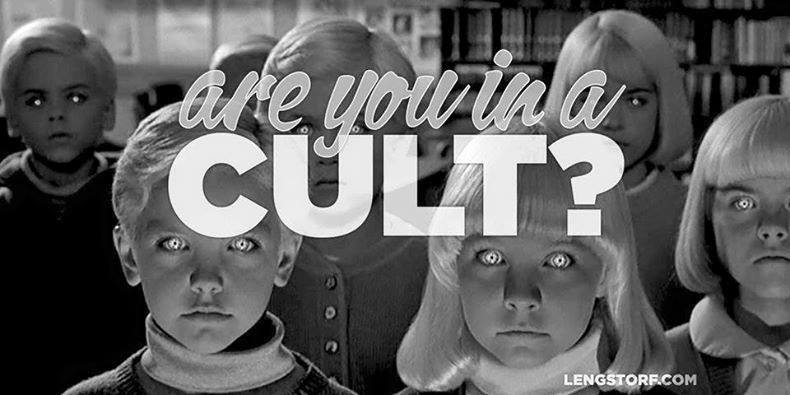
Whether you are already in one, or considering joining any kind of group be it a religious group, place of work, performance group etc. the following article will enlighten you on what signs to look out for.
By Rick Ross – Expert Consultant and Intervention Therapist.
Ten warning signs of a potentially unsafe group/leader.
Absolute authoritarianism without meaningful accountability.
No tolerance for questions or critical inquiry.
No meaningful financial disclosure regarding budget, expenses such as an independently audited financial statement.
Unreasonable fear about the outside world, such as impending catastrophe, evil conspiracies and persecutions.
There is no legitimate reason to leave, former followers are always wrong in leaving, negative or even evil.
Former members often relate the same stories of abuse and reflect a similar pattern of grievances.
There are records, books, news articles, or television programs that document the abuses of the group/leader.
Followers feel they can never be “good enough”.
The group/leader is always right.
The group/leader is the exclusive means of knowing “truth” or receiving validation, no other process of discovery is really acceptable or credible.
Ten warning signs regarding people involved in/with a potentially unsafe group/leader.
Extreme obsessiveness regarding the group/leader resulting in the exclusion of almost every practical consideration.
Individual identity, the group, the leader and/or God as distinct and separate categories of existence become increasingly blurred. Instead, in the follower’s mind these identities become substantially and increasingly fused–as that person’s involvement with the group/leader continues and deepens.
Whenever the group/leader is criticized or questioned it is characterized as “persecution”.
Uncharacteristically stilted and seemingly programmed conversation and mannerisms, cloning of the group/leader in personal behavior.
Dependency upon the group/leader for problem solving, solutions, and definitions without meaningful reflective thought. A seeming inability to think independently or analyze situations without group/leader involvement.
Hyperactivity centered on the group/leader agenda, which seems to supercede any personal goals or individual interests.
A dramatic loss of spontaneity and sense of humor.
Increasing isolation from family and old friends unless they demonstrate an interest in the group/leader.
Anything the group/leader does can be justified no matter how harsh or harmful.
Former followers are at best-considered negative or worse evil and under bad influences. They can not be trusted and personal contact is avoided.
Ten signs of a safe group/leader.
A safe group/leader will answer your questions without becoming judgmental and punitive.
A safe group/leader will disclose information such as finances and often offer an independently audited financial statement regarding budget and expenses. Safe groups and leaders will tell you more than you want to know.
A safe group/leader is often democratic, sharing decision making and encouraging accountability and oversight.
A safe group/leader may have disgruntled former followers, but will not vilify, excommunicate and forbid others from associating with them.
A safe group/leader will not have a paper trail of overwhelmingly negative records, books, articles and statements about them.
A safe group/leader will encourage family communication, community interaction and existing friendships and not feel threatened.
A safe group/leader will recognize reasonable boundaries and limitations when dealing with others.
A safe group/leader will encourage critical thinking, individual autonomy and feelings of self-esteem.
A safe group/leader will admit failings and mistakes and accept constructive criticism and advice.
A safe group/leader will not be the only source of knowledge and learning excluding everyone else, but value dialogue and the free exchange of ideas.
Don’t be naïve, develop a good BS Detector.
You can protect yourself from unsafe groups and leaders by developing a good BS detector. Check things out, know the facts and examine the evidence. A safe group will be patient with your decision making process. If a group or leader grows angry and anxious just because you want to make an informed and careful decision before joining; beware.
A family is like all living things; it grows, develops and constantly evolves over time as the family structure changes. Sometimes changes to the family structure occur as a result of new members joining the family, through marriage and the birth of children; other times, it’s the result of losing family members as our loved ones pass away.
It can be particularly difficult to cope with the breakdown of a family, through separation or divorce. How people deal with a separation or divorce is different for each person, and there is no right or wrong way of dealing with it. However, it can be helpful to understand how separation and divorce can impact the people within a family.
What does ‘divorce’ really mean?
Divorce is the ending of a marriage – but what about the additional relationships that were tied to this marriage? These peripheral relationships include extended families, such as in-laws, whilst core relationships include children. The dissolution of a marriage through divorce, however, does not address the impact of divorce upon all of the additional relationships that were created through the marriage.
Children are often the most affected by a separation or divorce. The breakup of the parental unit brings with it many changes. Changes may be physical – the literal separation of each parent to different places of residences – as well as emotional: primarily the confusion and frustration of not understanding what is happening, or why.
This is why children sometimes protest against the situation in unusual or unexpected ways, such as unusually poor academic performance, withdrawal from friends and family, and other problematic behaviours. Typically, a child’s first reaction to divorce or separation is confusion, denial, and fear. Children may subsequently experience anger, depression, or even panic attacks, unless their feelings are assuaged early on in the separation by each parent.
The effect on the extended family
A separation or divorce can also affect the extended family of a marriage. In some cases, the family members of each spouse may feel like they have to take sides. This may be difficult, confusing and may also adversely affect the children too.
Children are good at sensing when something is wrong, and they’re especially deft at picking up on hostility – particularly if it’s being directed toward one of their parents. Post-separation, children typically struggle with knowing how to balance divided loyalties; feeling disloyal if they still love dad when mum is visibly upset, and vice versa.
When grandparents and other members of an extended family are also conflicted over whether they should take sides, kids pick up on this. If the extended family does express prejudice toward one parent, this can reinforce those feelings of confusion in children, and damage the relationship the child has with each parent.
Moving forward after a separation
Though it may be difficult to manage whilst you’re in the throes of a separation, it’s important that you communicate regularly with your loved ones – especially your children, extended family, and your in-laws. It’s important that you explain to them how you would like your family to move forward, despite the separation or divorce.
Talk about your feelings openly with your children and family, even if they are feelings of hurt or frustration. Let them see that although you’re upset, it’s okay to talk about how they are feeling, too. Doing this eliminates the sense that certain topics may be off limits, which can exacerbate each person’s feelings of confusion and frustration.
A separation is not a competition
It’s also important that you reinforce that even though you are separating from your partner, no one is to take sides, least of all the children. Even if, deep down, you don’t feel this way – which is common for people going through a separation or divorce – it’s vital for the children that you don’t make them feel compelled to take sides. This just creates inner feelings of conflict and torment, which can negatively impact their emotional and physical wellbeing.
It’s also helpful if you have these discussions with your children while your partner is present, so they can see that despite everything, you’re both remaining amicable toward each other. Try not to argue or fight in front of the children, and if you do need to have discussions with your partner that may become heated, try to have them while the children are not around.
Even though this particular chapter of your family life is ending, the family you’ve built never really breaks up or goes away – it merely evolves and moves forward, and it’s important to remember that as you negotiate this difficult time.
Mourning is hard. It doesn’t matter if the person has passed away, is estranged from you or has chosen not to have contact with you. It. is. hard.
Mourning can be more complicated when the person is still alive but you cannot see them, speak to them, write to them, tell them about your day, your happy moments or your big achievements in life. Or the opposite spectrum, like not being able to talk to them when things are tough, knowing they would have the perfect advice or the perfect response to how you are feeling. We get dependent on certain people and their responses to the events going on in our lives. Sometimes, when a person is abruptly cut out of your life, or you have just “lost touch” when one or both of you moved away, it can be difficult to cope. We find that we miss the smell of our mother’s cooking or the way that she smiled when she was super proud of us.
In the place of those happy memories come tears, pain, repressed feelings and sometimes anger depending on how the relationship ended. Knowing they are still out there somewhere in this big ole world makes it sometimes hard to bear. We don’t know how they are doing, how life has changed for them, we don’t get to celebrate things with them anymore.
All of these feelings are completely normal. Beating yourself up for cutting a person out of your life for your better interest is not healthy and shouldn’t be a reason to let that person back into your life.
They hurt you.
They did something to make you feel as you do now.
We each have the right to take care of our own well-being. The problem with that is it often contradicts the notion that we should “respect our elders,” “take care of our parents” or that “love conquers all.”
All of these philosophies are one-sided. They leave no space for the truth. Sometimes we just have shitty parents, friends, relatives or relationships. They don’t take into account that sometimes the abuse of said elder, parent or person we love can be toxic, overwhelming, overbearing and sometimes downright scary.
That doesn’t mean we cannot still love them! It just means we choose to love them from a distance. I found that in my case, staying in limited contact was only hurting me more because any time I received any kind of contact it was never positive. It always dragged me right back down into the toxic cesspool of despair. I was depressed because I couldn’t fix all the things wrong with their life, with mine and with our relationship, or fix our inability to see eye-to-eye on many important subjects.
I was allowing myself to wither away by trying to keep someone else alive…
That couldn’t work for me anymore. I couldn’t be the person I wanted to be by being a depressed, anxious, worried, fearful, stressed out individual. I wanted freedom from terror.
It is so weird to think that I felt that way. Because how can you feel terror towards a person you also love?
Do not beat yourself up for this.
For those of you still reading, I want to tell you this:
Your feelings are valid.
You have a right to feel them, just as they are, with no manipulation by others or by the person who is hurting you.
Do not beat yourself up for feeling your feelings.
Do not keep giving up your patience, sanity, clear-minded stability and rational perceptions for the sake of the other person’s happiness. You only have one life, don’t waste it by living for someone else.
You cannot heal someone who chooses not to heal themselves. Do not let yourself fall into this trap. There is a reason you chose to leave that person behind, but it’s OK to mourn the loss of this relationship.
What causes us to move on from traumatic experiences? Psychologists are finding it’s not always about bouncing back—sometimes we have to feel our whole world fall to pieces.
The Vietnam War veteran had enlisted when he was young, serving two combat tours and surviving multiple firefights. “To this day,” said psychologist Jack Tsai of the Yale School of Medicine, “his war memories are triggered by certain smells that remind him of Vietnam”: overgrown vegetation, the acrid stench of burning, or even sweat—like that which ran in rivulets down the faces of men fighting for their lives in the sweltering jungles—brought it all back. It was classic post-traumatic stress.
As Tsai was treating him (successfully) for PTSD, however, something unexpected emerged. The vet still described his Vietnam experiences as horrific, but he said the painful memories remind him of who he is. His experience typifies research psychologists’ new understanding of trauma: When people are least resilient—in the sense that they are knocked for a loop, do not bounce back quickly or at all, and suffer emotionally for months, if not years—they can eventually emerge from trauma stronger, more appreciative of life, more sympathetic to the suffering of others, and with different (arguably more enlightened) values and priorities.
By no stretch of the imagination would the vet be called resilient in the sense that research psychologists use the term: an ability to go on with life, essentially unchanged mentally and emotionally, in the wake of profound adversity. To the contrary, environmental triggers returned the vet’s troubled mind to the horrors of land mines and ambushes and friends blown apart. At the same time, the vet’s military experience (and his triumph over PTSD) makes him feel that he can accomplish anything. “Nothing bothers him too much, because everything pales in comparison to Vietnam,” said Tsai.
For many, post-traumatic growth brings closer relationships—as family and other loved ones are more cherished—and a stronger sense of connection to other sufferers.
This effect, post-traumatic growth, was so named in 1996 by psychologists Lawrence Calhoun and Richard Tedeschi of the University of North Carolina. It can take many forms, but all involve positive psychological changes: a greater sense of personal strength (“if I survived that, I can survive anything”), deeper spiritual awareness, greater appreciation of life, and recognition of previously unseen pathways and possibilities for one’s life. For many, post-traumatic growth brings closer relationships—as family and other loved ones are more cherished—and a stronger sense of connection to other sufferers.
Stronger Than Before
The concept that from great suffering can come great wisdom is both ancient and familiar. An oncologist friend of mine talks about patients who say cancer was one of the best things that ever happened to them, cutting through life’s usual trivia and making them value the truly important. President Jimmy Carter’s Chief of Staff, Hamilton Jordan (1944–2008), said his battle with cancer made him see that “the simple joys of life are everywhere and are boundless.”
After a car crash in which my childhood friend Joyce lost her right leg at age 20, her months-long recovery and rehab left her with hours upon empty hours to think. “Stuff that used to be a big deal, like being popular, just isn’t anymore,” I remember her saying. “I care about making a difference [she became a schoolteacher], and I think I’m more empathetic. I feel that when someone is suffering I understand in my bones what she’s experiencing. Before, it was just, oh, poor her.” However, post-traumatic growth does not mean traumas are desirable, let alone that they should be downplayed when they befall others. As bestselling author Rabbi Harold Kushner said about the spiritual growth he experienced after the death of his 14-year-old son, “I would give up all of those gains in a second if I could have him back.”
Few lives are without suffering, crisis, and traumas, from extreme or rare ones, such as becoming a war refugee or being taken hostage, to common ones, such as bereavement, accidents, house fires, combat, or your own or a loved one’s serious or chronic illness. For years, psychology has assumed that the best inoculation against post-traumatic stress—as well as responses to trauma that fall well short of mental disorder—is resilience, the ability to pick up one’s life where it was before the trauma. Now that psychology has made post-traumatic growth a focus of research, what is emerging is a new understanding of the complicated relationship between trauma, resilience, PTSD, and post-traumatic growth.
Post-traumatic Growth vs. Resilience
Although the psychological concept of resilience dates back to the 1970s, scientists are still struggling to understand its origins. Some studies find it’s fostered in childhood by a strong relationship with a parent or other adult, and the belief that your fate is in your own hands (a sense of agency). But the opposite belief, that “God is in control and everything happens for a reason,” may contribute to resilience, too, said UNC’s Calhoun. A 2016 review of people who survived atrocities and war in nine countries from South Sudan and Uganda to Bosnia and Burundi found that resilience varied by culture. Strong emotional connections to others fostered resilience among survivors in some societies but not others, and a sense of agency actually backfired among some: If you believe your fate is in your hands and then see your family cut down by a sniper in Sarajevo, you feel not only grief but also crushing guilt.
In the absence of resilience, post-traumatic growth—a very different response to trauma—might emerge instead. “Post-traumatic growth means you’ve been broken—but you put yourself back together” in a stronger, more meaningful way, Tsai said. This may come as a surprise to those who think of resilience as the ability to learn, change, and gain strength in the face of adversity. Among research psychologists, however, resilience is about bouncing back with relative ease to where you were before, not necessarily bouncing forward to a stronger place. By this understanding, without the breaking, there cannot be putting back together, so people with strong coping capacities will be less challenged by trauma and therefore less likely to experience post-traumatic growth.
In the absence of resilience, post-traumatic growth—a very different response to trauma—might emerge instead.
For post-traumatic growth to occur, the breaking need not be so extreme as to constitute PTSD, as was the case for the Vietnam War vet. Tsai and his colleagues found that among the 1,057 US military veterans they studied, the average number of lifetime traumas (such as bereavement, natural disaster, illness, and accidents, as well as military traumas) was 5.7. Only 1 in 10 had PTSD, yet 59% of the vets had experienced post-traumatic growth. And the strongest predictor of whether someone would avoid PTSD after additional trauma was whether they had experienced post-traumatic growth after an earlier one, Tsai and his colleagues reported in the Journal of Affective Disorders. It was the first study to examine whether previous post-traumatic growth can protect against PTSD if trauma strikes again. The findings suggest post-traumatic growth might in fact boost resilience.
Post-traumatic growth—unlike resilience—is not a return to baseline. It is the product of reassembling your “general set of beliefs about the world/universe and your place in it,” said Calhoun: You question the benevolence, predictability, and control ability of the world, your sense of self, the path you expected life to follow. From the shards of previous beliefs, you create wholly new worldviews, and can perhaps emerge a stronger person than you were before.
What is Trauma?
Among psychiatrists, what constitutes “trauma” is controversial. Some define trauma based on the nature of the event: Psychiatry’s diagnostic manual, for instance, says a traumatic experience must be outside the range of what humans normally encounter. Others define trauma based on how people respond to an experience: Intense fear, helplessness, horror, or distress would be symptoms of trauma.
A circular definition —“trauma is something that leaves you traumatized”—is obviously not ideal. Nor is “outside the range of normal experience” a reliable measure: Tragically, many experiences that once were outside that range no longer are, such as natural disasters, mass shootings, or wartime horrors.
Scholars are therefore trying to do better. An emerging definition holds that trauma challenges a person’s “assumptive world”: her belief in how people behave, how the world works, and how her life would unfold. By this understanding, trauma needn’t threaten life or health, nor cause post-traumatic stress disorder. But it must make you question your bedrock assumptions, such as that the world is fair, that terrible things do not befall good people, that there are limits to humans’ capacity for inhumanity, that things will always work out, or that the old die before the young. By that definition, few of us make it through this life without experiencing trauma.









 Taking The Helm