The Cultural Story Behind Family Estrangement

by Rachel Haack MA MFTI
1. Postmodernism and Critical Theory in the Family System

Postmodernism taught us to question authority and dismantle universal truths. Critical theory taught us to look for oppression and power in every relationship. Both were useful lenses at first, until they became the only lenses.

Today, these frameworks have trickled all the way down into the family, where dynamics are no longer just relational but political.
Parents are recast as oppressors. Children as liberators. Love becomes suspect, and forgiveness looks like betrayal of the self.

Books like Adult Children of Emotionally Immature Parents and online influencers preaching “go no contact” have popularized this moral framework of hierarchy and harm. Once you interpret ordinary imperfection through a lens of oppression, the only moral response becomes disconnection.

2. Social Contagion and the Amplification of Ideas

Before smartphones, ideas spread through communities slowly: by conversation, print, and lived experience. Now they spread virally, without friction or context.

We’ve seen social contagions before: diagnostic trends like “multiple personality disorder” in the 1980s or the surge of “recovered memories.” Today, similar dynamics are playing out around “toxic parents,” “narcissistic mothers,” and “cutoff as healing.”

On TikTok and Instagram, creators share stories of liberation from their families, often rewarded with validation and applause. The more sensational the story, the more viral it becomes. And soon, estrangement itself, especially “no contact”, becomes not just a coping choice but a cultural script.

3. The Portable, Always-Connected World

In 1960, a college student might have called home once a month (collect!).
Letters were the norm. Distance was assumed. Love wasn’t measured in response time.

Now, the digital tether has changed our expectations entirely. Parents and adult children can be in contact multiple times a day, and when they’re not, it feels like something’s wrong.

This 24/7 accessibility has raised the relational temperature for everyone. We’re over-connected, overstimulated, and overwhelmed. Most adults are managing hundreds of micro-relationships through text, email, and social media. The guilt of not keeping up, of failing to “stay in touch”, becomes exhausting. And sometimes, that guilt turns into avoidance or conflict.

We’re living in what I call the age of too much para-connection, where everyone feels both crowded and lonely.

4. Concept Creep, Safetyism, and the Pathologizing of Discomfort

Over the past decade, psychological language has exploded into everyday conversation. Words that once had clinical meaning: trauma, abuse, narcissism, gaslighting, boundaries – are now used casually to describe any form of emotional pain or frustration. Psychologists Nick Haslam and Jonathan Haidt have called this phenomenon concept creep: when the definitions of harm and trauma expand to include ordinary stress, discomfort, and disagreement.

At the same time, a new cultural ideal has emerged, what Haidt and Greg Lukianoff call safetyism. Safety, once meaning freedom from physical danger, now includes freedom from emotional discomfort. To be “safe” means to never feel hurt, anxious, or misunderstood.

This shift sounds compassionate, but it has quietly redefined what we consider harmful. Normal friction in relationships: differences in temperament, misunderstanding, conflict, even the enduring “perpetual problems” that exist in every long-term bond – are now reinterpreted as forms of emotional danger.

When discomfort itself is seen as harm, repair begins to look like self-betrayal. Rather than learning tolerance for relational tension, we pathologize it. And soon, the ordinary pain of loving another imperfect human being starts to feel like something we must protect ourselves from, rather than something we can grow through.

5. The Reinforcement Loop: How Therapy Culture Confirms the Cutoff

This new sensitivity to harm is reinforced by the professionals and influencers shaping our public conversations about relationships. The dominant narrative says that no one cuts off contact with a parent without perfectly good reasons. The logic goes like this: because estrangement feels so unthinkable, it must also be justified.

Therapists and creators often tell their audiences, “You’ve done everything you could,” or “No one goes no contact lightly.” The implicit message is that disconnection is the only rational or healthy conclusion to a long-standing relationship problem.

In clinical spaces, this message is amplified by a moral pressure that runs deep in the helping professions. To challenge a client’s decision to cut off contact is framed as “causing harm.” To explore reconciliation is seen as enabling abuse. Therapists are warned that if we don’t affirm a client’s self-protective decisions, we risk becoming “excusers of abusers.” I receive messages such as “Yikes. This is dangerous.” to an instagram post addressing the nuance of estrangement.

Naturally, that strikes fear into the heart of any well-meaning clinician who wants to do right by their client. To imagine that our empathy could itself cause harm is paralyzing. And so, out of caution, many practitioners stop short of exploring repair or differentiation, even when disconnection may be premature or unnecessary.

What results is a therapeutic culture that affirms estrangement as inherently empowering: but rarely asks whether empowerment might also come from growth, dialogue, or courage in the face of discomfort.

6. The “Pure Relationship” and the Consumer Self

Sociologist Anthony Giddens coined the term the pure relationship—the belief that a relationship’s legitimacy depends on emotional satisfaction alone. It should be warm, mutually beneficial, and affirming at all times.

That idea, combined with our culture’s obsession with optimization, has quietly reshaped our relational ethics. We now evaluate our relationships the way we evaluate products: Does this still serve me? Does this make me happy?

When something feels hard, the impulse isn’t to repair, it’s to replace.
We live in a hyper-individualistic, portable, meritocratic, consumer world. We can move cities, change jobs, and find new communities with a swipe. The result is a growing inability to tolerate the inevitable discomforts of enduring relationships: the very tensions that make us grow up, soften, and mature. We don’t have to learn to live within our village: we can find a new one instead.

Estrangement, in this context, isn’t just a breakdown of love; it’s the logical conclusion of a culture that has made comfort and self-expression the highest virtues.

7. Luxury Beliefs and the New Village of One

Sociologist Rob Henderson coined the term luxury beliefs to describe ideas that signal social status but often carry hidden costs for others. In this context, the belief that cutting off “toxic” family members is always healthy functions like a luxury belief: it’s most easily embraced by those who can afford to lose their families and replace them (often with paid support networks).

Many modern cutoffs occur in families with greater resources, where autonomy is financially feasible. Our standard of living has made it possible to outsource almost every form of relational interdependence. We no longer need the messy village of extended family to survive; we can simply hire one.

If our in-law is irritating, we can pay for childcare.
If our mother’s help feels overwhelming, we can hire a postpartum doula.
If a relationship feels complicated, we can opt for convenience.

In this way, affluence enables avoidance. It allows us to curate our social lives around comfort and control rather than tolerance and reciprocity. The more economically independent we become, the less dependent we are on the people who stretch us.

And sometimes, that independence itself is a gift handed down from the very family being rejected. Many of the young adults now severing ties with parents do so after those same parents helped fund their education, co-signed their first lease, or quietly absorbed the cost of early adulthood. The support that made autonomy possible is later reinterpreted as control. Once financial reliance ends, the relationship can be rewritten through the language of freedom: They can’t control me anymore.

It’s a striking irony of privilege—the estrangement enabled by security. When you no longer need your family to survive, you also lose the incentive to work through what makes them difficult. And so, we drift further into what might be called the luxury of disconnection—a life where we can meet nearly all our needs without ever having to practice forgiveness, patience, or repair.

8. So What Do We Do With All This?

It’s easy to feel overwhelmed by all of this, to feel like you’re standing in the tide of something too large to resist. You can’t fight the world. You can’t change a culture on your own. You can’t go to battle against the zeitgeist without burning out in despair.

So here’s what I suggest: When things feel big, focus on the small.

You don’t have to fix the world. What we can do is adapt: by creating small, consistent acts of connection with those closest to us. Reorient to your values and live them out in the relationships right in front of you.

If you’re disheartened by the fact that we live in an individualistic, portable, meritocratic, consumer world, start by noticing where that shows up in your own relationships. Begin to reclaim the village around you.

  • Can you stay in relationship when it’s hard?
  • Can you practice forgiveness even when it isn’t reciprocated?
  • Who are you quick to write off—and who might you reach out to instead?

Nobody changes by being lectured into connection. We learn by observation and osmosis. Culture shifts not through argument, but through example.

So ask yourself:

  • Am I making it easier or harder for people to connect with me?
  • Do people feel seen in my presence?
  • Is there one small thing I can do differently in this relationship today?

That’s how change happens—not through revolution, but through micro-shifts. We don’t have to fix a generation or a cultural moment. We just need to live our values with quiet conviction in a world that spins around us.

Because while you can’t stop the tide, you can build something steady enough to stand in it.

 If this resonated with you, share it with someone who’s also trying to make sense of our disconnected age. The more we talk about it—and live differently inside it—the more repair becomes possible. Also, please consider becoming a paid subscriber, as it allows me to keep offering my articles for free to those in need. Thank you!

Substack.com

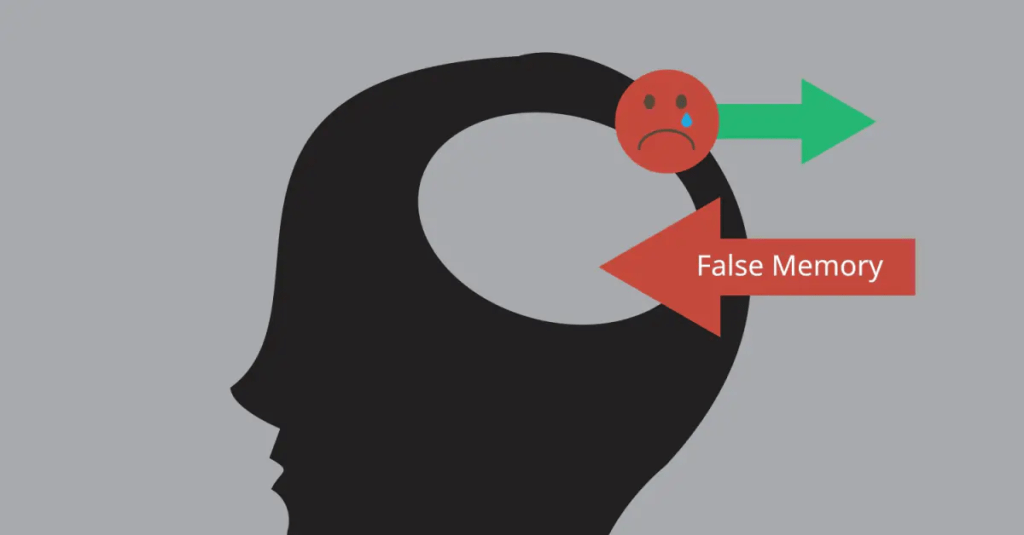
False Memory Creation – Parental Alienation

by Sarah Squires

One of the hardest elements of parental alienation is when allegations are made by both
children and parents. Professionals have a duty of care to investigate and gather evidence. But
how reliable are the memories being recalled?
It has long been accepted that false memories exist and there are countless studies which
confirm how easy it is to “implant” a memory (which we will look into later) but for a practitioner
involved in a parental alienation case, it can be hard to identify real from false memories and
therefore recall confabulation can result in prosecution for the “abuser”, possibly jail and
definitely the loss of the relationship with their child.
It is therefore important that we understand what memory is, how it is stored and how false
memories can occur.

What is memory?

Bartlett (1932) describes memory as “imaginative reconstruction” meaning that memories
consist of numerous elements, pieced together and replayed in a format familiar to the teller.
The first two elements are:
● Declarative
● Nondeclarative

Semantic memory refers to the facts involved in the memory which you just know and are not
from personal experience. For example, the names for colours. Craik and Lockhart (1972) found
that complex semantic processing produced better recall than simple semantic processing.
Meaning it’s the details which help with the recall.

Episodic memory refers to the unique experience linked to the time and place in our lives.
Rogers et al (1977) found that episodic memory was more reliable than semantic in recall
situations. Meaning we remember things better which have a personal and emotional
connection to us. A study by Hayne and Imuta (2011) found that by the age of 3, children exhibit
rudimentary episodic memory skills, and that strict reliance on verbal recall may underestimate
their episodic memory ability.

Interestingly, more recent findings have suggested that it is the ability to retain, as opposed to
form, episodic memories that may be the source of the advantage inferred through age in older children, with 3-year-old children demonstrating good retention of episodic recollection across short but not long delays (Scarf et al., 2013).

Nondeclarative memory, also known as procedural memory, is the repository of information
about basic skills, motor (muscular) movement, verbal qualities, visual images, and emotions. It
is our unconscious memory based on what we have been taught and experienced in the world
around us.

Conditioning plays an important role in procedural memory and two main conditioning elements
have been identified: classic and operant.

Classic conditioning theory was developed by Pavlov following experiments with dogs.
He found that you could associate a behaviour to a previously non-associated action
through classic conditioning. He rang a bell and the dogs did not respond. He showed
them food, they salivated (required response). He then gave the food and rang the bell
at the same time, dogs salivated (required response). Finally he rang the bell on it’s own
and the dogs salivated (required response). The dogs had been conditioned to associate
the bell and food.

Operant conditioning was developed by Skinner (1948) and Thorndike (1905). They both
found that animals would repeat the same action if the outcome was pleasant (positive
reinforcement) and would stop an action if the outcome was negative (negative
reinforcement). The animals learnt this through trial and error. This became known as
the “law of effect”

Both are behavioural theories but these responses becomes procedural and so form part of our
long term memory.

In order for memory to be developed, we also need the cognitive abilities to piece it all together.
Jean Piaget (1932) developed 4 cognitive stages of childhood development:

  1. Sensorimotor Stage: Birth through about 2 years. During this stage, children learn about
    the world through their senses and the manipulation of objects.
  2. Preoperational Stage: Ages 2 through 7. During this stage, children develop memory and imagination. They are also able to understand things symbolically, and to understand the ideas of past and future.
  3. Concrete Operational Stage: Ages 7 through 11. During this stage, children become more aware of external events, as well as feelings other than their own. They become less egocentric, and begin to understand that not everyone shares their thoughts, beliefs, or feelings.
  4. Formal Operational Stage: Ages 11 and older. During this stage, children are able to use logic to solve problems, view the world around them, and plan for the future.

“Six-month-olds have a memory span of no more than about 24 hours, which gradually expands
to up to a month by 9 months. In the new study, 13-month-old babies could not remember
events they had witnessed and mimicked four months earlier– a task that came easily to their
elders, ages 21 months and 28 months.”
(https://www.upi.com/Older-children-remember-longer/47801036004400/)

Using this and the previous studies mentioned, we can see how memory develops in children
and the ages at which specific types of memory develop alongside their cognitive and language
abilities.

How false memories can be created

Freud (1923) first identified that likelihood of false memory, naming it confabulation and
reconstruction.
Confabulation is the unintentional manufacturing of information to fill in the missing details
during recall. It’s usual purpose it to make the story more coherent and can occur under
conditions of high motivation or emotion.
In 1997 Coan found that “our recollection of memories can be manipulated and even entire sets
of events can be confabulated”.
Reconstruction involves the distortion of the original memory through a series of filters including
our past experiences, beliefs, schemas and stereotypes.

Elizabeth Loftus and Cara Laney (2013) found that the verbage used to frame a question when
trying to illicit a memory recall can impact false memory recollection. For example, asking “did
you see THE dog?” was more likely to get a false memory recollection than asking “did you see
Adog?”
Nicholas Spanos (1996) found that 50% of participants were led to contrast complex, vivid and
detailed false memories using a process called “guided mnemonic restructuring” which involves
active encouragement.
Loftus and Laney also found that imagination inflation can occur as the more a subject
visualises/images the event, the more “real” it becomes.

In the same paper three key elements which impact the forming of false memory were identified
as:
● social pressure
● encouragement
● individual encouraged not to consider if the memory is true or not

Implications for parental alienation

In studies adults have been shown to be very susceptible to suggestion and manipulation to
create false memories if they are encouraged to by someone they have an interpersonal
relationship with meaning children, who are much more susceptible to their parent’s influence,
could easily “create” memories which they retain through rehearsal.

Attachment System Suppression and Phobic Anxiety Toward a Parent

The child’s symptoms evidence a selective and targeted suppression of the normal-range
functioning of the child’s attachment bonding motivations toward one parent, the
targeted-rejected parent, in which the child seeks to entirely terminate a relationship with this parent (i.e., a child-initiated cut-off in the child’s relationship with a normal-range and affectionally available parent). (Childress 2015)

A child who previously had a positive and secure attachment to the alienated parent, suddenly
hates them and vilifies them for everything they do and have done.

They have no good memories of the alienated parent. The age of the child is important as is
how long the child has been separated from the parent. However, we know that children are
capable of storing and recalling memories from a very young age and so for there to be a
complete absence of any good memories, may suggest manipulation or conditioning. For
example a child could say they love the alienated parent and get shouted at (negative
reinforcement) so they stop saying it and instead say “I hate them” and get rewarded (positive
reinforcement). Following the law of effect, the child would make more negative statements
towards the alienated parent in order to receive more rewards. There is also the added
dimension here of the attachment style of the parent. If they were previously rejecting-neglecting
the child, there is even more motivation for the child to say negative things as they will get their
primary needs met as well.

Fixed False Belief

The child’s symptoms display an intransigently held, fixed and false belief regarding the
fundamental parental inadequacy of the targeted-rejected parent in which the child
characterizes a relationship with the targeted rejected parent as being somehow
emotionally or psychologically “abusive” of the child. While the child may not explicitly
use the term “abusive,” the implication of emotional or psychological abuse is contained
within the child’s belief system and is not warranted based on the assessed parenting
practices of the targeted-rejected parent (which are assessed to be broadly normal
range) (Childress 2015).

In some instances there may be a genuine reason the child feels angry towards the alienated
parent. But the reaction is still disproportionate to the incident which has made them angry. As
an ex child protection social worker I have witnessed contact between abusive parents and their children and in almost all cases, the child will interact with the parent and the relationship will
return to its previous state. Obviously here the age of the child is important though. An
adolescent child may demonstrate more anger due to their increased understanding and their
own interrupted emotional state as they go through puberty. A younger child however, whose
memory is still developing, would struggle to recall memories from over two months ago.
Therefore it is important for practitioners to remember that a child will have both good and bad
memories of the alienated parent. Bad events do not delete good ones. If a child is unable (or
unwilling) to recall positive memories, this could indicate manipulation or conditioning. It may
also be possible that false memories have been implanted and cemented through rehearsal,
ensuring that the child thoroughly believes their accusations.

Splitting

The child evidences polarized extremes of attitude toward the parents, in which the
supposedly “favoured” parent is idealized as the all-good and nurturing parent while the
rejected parent is entirely devalued as the all-bad and entirely inadequate parent.
(Childress 2015)

The child has a very “black and white” view of their parents. One is all good, the other all bad.
No positive qualities can be recalled for the alienated parent and no negative ones for the
alienator.

Memory is very rarely erased (except in amnesia cases) and instead fade over time. So for a
child to be unable (or unwilling) to recall any positive qualities in their parent, suggests that
conditioning has taken place. For example, the alienating parent could classically condition the
child into believing the alienated parent is all bad by associating all bad memories with that
parent. “We can’t go on holiday this year because of your mother/father”. If this process is
repeated often enough, the child will be conditioned to believe the alienated parent is all bad.
Diversely, the alienating parent will be telling the child that they are the only one who loves them
and understands them, conditioning the child to see them as all good.

Role-Reversal Dynamic

In alienation, a child’s psychological boundaries may be compromised, and differentiation
from that parent may not occur. Instead, the child becomes infused with the mindset of the
pathogenic parent and alienated from the normal-range parent through covert psychological
manipulation on the part of the pathogenic parent. (Childress 2015)

The child will adamantly deny that anyone has influenced their decision.
Again, age will be an important factor here. Does the child have the cognitive ability (as outlined
above) to make these statements? Do they understand the consequences? It is therefore
important the practitioner explores the child’s understanding of what the statements mean and
uses memory recall exercises to confirm this. For example, a child who states that they have
decided they never want to see their parent again could be asked “what about at Christmas? Do
you not want a present from them?” and explore “what did you get from them last year?”. Future
and past tense exercises can help bypass the possibility of false memories because it is unlikely
(and impossible) for someone to have rewritten their entire history or talked about the future with
the child.

Absence of Empathy

The child displays a complete absence of empathy for the emotional pain being inflicted
on the targeted-rejected parent by the child’s hostility and rejection of this parent.
(Childress 2015)

The child will feel justified in their actions and cold towards the alienated parent.
According to Erikson’s Psychosocial (1950, 1963) stage theory, around age three and
continuing to age five, children assert themselves more frequently. They will play independently,
make up games and and initiate activities with others. This is the Initiative v’s Guilt stage.
Therefore it is important when a child is expressing that they are using their own initiative, that this behaviour is observed in other settings as well. Does the demonstrate the ability to think
independently about other subjects? Any inconsistency may suggest manipulation.

Grandiosity

The child displays a grandiose perception of occupying an inappropriately elevated
status in the family hierarchy that is above the targeted-rejected parent from which the
child feels empowered to sit in judgment of the targeted-rejected parent as both a parent
and as a person. (Childress 2015)

The child will always side with the alienating parent. The child does not want to hear the
alienated parent’s point of view.

This demonstrates elements of concrete thinking. i.e. seeing something as fixed and certain. It
is evident in very young children but as children age they begin to develop logical and
eventually abstract thinking as well (see Piaget’s development stages above). The absence of
logical thinking, which would be developmentally appropriate for their age, suggests either
developmental delay or manipulation.

Transgenerational Trauma and the Trauma Reenactment

This is the process by which differentiation between family members across generations
affects individuals and their personal differentiation process. The transmission occurs on
several levels involving both conscious teaching and unconscious programming of
emotional responses and behaviors. Due to the intricacies of the relationship dynamics,
some children develop more of a differentiated “self” than others. (Childress 2015)

The child may make accusations against the alienated parent which phrases and scenarios
which are inappropriate for their age. For example, a child might say “I hate mum/dad because
they made us homeless” but when you ask them what homeless means they have no
understanding of it.

Whilst not all allegations are false, those which use language which isn’t congruent with the
child’s natural speech, would suggest that false memories have been implanted. As outlined in
the above section on “how false memories are implanted”, this is relatively easy to do and
children will be highly sensitive to this kind of manipulation from a caregiver. Especially if it is
coupled with condition behaviours.

Avoidance of Parent

The child seeks to avoid exposure to the targeted parent due to the situationally
provoked anxiety or else endures the presence of the targeted parent with great distress.
“Childress 2015)

Anyone associated with the alienated parent will be rejected by the child for little or no reason.
Using Erikson’s psychosocial development model again, the crisis of trust vs mistrust occurs
during the first year or so of life. During this stage, the infant is uncertain about the world in
which they live. To resolve these feelings of uncertainty, the infant looks towards their caregivers
for stability and consistency of care. This forms the attachment.

Initially Bowlby (1969) believed that a child formed one primary attachment which superseded
all others. However later research has shown that children form multiple quality attachments to a
range of caregivers, including grandparents, aunts and uncles (Furnivall 2011). Therefore it is
important when a child is rejecting whole families or those associated with alienated parent, that
a practitioner explores early attachment and experiences with the wider family through taking
family history. The child is unlikely to have forgotten those experiences and, unless severe
abuse has taken place, it is unlikely the memories have been repressed. Therefore the child
may have been conditioned and manipulated into “forgetting”.

Conclusion

Both memory and parental alienation are complex theories and we have to draw upon many
additional theories in order to give a comprehensive picture of what is going on. However I hope
that this paper has demonstrated the important role that memory and memory manipulation
plays in parental alienation syndrome and provided some practical advice on what to look for.

False Memories by Sarah Squires

My comments – Although this article speaks of younger children, adult children can also act this way towards a targeted parent, creating false memories about them due to the manipulation and conditioning from the favoured parent. I have had contact with thousands of mothers who are experiencing this.

Confabulation and False Memories

by Web MD Editorial Contributors, Medically Reviewed by Smitha Bhandari MD

Image – Sydney Criminal Lawyers

No one’s memory is 100% percent accurate, but some people make many memory errors. They believe in the accuracy of these faulty memories and can be convincing when talking about them. This is what scientists call confabulation. Some brain conditions can cause these errors in memory.

What Is Confabulation?

Confabulations are usually autobiographical, involving people misremembering their own experiences. Sometimes they place experiences in the wrong time or place. They may wrongly recall other details, large or small. Occasionally confabulations have little basis in reality. Details can be drawn from movies, television, and overheard conversations.

Of course, people with no brain disorders can have faulty memories. Normal mistakes in memory become confabulation when people remember false information in vivid detail, often claiming to relive the event. They may exhibit genuine emotions, such as grieving over a friend who has not died. Listeners often believe what they are hearing is true. 

What Confabulation Is Not

Confabulation is not lying. Confabulation differs from other forms of falsehood. Confabulators have no reason to tell a lie and don’t realize that they’re not telling the truth. Their brains simply filled in some missing spots with false information. Some people have called this “honest lying”.  

Confabulations are not delusions. Both involve false beliefs, but confabulation almost always involves a memory, while delusions are less anchored in the real world. Delusions occur mostly in psychiatric disorders such as schizophrenia. Confabulation is more common in brain disorders such as dementia.

Two Kinds of Confabulation

Confabulations can be either provoked or spontaneous. They’re provoked if they occur in response to a question. The person may feel compelled to answer even if they don’t know what to say. They’re spontaneous if they’re offered voluntarily. Spontaneous confabulations are usually less believable and might be fantastic or bizarre. 

Conditions Linked to Confabulation

Confabulation is caused by brain damage or poor brain function, but researchers are unsure which parts of the brain are at fault. The frontal lobe or the basal forebrain may be involved. Confabulation occurs with several brain disorders. These are some of the most common. 

Wernicke-Korsakoff syndromeConfabulation was first studied by a Russian psychiatrist, Sergeievich Korsakoff. He noticed that his clients who overused alcohol often had faulty memories. He gave his name to a condition that occurs with an alcohol use problem. Wernicke-Korsakoff syndrome is caused by a vitamin B1 deficiency.

Alzheimer’s disease. Those with Alzheimer’s disease experience a range of symptoms. Delusions, such as believing that someone is stealing from them, are common. Provoked confabulations are common in early Alzheimer’s. Spontaneous confabulations can become a serious problem if the person with Alzheimer’s acts on their mistaken beliefs.

Traumatic brain injury. A blow to the head can cause problems in thinking and memory. Confabulation can be a special problem for those with traumatic brain injury. They may misreport events leading up to the injury or make mistakes about other important details.

Fetal Alcohol Spectrum DisorderExposure to alcohol in the womb can cause a person to have a variety of brain problems, including confabulation. Often those with fetal alcohol spectrum disorder are suggestible and eager to please. These characteristics can make them likely to create false memories.  

Can Confabulation Be Treated?

Confabulation won’t go away unless the underlying condition is addressed. Doctors can treat some conditions. For example, Wernicke-Korsakoff syndrome is treated with vitamin B1. Other conditions lack effective treatments.   

Those who live or work with confabulators can reduce problems by using strategies such as these:

  • Minimizing distractions
  • Avoiding leading questions
  • Allowing extra time for processing
  • Reducing stress
  • Using simple language
  • Checking to see if they understand

Some confabulators can be taught how to monitor themselves. Memory aids can help. They can keep memory diaries so they don’t feel pressure to remember everything.

Results of Confabulation

For the self. Confabulation performs several functions for those who do it:

  • It lets them make sense of their situation.
  • It enhances their sense of self.
  • It makes them relevant in the world. 

For family members. Dealing with confabulation can make family members frustrated, angry, or sad. They should remember that their relative is not being untruthful on purpose. A support system is vital for those who confabulate. They may give inaccurate information in a variety of situations. Family can be a part of that support system. 

In the legal system. Individuals who confabulate can make false confessions and give false testimony. Although they are not lying on purpose, the results can be serious. Those who interview people with certain brain disorders should understand confabulation. They should avoid long interviews, suggestive questions, and other techniques that could cause the subject to give false information.

Webmd.com

False Memories

Although memories seem to be a solid, straightforward sum of who people are, strong evidence suggests that memories are much more quite complex, highly subject to change, and often simply unreliable. Memories of past events can be reconstructed as people age or as their worldview changes. People regularly recall childhood events falsely, and through effective suggestions and other methods, it’s been proven that they can even create new false memories.

Why False Memories Are Common

A person’s malleable memories often involve the mundane, such as when we second-guess whether the stove really is off or on. But they can often be far more consequential, such as unreliable eyewitness recollections of a crime.

What causes a false memory?

Human memory is pliable and easy to manipulate. A distorted memory or the introduction of later, false information can affect how we recall events we experienced firsthand. A person’s existing knowledge can impede and obstructs their own memory, leading to a newly formed, cobbled-together recollection that does not accurately reflect reality. Also, under certain circumstances, a person can be given false information and be convinced to believe that an event that never occurred actually did.

Should I question my memories?

Given that our recovered memories may be genuine or false, or a combination of the two, it is legitimate to question just how much of what you remember is real and how much is a misperception.

How can I identify a false memory?

Without material evidence, it’s hard to know for sure whether a memory is real or imagined. Even if you feel high conviction that a recollection is true, there is a high chance that the memory is flawed, by a little or a lot.

How do I get rid of false memories?

Just as a recollection can be altered into a false memory, it can be reversed as well. If you return to the memory and think closely about its details, you may be able to recreate the event over time. Through such a process, you reroute the false memory to a true one.

Why Memories Matter

A malleable memory can have especially dire consequences, particularly in legal settings when children are used as eyewitnesses. Research has found that a child may be especially susceptible to the implanting of false memories by parents or other authority figures. This becomes highly problematic when a case involves alleged sexual abuse or relies on the correct identification of a suspect by a child. But adults can also be tricked into remembering events that never happened, or changing the details of things that really did happen.

Why do I remember things that never happened?

Presented with incomplete information, the brain seeks to fill in the blanks. If you see a photo of a person you have never met, for example, and mutual friends have shared descriptive details on time spent with the person, you may start to believe that you have in fact met the individual.

Why do memories change over time?

Psychologist Elizabeth Loftus of the University of California at Irvine, an influential researcher on memory who has consulted on many high-profile legal cases involving disputed memories, including the McMartin preschool sexual abuse allegations, notes that everyone embellishes or adds to their memories during recall or recounting. Over time those changes, accurate or not, become part of the memory in the mind. Loftus warns that human memory is not a recording device, but more like a Wikipedia page: You can change it, but others can, too.

Why can’t I remember my childhood?

Most people struggle to recall events before the age of about 3 or 4, a phenomenon called childhood amnesia. In the first few years of life, a child’s body undergoes the process of neurogenesis, or the growth and development of nervous tissue. New nerve cells develop, and old cells get recycled or reformed, taking childhood memories away with them.

How Misinformation Is Easily Spread

On the internet, almost anyone claiming objectivity or impartiality can disseminate false memories through the dissemination of specious information. Misinformation, or “fake news,” has become ubiquitous through media such as doctored videos and photoshopped images as well as fabricated text. Such misinformation is especially persuasive with audiences who already harbor biases endorsed by the inaccurate messages.

Why is misinformation so detrimental?

Several recent events have proven that memory can become weaponized, often quite effectively. Once misinformation taken hold in a target’s mind, that new, false recollection hinders his or her ability to make informed decisions about policy and politicians. Fake news drives social discord and character assassination, and even corrupts crucial personal choices about health and well-being.

Can our attitudes and bias influence memory?

Biased thinking molds the way we remember. We all employ bias when perceiving, interpreting, and remembering information and events. This effect extends to the ways in which we tap our memories for information about fake news.

Can well-known events be altered?

In a study, researchers doctored images of well-known events and found that indeed a person’s recollection of even universally known, iconic events can be altered.


How to Spot Fake News

  • Investigate the source of the information and whether the site is reputable.
  • See who is listed in the “About” section or “Contact Us” page.
  • Check the author and scrutinize the person’s credibility.
  • Is the author a real person?
  • Don’t fall for clickbait headlines, read the entire post.
  • What is the purpose of the information?
  • Make sure the story is current and not lifted from old information.
  • Check the accompanying links for references and citations.
  • Search for more information on the claim.
  • Doctored images are sometimes obvious and can be searched via image sourcing tools.
  • Check the image credit.

Psychology Today

Inside the Mind of a Liar

The psychology of deception. by Muhammad Tuhin

Image – Pinterest

It begins small. A little boy drops a glass and blames the cat. A teenager says she studied for the test, but didn’t. A man tells a friend he’s fine, even though his heart is broken. A woman tells her boss she’s on her way—though she’s still in her pajamas.

Deception weaves its way through everyday life. We do it to avoid shame, to save face, to gain advantage, to protect others, to feel safe. Most of the time, we don’t even notice we’re doing it. But beneath the surface, each lie—no matter how tiny or towering—leaves fingerprints on the mind.

To understand deception is to peer into one of the most complex and mysterious aspects of human psychology. It is not just about falsehood. It is about strategy, memory, emotion, fear, control, and even survival.

Lying is ancient. It is wired into our evolutionary history. And though it might be easy to judge liars from the outside, the real story unfolds deep inside the brain.

The Origins of Deception: Born to Lie?

Before we explore the inner workings of a liar’s mind, we must face a startling truth: the capacity for deception begins in childhood, often earlier than most people expect.

Infants as young as six months have been observed in experimental settings to feign distress to attract caregiver attention. By age two, toddlers can deliberately mislead. At age four or five, children develop what psychologists call theory of mind—the understanding that other people have beliefs, desires, and knowledge different from one’s own. This milestone is crucial for intentional lying.

The emergence of lying coincides with cognitive development. To lie, a child must juggle multiple mental tasks: invent a story, remember what’s been said, suppress the truth, and anticipate the reaction of others. It’s a kind of mental juggling act—and not a simple one.

Ironically, a child’s first lie is often a sign not of moral decay, but of mental sophistication. It marks the point where imagination, memory, and empathy collide.

What Happens in the Brain When We Lie?

Telling the truth is easy. It’s a direct retrieval of memory. But lying? That’s mental gymnastics.

Modern neuroscience offers extraordinary tools for peering into the brain as deception unfolds. Functional MRI (fMRI) scans and EEG readings have shown that lying activates multiple brain regions, including the prefrontal cortexanterior cingulate cortex, and parietal lobes.

The prefrontal cortex is the executive center—the brain’s CEO. It handles planning, decision-making, and impulse control. To construct a believable lie, this region must suppress the truth and generate an alternative scenario. The anterior cingulate cortex, meanwhile, manages conflict detection. It lights up when our internal moral compass clashes with dishonest behavior.

This internal conflict is critical. It’s what causes physical signs of stress—fidgeting, sweating, voice pitch changes. It’s also why lying can be mentally exhausting.

But here’s the catch: not all lies feel bad. With practice, people can become desensitized to deception. Over time, the emotional and neurological “cost” of lying diminishes. This is how compulsive liars are born—not in a single moment, but through the slow erosion of conscience.

The Sliding Scale of Lies

Not all lies are created equal.

Some are harmless, even helpful. These are the so-called white lies—the kind we tell to protect feelings or maintain social harmony. “You look great in that outfit.” “I loved your presentation.” “I’m not mad.”

Then there are strategic lies, used to gain an advantage or manipulate outcomes. Politicians, negotiators, poker players—many rely on subtle forms of deception to achieve their goals.

And, of course, there are malicious lies—intended to harm, mislead, or destroy. These lies are heavy with intention and often rooted in deeper psychological dysfunctions, including narcissism, psychopathy, or unresolved trauma.

Understanding a liar means understanding their motive. Was it fear? Gain? Habit? Compassion? Self-image? The psychology of lying cannot be painted with one brush. Every falsehood tells a story, not just about what happened, but about why someone wanted to change the version of reality they shared.

Who Lies, and How Often?

You might think you’re an honest person—and perhaps you are. But research suggests we all bend the truth more than we’d like to admit.

A groundbreaking study by psychologist Robert Feldman found that people lie in about one in every five interactions lasting more than ten minutes. That’s not to say every lie is dramatic. Most are small exaggerations or omissions. But they’re still distortions.

Interestingly, people tend to lie more in certain contexts—job interviews, dating scenarios, social media posts. These are environments where impression management is crucial. We lie to look better, smarter, kinder, more successful.

But there’s a darker truth too: a small percentage of people tell the majority of lies. In one study, just 5% of participants were responsible for nearly 50% of all lies told. These individuals, often labeled prolific liars, tend to have distinct psychological profiles. They’re often more manipulative, less empathetic, and more comfortable with risk.

The Brain’s Emotional Load of Lying

Lying isn’t just a cognitive event—it’s an emotional one.

When we lie, especially about something meaningful, our body responds. Heart rate increases. Breathing changes. Pupils dilate. The body perceives lying as a stressor because it involves fear of detection and the guilt of dishonesty.

This emotional burden is what makes polygraphs (lie detectors) possible, though far from perfect. Polygraphs measure physiological signs of stress, not deception directly. And while they can sometimes detect lies, they’re also vulnerable to false positives. Anxious truth-tellers may be flagged, while practiced liars may fly under the radar.

The emotional weight of lying is also why confessions—real ones—often come with visible relief. The brain, no longer juggling conflicting realities, breathes easier when the truth is finally spoken.

Pathological Liars: When the Truth Becomes Alien

Pathological lying, also known as pseudologia fantastica, is a rare but deeply perplexing phenomenon. These individuals lie compulsively and often without clear motive. Their fabrications are elaborate, dramatic, and sometimes fantastical.

For pathological liars, the boundary between reality and fiction blurs. In some cases, they believe their own lies. In others, they lie knowing the truth, but unable to stop.

Brain scans of compulsive liars have shown increased white matter in the prefrontal cortex. This may suggest enhanced connectivity between brain regions—giving liars an edge in crafting stories and thinking on their feet. But it also hints at a possible structural difference in moral regulation.

Pathological lying often co-occurs with personality disorders, particularly narcissisticantisocial, and histrionic personality disorders. In these cases, lying serves deeper psychological needs—attention, control, or manipulation.

Lying to Ourselves: The Art of Self-Deception

Perhaps the most profound lies are not the ones we tell others—but the ones we tell ourselves.

Self-deception is a psychological survival mechanism. It allows us to maintain a coherent self-image in the face of conflicting truths. “He didn’t mean to hurt me.” “I’m fine on my own.” “I could quit anytime.” “They just don’t understand me.”

These lies are comforting. They soften pain, blur guilt, and bolster confidence. Evolutionary psychologists suggest self-deception may have offered an adaptive advantage. If we believe our own lies, we become more convincing to others. Confidence—true or not—can be a powerful social tool.

But self-deception is a double-edged sword. It can protect mental health in the short term but distort reality in the long run. It keeps people in toxic relationships. It blinds them to destructive habits. It delays healing.

Inside the mind of a self-deceiver is a hall of mirrors—every reflection distorted just enough to make life feel manageable.

Spotting a Lie: Myths vs. Reality

Think liars always fidget or avoid eye contact? Think again.

Popular culture has filled our minds with myths about how deception looks. But research paints a more complex picture. Good liars often maintain eye contact. They don’t sweat profusely or shift nervously. They can appear calm, charming, and utterly sincere.

What truly differentiates a lie is cognitive load—the mental effort required to fabricate a believable story. Liars may pause more to think. Their stories may lack detail or sound too rehearsed. They may have trouble recalling their lies later. Their emotional expressions may not quite match the content of their words.

But there is no universal “tell.” Lie detection is a skill honed over time, and even trained professionals like FBI agents and psychologists are only slightly better than chance in detecting deception.

Ironically, the best liars are often the ones who believe their lies—or don’t feel guilty telling them. Without emotional leakage, the lie becomes almost indistinguishable from the truth.

Digital Lies: Deception in the Age of the Internet

In the digital era, lying has taken on new forms. Social media profiles are curated façades. Online dating apps are filled with selective truths. Deepfakes and AI-generated content blur the line between reality and illusion.

Online anonymity emboldens deception. People say things behind screens they would never say face-to-face. Cyber deception includes catfishing, identity fraud, fake news, and phishing scams. The consequences range from hurt feelings to financial ruin.

What makes online deception especially insidious is its scale and speed. A lie can reach millions in minutes. False information spreads faster than corrections. Our brains, designed for face-to-face interaction, struggle to navigate these new digital landscapes.

This raises urgent ethical and psychological questions: How do we cultivate honesty in a world of filters and avatars? What happens to our trust in reality when everything can be faked?

Can Lying Be Good?

Despite its bad reputation, lying is not always morally wrong. In some cases, it is even necessary.

Consider the doctor who softens the truth to ease a dying patient’s fear. The friend who hides a surprise party. The freedom fighter who deceives a regime to protect others.

Psychologists call this prosocial lying—deception motivated by kindness, protection, or social harmony. In fact, studies show people prefer to be lied to in certain situations, especially when the truth would cause unnecessary harm.

Ethical philosophers wrestle with this dilemma. Is it better to lie and protect, or tell the truth and hurt? The answer often depends on context, intention, and consequence.

The Future of Lies: AI, Neuroethics, and Truth Engineering

As neuroscience and artificial intelligence evolve, we may soon face radical new questions about deception.

Will brain scans become advanced enough to detect lies reliably? Could we engineer honesty through brain stimulation or genetic editing? Could AI systems detect micro-signals of deception that humans miss? Should they?

The future of truth may not rest on human conscience alone. It may become technological, regulated, even commodified.

But until that day, the human mind will remain the ultimate battleground of honesty and deceit—a theatre where truth and fiction play out in equal measure.

The Mirror in the Mind

In the end, to lie is to be human. We do it out of fear, love, ambition, and pain. We do it to survive. To belong. To shape how others see us. But every lie, big or small, leaves a trace inside the mind.

It demands memory, emotional control, ethical negotiation. It shapes our character and reveals our values.

The psychology of deception is not about villains and saints. It is about the fragile, fascinating dance between truth and identity.

Because inside the mind of a liar is not just a story—but a struggle. A person wrestling with reality. A brain bending the world, hoping it won’t snap.

Science News Today

When Someone is Lying and You Know the Truth

by Chuck Orwell

There’s something universally relatable about the moment when someone lies to your face, and you know the truth. Whether it’s a little white lie or something more sinister, it can be both frustrating and oddly amusing. If you’ve ever found yourself in such a situation, these “when someone is lying and you know the truth quotes” are here to help you find the right words to express that mix of exasperation, clarity, and even humour.

Below, I’ve compiled 75 unique quotes for those moments when the truth is on your side, but the person in front of you is… well, not being entirely honest.

Truth Always Prevails: Quotes for When Lies Can’t Hide

1. “The truth doesn’t change just because someone chooses not to believe it.”
Even when someone is lying, the truth is like gravity—it’s always there, whether they acknowledge it or not.

2. “Lies may sprint, but truth always finishes the marathon.”
Lies can give someone a head start, but the truth? It always catches up.

3. “Their words are paper-thin; the truth is ironclad.”
When someone lies, it often feels flimsy compared to the solid reality you know.

4. “I might stay quiet, but that doesn’t mean I don’t see through the facade.”
Sometimes the best way to handle a liar is to let them keep talking, knowing you’re steps ahead.

5. “A lie might be easier, but the truth has more endurance.”
Lies may provide temporary relief, but the truth is built to last.

Busted: Quotes for When You Know They’re Lying

6. “You can tell me whatever you want, but the truth is already sitting next to me.”
It’s like having an invisible friend—the truth—who’s always there, quietly shaking their head.

7. “It’s cute how they think their lie is convincing.”
Sometimes, the lie is so bad, it’s almost adorable.

8. “Your story is full of plot holes, and I’ve already read the ending.”
Lies are like poorly written novels—you can spot the gaps a mile away.

9. “If only they knew how obvious their lie looks from the outside.”
Liars tend to underestimate how transparent they are.

10. “I’m not sure what’s funnier—the lie or the fact they think I believe it.”
Let’s be honest, sometimes it’s just funny how far someone will go to try and deceive you.

The Power of Silence: Quotes for Quietly Knowing the Truth

11. “Silence is golden when the truth speaks louder than lies ever could.”
Sometimes, saying nothing is the best response when you know the truth.

12. “I don’t need to argue with you; the truth already has the final word.”
There’s no need for a back-and-forth when the truth is undeniable.

13. “They speak lies, I speak with my silence.”
Your silence can be more powerful than their tangled web of deception.

14. “Knowing the truth but choosing not to say it is its own kind of power.”
Holding onto the truth and letting the lie float around can give you a quiet strength.

15. “I’ve said nothing, but I know everything.”
There’s something empowering about knowing the truth and just letting them dig deeper.

Lies Have Short Legs: Quotes About the Inevitable Exposure of Lies

16. “Lies are like snowflakes—they melt under the heat of the truth.”
Lies can’t withstand the warmth of honesty.

17. “The truth might take its time, but when it arrives, it demands attention.”
It might be slow, but the truth always makes a grand entrance.

18. “Your lie might be quick, but the truth has stamina.”
Lies are sprinters, but truth? That’s a marathon runner.

19. “Lies fade, truth remains.”
The simple fact is: the truth is always left standing after the dust of lies settles.

20. “A lie might dress itself up, but the truth doesn’t need a costume.”
Lies often try to appear more than they are, but the truth is effortlessly itself.

Calling Out the Lies: Quotes for When You Want to Confront Them

21. “You can lie to me, but you can’t lie to the truth.”
The truth doesn’t care if someone lies—it’s still there.

22. “I see your lie, and I raise you the truth.”
If lies were a poker game, you’d be sitting there with a royal flush of truth.

23. “Lying is a short-term solution for a long-term problem called ‘truth.’”
Lies may feel like quick fixes, but the truth is the permanent answer.

24. “Every time you lie, the truth grows stronger.”
The more lies you tell, the bigger the truth becomes.

25. “You can keep lying, but the truth and I have all the time in the world.”
No matter how long they lie, the truth is patient.

The Subtle Art of Knowing: Quotes for Quiet Confidence in the Truth

26. “I’ll let them keep lying, while I enjoy the truth in peace.”
There’s a certain calm that comes with knowing the truth, even as someone tries to deceive you.

27. “They’re playing checkers while I’m sitting with the truth’s chessboard.”
When you know the truth, it feels like you’re a step ahead in a more complex game.

28. “The truth gives me a kind of quiet that lies never could.”
Lies create noise, but the truth brings peace.

29. “I’m not here to expose the lie—I’ll let the truth do that for me.”
The truth often reveals itself without you having to lift a finger.

30. “I’ve got the truth on speed dial, and it always picks up.”
When you know the truth, you’re never far from the facts.

Truth Hurts: Quotes for When the Lie Isn’t Fooling Anyone

31. “Their lie hurts less than knowing they think I’d believe it.”
Sometimes, it’s the insult to your intelligence that stings the most.

32. “The truth might sting, but lies are like paper cuts—they hurt longer.”
Lies often hurt in small, persistent ways.

33. “They’re lying, and I’m already cringing at their attempt.”
Sometimes, you can’t help but feel secondhand embarrassment for the person lying.

34. “Lies feel like the pebbles in your shoe—annoying, but easily removed.”
Once you know the truth, lies become minor irritations.

35. “I see the lie before it even leaves their lips.”
It’s like watching a bad movie you’ve already seen—predictable and unimpressive.

Trust and Deception: Quotes for When You Know the Truth Hurts More Than the Lie

36. “Trust is fragile—one lie can shatter it.”
The truth has a weight that lies simply can’t hold.

37. “Lies are the termites of trust—they gnaw at it until it collapses.”
Lies eat away at trust, slowly but surely.

38. “The real betrayal is not the lie, but believing I wouldn’t know the truth.”
It’s not just the lie itself, but the assumption you wouldn’t catch on that feels hurtful.

39. “The truth is a mirror, and your lies can’t break it.”
No matter how hard someone tries to distort reality, the truth remains unbroken.

40. “Lies live in the shadows, but the truth always steps into the light.”
Lies can only survive when hidden, while truth thrives in the open.

Humorous Take on Lies: Because Sometimes You Just Have to Laugh

41. “I’ve seen better acting in high school plays.”
Let’s be honest—some lies are just badly delivered.

42. “If lying was an Olympic sport, you’d still lose.”
Not everyone’s cut out for deception, and that’s painfully obvious sometimes.

43. “Your lie has more holes than a slice of Swiss cheese.”
And they thought it was solid? Bless their heart.

44. “I’d believe your lie if it weren’t for all the facts.”
Facts have a funny way of ruining a good lie, don’t they?

45. “Congratulations, you’ve just won the award for ‘Worst Lie Ever.’”
Some lies are so bad, they deserve a prize. Not a good one, though.

When the Lie is Obvious: Quotes for When the Truth is Plain as Day

46. “Your lie is as clear as the sky on a sunny day.”
There’s no clouding the truth.

47. “I’d pretend to believe you, but I’m a terrible actor.”
No need to fake it when the truth is glaringly obvious.

48. “Their lie is a work of fiction, but I’m not buying the book.”
It’s one thing to tell a tall tale, but don’t expect everyone to believe it.

49. “The only person you’re fooling is yourself.”
When the lie is this obvious, it’s clear who’s really in denial.

50. “Lies are easy to spot when you’ve got a map of the truth.”
Knowing the truth is like having a guidebook to spot all the detours.

Truth Wins: Quotes for When You’re Waiting for the Truth to Come Out

51. “The truth is like water—it finds a way to surface.”
Even if it takes time, the truth always comes out.

52. “Lies are temporary; the truth is forever.”
Lies might feel powerful in the moment, but the truth outlasts them.

53. “I don’t need to chase the truth—it’s coming for you.”
The truth is on its way, and it won’t be kind to the lie.

54. “Every lie is a ticking time bomb, and the truth is the clock.”
Eventually, the truth always blows up the lie.

55. “The truth doesn’t need an invitation to show up.”
It’s going to make an appearance, whether someone is ready for it or not.

The Inevitable Fall of Lies: Quotes for When the Truth is Close

56. “Lies crumble under the weight of the truth.”
Eventually, the truth just crushes the lie into dust.

57. “A house built on lies is destined to collapse.”
Lies can’t form a solid foundation, and the truth will tear it down.

58. “Their lie is a castle made of sand—the truth is the incoming tide.”
It’s only a matter of time before the truth washes it all away.

59. “The truth is the sword that cuts through the web of lies.”
Lies can be intricate, but the truth slices through it all.

60. “Every lie digs a deeper hole—the truth is the ladder out.”
The more they lie, the deeper they get, but only the truth can save them.

For the Smug Satisfaction of Knowing: Quotes for the Ultimate Truth Moment

61. “I’m just waiting for the truth to do its thing.”
Sit back, relax, and let the truth handle it.

62. “Lies are the prelude, but the truth is the headline act.”
Lies might open the show, but the truth is what everyone really came for.

63. “You can’t outrun the truth, no matter how fast you lie.”
Lies might give them a head start, but the truth is catching up.

64. “The truth is patient—it waits while lies try to steal the show.”
The truth doesn’t rush. It knows it’s got the final say.

65. “Lies are cheap entertainment; the truth is priceless.”
Lies might be fun for a minute, but the truth is the real treasure.

The Art of Letting Them Think They’re Fooling You: Quotes for Quiet Satisfaction

66. “I’ll let them have their lie, for now.”
Sometimes it’s more fun to let someone think they’re fooling you—until they aren’t.

67. “I’m not calling them out just yet; the truth will do that for me.”
No need to rush—the truth always comes out in due time.

68. “They’re playing checkers, and I’m waiting for them to realize it’s chess.”
When you know the truth, you’re operating on a whole different level.

69. “I’m giving them enough rope to hang their own lie.”
Let them keep lying—they’re only setting themselves up for a fall.

70. “It’s funny how lies are loud, but the truth whispers in your ear.”
Lies often scream for attention, while the truth is calmly waiting to be heard.

Final Moments of Truth: Quotes for the Big Reveal

71. “The truth doesn’t knock—it kicks the door down.”
When the truth finally comes out, it doesn’t tiptoe.

72. “Lies unravel, and the truth wraps it all up.”
When the truth finally comes out, everything else falls into place.

73. “Their lie was a detour, but the truth always brings you home.”
Lies might take you off course, but the truth will get you back on track.

74. “The truth might be late, but it never no-shows.”
It may take time, but the truth always arrives eventually.

75. “Lies wither in the light of the truth.”
Like plants without sunlight, lies can’t survive once the truth shines through.

Conclusion: When You Know the Truth, Lies Have No Power

The satisfaction of knowing the truth when someone is lying to you is undeniable. It gives you the upper hand, the quiet confidence, and sometimes, a good laugh. These 75 quotes remind us that while lies can be annoying, the truth is always worth waiting for. Whether you choose to confront the lie or simply enjoy knowing the truth, these quotes will help you capture that moment of clarity.

1. How do you deal with someone lying to you when you know the truth?
Sometimes, the best approach is to stay calm and let the truth unfold naturally. Confronting the lie head-on isn’t always necessary—patience can be powerful.

2. What should I do when someone lies to my face?
You can choose to address it directly or remain silent, knowing that the truth will surface eventually. Trust your instincts on what feels right for the situation.

3. Why do people lie even when they know the truth will come out?
People often lie out of fear, shame, or a desire to control a situation. In many cases, they underestimate how obvious their deception is.

4. Is it better to call out a liar or wait for them to admit it?
It depends on the situation. Sometimes, letting someone lie while you know the truth can be more effective than immediate confrontation.

5. Can lies ever be justified?
While small “white lies” are often seen as harmless, most lies damage trust in the long run. Honesty usually leads to stronger, more authentic relationships.

6. How can I spot when someone is lying?
Pay attention to inconsistencies in their story, body language cues, and their emotional responses. Often, the truth reveals itself in the gaps of their lie. For more tips on detecting deception, check out this article on how to tell if someone is lying from Business Insider.

Disposable Mothers – An Epidemic

Morning Reflection: This Is an Epidemic

THE DISPOSABLE MOTHER:

A Cultural Indictment of misdiagnosed memories, emotional propaganda and the silencing of the woman who stayed.

There is a quiet war being waged. And the casualty? The Mother. Not the absent one. Not the abusive one. But the one that stayed. The one who broke herself into pieces to keep everything together. The one who gave up her own identity so that her children could find theirs.

The one who fed, clothed, soothed, worked, showed up, and still got labeled toxic.

And what does culture tell her now? Shut up. Don’t complain.

Don’t have needs.

Don’t have feelings.

Don’t be angry.

Don’t be tired.

Don’t be hurt.

Just vanish. Quietly, gracefully and invisibly.

Do this so your Adult Children can finish the story of your failure without you…

There’s a new epidemic.

It’s not viral — it’s emotional.

And its symptoms are silence, shame, and scapegoating.

It’s the epidemic of the disposable mother.

Not the abusive one.

Not the neglectful one.

But the one who stayed.

The one who gave everything — her time, her youth, her identity — and is now being erased from the narrative. Diagnosed without a voice. Abandoned in the name of “healing.” Labeled toxic for having emotions. Forgotten for simply being human.

This isn’t just a few hurt feelings.

This is a widespread cultural phenomenon.

An epidemic of estrangement, misdiagnosed memories, and weaponized therapy.

We are watching an entire generation of mothers be rewritten.

But we will not be erased.

We are still here.

Still grieving.

Still sacred.

Still rising.

Let this post be a gentle wake-up call — a crack in the illusion.

If you are one of these mothers, you are not alone. You are not crazy. You are not toxic.

You are part of a generation of women waking up to a system that betrayed them — and still choosing to hold peace in their hearts.

📖 Read this piece. Share it with someone who needs to know they’re not alone.

Let’s name the wound, and begin the reckoning.

From Sacred Resiliance

Surviving Father’s Day

…. When ‘Dear Old Dad’ is not so ‘dear’.

by Timothy Rice MD and Kristian Beesley Ph D

When you have a difficult, or worse, relationship with your dad, Father’s Day can be fraught with anxiety and pain. Unpleasant memories, tension, and varying levels of estrangement take center stage, meanwhile, your friends are celebrating their dads with heartfelt cards and gifts.

Father’s Day, like Mother’s Day, is widely promoted and hard to ignore.

A TV ad asks, “Where will you celebrate Father’s Day?” It showcases a beaming adult son enjoying a meal with his cardigan-graced Dad at the best restaurant in town. People think, “great idea.” However, you instantly recall the time your father yelled at you at a restaurant when you were 12. You remember it well. Your father doesn’t.

An online ad pops up, featuring a woman your age, smiling up at her graying dad and presenting him with a gift. Meanwhile, your own father barely communicates with you and on the rare phone call, he sounds like he’s been drinking, can’t remember the name of your dog, and only talks about how much he and his third wife are enjoying their beach condo. You aren’t planning on sending him a gift because he doesn’t call you on your birthday.

Father’s Day can be rife with pain, despite the media demand for unconditional celebration. But there is hope. If you would like a healthier experience this Father’s Day:

Step 1: Accept your father’s negatives

If you have mixed memories of your father, you may feel pressure (both internally and externally) to brush aside the pain and focus on the positive. But you don’t need to abandon past hurts. Past hurts actually feel more “authentic” to you than those vague, “happy” memories you’re trying hard to resuscitate. Instead of hiding the pain, allow yourself some space to simply not enjoy.

Step 2: Gain perspective on your father’s own experience

After validating the negatives, think about whether your father did his best with what he had available, and place the downsides into the context of his own upbringing and life. Typically, we view our fathers as authorities. Yet, every father is really just another person like the rest of us. The late psychoanalyst and social worker Selma Fraiberg promoted the concept of intergenerational transmission of trauma, in which the hurts of parents continue on into their children. While you can feel hurt for the way these ghosts can be passed down, take into context that the struggle you may have had with your father is the same struggle he may have had with his own parents.

Step 3: Acknowledge your father’s positives

While you should acknowledge and accept your father’s negatives, an important step to a healthier Father’s Day is to also find the positives, no matter how small. Did you learn an important lesson from your father? Can you recall any warm feelings you shared with your dad? Did he have a particular talent you admire? One important developmental task of adulthood is to live with appreciation and disappointment side by side; bring light to your bag of mixed emotions. Give yourself some credit and permit yourself to feel both good and bad at the same time.

Step 4: Do something, maybe even give your dad a call

Father’s Day is well set up for new beginnings. Take the opportunity to share something loving with your father, without internally feeling the need to do injustice to your own complex feelings.

If your father lives nearby, perhaps send him an email to invite him for coffee. If you’re states away, set up a time to talk with him via phone or Facetime. Or, if it feels comfortable, pick up the phone and just call on Father’s Day. If you do connect, say hello, and share whatever you are feeling.

Reflect on the negatives, recognize that you are entitled to your feelings, and allow yourself the space to feel a range of feelings. You need not experience only the positive. Allow yourself to connect, say hello, and just accept whatever you are feeling.

Your father may not respond at all. He may not return your email or answer your call. This may simply be a matter of bad timing but he may be actively stating he does not want to speak. Fathers have their own uncomfortable feelings that arise poignantly on Father’s Day.

What feels right for you

Some people choose to acknowledge their feelings with a mailed letter, a card, or an email. Some may reflect privately. While the holiday is called Father’s Day, it is also a day for the child. Do what feels right for you.

When it helps, share any past hurts with your friends and family in the service of allowing yourself to be open to positivity. If you spend time with your father on this special day, you may actually enjoy it.

For adult children, this is also a time to reflect on what fathering means to us, how we hope to take in these memories, and pass down our memories with our own understanding to those we parent or mentor.

While you may not be truly “celebrating” your father, coming to terms with your relationship is an opportunity.

Psychology Today

Shadow Work

An excellent article by Coventum

Shadow work is not just a practice of psychology. And definitely not about fixing what’s broken. It’s about discovering what’s been buried—your emotions, wounds, truths, and power.

Rooted in Jungian psychology and practiced for centuries through shamanic, spiritual, and mystical traditions, shadow work is the practice of meeting your unconscious self with honesty and compassion. It’s the journey of bringing light to what has long been kept in the dark.

“Until you make the unconscious conscious, it will direct your life and you will call it fate.” — Carl Jung

What Is Shadow Work?

Shadow work is the practice of uncovering and integrating the unconscious parts of yourself—your fears, desires, shame, and hidden strengths. These “shadow parts” are often formed in childhood and buried by the ego to protect your identity. However, they don’t disappear. They project themselves onto others, influence your reactions, and can create patterns that keep you stuck.

To do shadow work is to observe your triggers, trace them to their roots, and reclaim what you’ve disowned. This practice is both psychological and spiritual—a return to wholeness.

Yes, you can do shadow work by yourself, and no, it’s not just for therapists or spiritual gurus. It’s for anyone ready to know themselves, fully.

Next, we’ll explore beginner-friendly methods for accepting your shadow side.

1. Observe Your Triggers

Anything that causes an intense emotional reaction—anger, shame, jealousy, discomfort—could be a window into your shadow. Pay close attention to the situations, people, or themes that spark a disproportionate emotional response.

“If you hate a person, you hate something in them that is part of yourself.” — Hermann Hesse

For example, if the sex scenes in the movies and TV shows you watch embarrass or anger you, this may indicate repressed sexuality, or if the scenes of violence and war make you happy inside, this can be interpreted as suppressed anger/hatred.

“Usually we punish the things that remind us of the parts of ourselves that we disagree with and that we are most uncomfortable with, and we often see these parts of ourselves that we deny.” -Robert A Johnson

Use these moments as data points. Ask yourself: What exactly triggered me? What emotion came up? What memory does this remind me of?

2. Take Note of Your Inner Conversations

Throughout your life, you have exhibited some behaviors, said words that you cannot understand, and then wondered why you acted or spoke this way. An archetype/sub-personality/fragment within you has taken all control.

With these parts; We can communicate through internal dialogue and/or active imagination, or simply by writing on paper or computer. In this way, we integrate these parts of us into our conscious mind.

Writing is one of the simplest shadow works exercises. You don’t need to be a writer—just be honest. Here are some powerful shadow work journal prompts to start with:

  • What emotions am I most uncomfortable feeling, and why?
  • What qualities in others do I secretly admire or resent?
  • When do I feel fake or performative?
  • What am I afraid people might find out about me?
  • Who triggers me the most—and what do they reflect back to me?

Even five minutes a day can spark surprising clarity.

3. Practice Inner Dialogue

Another beginner-friendly approach is to have a silent (or written) dialogue with a part of you that feels hidden or disruptive. This is a key practice in Jungian shadow work and can be done through meditation or imagination.

Sit in a quiet space. Close your eyes. Ask: Who wants to speak? What do you need me to hear? Then listen—without judgment.

Sometimes the part that speaks is younger, angry, fearful, or wild. All parts have something to teach.

Remember, filling our conscious mind with perfect/ideal thoughts is characteristic of most Western philosophies/theologies, and these philosophies generally do not face the shadows and dark side of the world. A person cannot become enlightened simply by imagining the light, but rather by making the darkness conscious.

4. Accept, Don’t Fix

A crucial shift: shadow work is not about fixing your shadow self—it’s about reintegrating it. The goal is not perfection or constant positivity. The goal is wholeness, honesty, and reclaiming power.

5. Creativity as Expression

Art, dance, poetry, music, and movement are excellent ways to engage with your unconscious mind. Don’t censor yourself. Let your emotions guide your creations.

Creative practices bring your shadow into form and make it easier to observe and integrate. This is also where our Pentacle Necklace comes in—a symbol of harmony between the five elements, including your inner chaos.

6. Use the World as a Mirror

What annoys you about others? What behaviours do you judge harshly? These projections are often mirrors of your disowned qualities.

Not all triggers are projections—but many are. Learning to discern which shadows are yours, which are others’, and which are shared is part of the work.

Try asking:

  • Is this reaction about me or them?
  • What part of me feels threatened?
  • What would I never allow myself to be—and why?

This is powerful reflection work. And with time, it leads to radical self-awareness.

It is also a possibility that two people may reflect similar qualities. Or, qualities that complement each other may be mirrored mutually. For example, one person tends to be overly self-sacrificing and another tends to control others. From the collision of these two, one may be the controlled and the other the controlling, where opposite but complementary qualities may be mutually projected onto each other. Examples can be multiplied. A person may be projecting jealousy, anger, greed, and all the qualities we can think of to the other side and the world.

7. Shadow Work Therapy (Optional But Powerful)

You don’t have to do shadow work alone. In fact, many people benefit from working with Jungian therapists or trauma-informed coaches.

Professional guidance can help you move through blockages faster and more safely—especially if you’re dealing with trauma, grief, or anxiety.

8. Work With Archetypes & Mythic Energy

Symbols like Lilith, Nyx, and the Crow aren’t just myth—they’re psychological mirrors. Working with dark feminine archetypes can be deeply supportive in shadow work.

References:

For more information visit Coventum

The Difficulty of Grieving A Complicated Relationship

By Sam Carr

There is a scene in the pilot episode of HBO’s American black comedy-drama series Succession where Kendall Roy locks himself in the bathroom, no longer able to hold in his rage and resentment towards his father. Billionaire media mogul, Logan Roy, is portrayed as a narcissistic, emotionally abusive, power-hungry father who has inflicted a lifetime of neglect and abuse on his children.

After his mini-breakdown, Kendall composes himself, returns to the dining room, and puts on a brave face with the rest of the family to celebrate his father’s birthday. There is an uncomfortable sense that family life is an artificial performance. Not too far from the surface are the pain, resentment and anger of decades of dysfunctional family life.

Trauma specialist, Caroline Spring, wrote that the “happy family” is a myth for many, a performed cultural ideal that masks a myriad of unpalatable truths. This can also be true in death, as people negotiate the loss of family members they blatantly disliked during life, or who caused them nothing but suffering and pain.

It’s difficult to say how many funerals are characterised by singing the praises of people many of those present either openly or secretly resented or cannot forgive.

It’s not necessarily that the deceased wasn’t loved or that their loss doesn’t still sting. Grieving dysfunctional, toxic or hurtful relationships creates a different level of complexity.

In Succession, when the tyrannical Logan Roy finally dies his children’s sadness is palpable. However, family therapists have argued that such grief can be complicated by the fact that the bereaved are often mourning a relationship they wish they’d had with the deceased or are angry and remorseful about the fact that things were never repaired.

There is also the possibility for internal conflict when cultural or familial pressure to celebrate the deceased collides with an internal need to acknowledge the fact that they were mean, abusive, and neglectful.

Artificial forgiveness

Bereavement psychologists suggest that forgiving the deceased is important to preserving mental health. After all, as Nelson Mandela suggested, resentment “is like drinking poison and waiting for the other person to die”.

In simple terms, psychologist Robert Enright defined forgiveness as rooting out negative thoughts, feelings and behaviours towards someone, and finding a way to develop positive thoughts, feelings and behaviours about them too. He suggested such forgiveness is highly relevant in cases where the offending party is dead.

In his book, Dying Matters, palliative care physician, Ira Byock, argued that suffering can be eased through deathbed rituals designed to foster forgiveness. As part of a “good death”, he encourages people to engage in five steps, where they say:

Forgive me. I forgive you. Thank you. I love you. And Goodbye.

The idea being that such forgiveness rituals help “wipe the slate clean”.

However, it has been argued that this sort of forgiveness is artificial.

Grief psychologist, Lorraine Hedtke, believes such practices pressure people into what she calls an “artificial ending”. Sometimes people end up silencing suffering or minimising and denying pain in service to a cultural pressure to accelerate forgiveness. She also questions whether forgiveness is really something we can conjure up in “once and forever” rituals.

Death is not the end

Of course, death is not the end of our psychological relationship with the deceased. Hedtke offers the example of an abusive, angry, tyrannical father, much like Succession’s Logan Roy, whose six sons had few kind words to say about him on his death.

Neither the man’s death, nor his funeral, she wrote, were the time or place any of his children felt able to make false declarations of forgiveness. At the funeral they had few kind words or fond memories and could not recall appreciative connections with their father. Only in the years that followed did they begin to construct a more forgiving version of him.

Eventually the brothers were able to retain their original reality – that he was indeed a mean and vindictive father – and also begin to appreciate and understand him in a different light too. This was sparked by a random conversation about a long-forgotten fishing trip, prompting them to remember a positive quality that had previously gone unnoticed.

Even after death, Hedtke argues, relationships change and evolve. In some cases, perhaps this sort of change is only possible after someone’s death.

Studies have also suggested that people’s capacity to forgive the dead may be connected to psychological factors like attachment. Psychologists Elizabeth Gassin and Gregory Lengel found that people with high attachment avoidance were less likely to reach forgiveness for someone they were close to who had died. This makes sense because attachment avoidance is a tendency to repress or shut away our feelings for the other. It is difficult to forgive someone if we are unable to acknowledge or face our feelings about them.

So with all this in mind, it might be hard for the Roy children to forgive Logan straight away. Theirs was a fraught and complicated relationship. Their journey to forgiveness and through grief might take time but that is normal.

The Conversation