Abusive adult children influence parents’ self-image
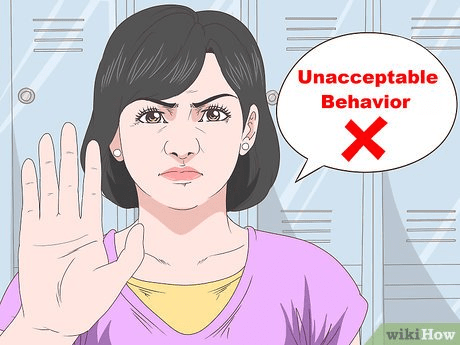
Image – Wikihow
Abusive adult children: a scary reflection
Have you ever looked in one of those magnifying mirrors that highlights every imperfection? Fine facial hair looks forest-thick, and skin pores appear as large as craters. But there’s a value in looking closely—even if, as a friend says, “Those magnifying mirrors are scary.”
Whose Mirror?
The perverse opinions of abusive adult children can make parents see themselves in a warped mirror. One that distorts them so much they no longer recognize themselves. This might have happened over time, or overnight.
“All I could see were my failures,” recalls Barbara. “My own daughter told me I ruined her life, and she had a million detailed memories of how I did everything wrong.”
Imagine waking up one day and seeing a monstrosity reflected. That’s how parents can feel when an adult child’s abuse includes blame, accusations, and twisted memories.
In the beginning, Barbara spoke up. “It was as if my daughter woke up one day and had brand new memories,” Barbara explains. “She recounted her life with a black cloud of doom over her head, and the cloud was me.”
Because the vast majority of parents want their children’s happiness above all else, they reevaluate themselves through the son or daughter’s perspective. They’re willing to look at how their choices may have been seen through their child’s eyes. All parents make mistakes. Also, it’s possible a child didn’t understand a parent’s choices, the motivation driving them, or what might have been happening behind the scenes. Those sorts of things can be discussed and worked out by willing parties.
Unfortunately, of the one hundred or more emails I receive from parents of estranged or abusive adult children each week, many of them have tried—unsuccessfully. Barbara certainly did. Offers for mediation, counselling, or to just sit down and talk, have been met with such things as flat-out refusals, silence, or more abusive rants.
Seeing the real you
Many parents are surprised to find that there are so many like them who have suffered from cruelty, abandonment, put-downs, and endless blame. And because it’s a controversial subject, they’ve been afraid to tell anyone for fear of judgment. Or, as is often the case, they’re keeping quiet to protect their adult child’s reputation.
Barbara knew she had done her best. She’s like other parents whose self-image can get lost to a flawed reflection provided repeatedly by abusive adult children. I routinely hear from parents convinced they’re failures, deserving of the pain or abandonment their sons and daughters inflict. After all, they reason, if they were a good mother or father, their children would love them.
They may try everything to maintain a relationship. Barbara’s daughter threatened to keep her grandchildren away, so she walked on eggshells. “If I said anything out of line, which could be anything depending on her mood, then the tirade would begin.” Eventually, Barbara’s then 36-year old daughter began posting lies on Facebook about her. At the time, Barbara was recovering from surgery. At her breaking point, she replied, publicly asking her daughter why she’d lied. The postings were deleted, but Barbara’s daughter went no-contact. “It wasn’t the first time,” says Barbara. “But it has been the longest estrangement so far.”
With a health scare that became a turning point, Barbara knew she had to make a change. That’s when she began to look for help. But after years of warped opinions from an abusive adult child, she had little self-confidence. “If I raised this person who turned out to be so cruel, then how could I be a successful mother?” she asks. “My daughter had reminded me what a failure I was every chance she got.”
Take a closer look.
When suffering parents discover my book, they tell me they’re shocked to read so many experiences that mirror their own. And although it’s sad to know there are so many suffering, the knowledge is also heartening. They’re no longer alone. In reading other parents’ accounts, they get a clearer view. They see themselves in others’ stories, and recognize they were also good parents who did their best.
Once parents have a clearer reflection, they can explore positive changes to help themselves move forward in their own lives. One of the first steps is to look more closely at how much an abusive adult child has affected their lives. The inflicted suffering entails more than sadness and grief. Bitterness, lack of confidence, anger, fear, and anxiety have often crept in. In Done With The Crying: Help and Healing for Mothers of Estranged Adult Children, there are many exercises, and one designed specifically to help with this vital step. Holding the magnifier up to examine changes in themselves is one of the first steps to making positive, concrete plans to regain confidence, find meaning, and happiness again.
Take action.
One woman who found this website and my book after 20 years of grief described her life as a “living death.” Now, she’s glad to have found a way out of the roller-coaster of emotions, the shame and sorrow, and to stop crying and to start celebrating life.
Barbara says it’s too late to reconcile with her daughter. There has been too much heartbreak, and her daughter has refused any sort of counseling or mediation. “I miss my grandchildren,” she says, “but I’m hoping to one day see them again.”
Barbara’s expresses the sentiment of many grandparents who, due to estrangement, have lost touch with precious ones. But I sometimes hear from grandparents who have received their wish. There’s a knock at the door one day, and it’s a grownup grandchild with that same sweet smile, wanting to reconnect. When that happens, you’ll want to be ready, so take care of yourself. As one grandmother recently advised, “Get dressed and put on lipstick every day.”
Don’t wait and hope, mired by inaction that only adds to your grief. You can clean the mirrors of guilt and shame and see yourself for the loving parent you have always been. Like thousands of parents who are learning to accept what they cannot change, and see their goodness again, you can be done with the crying. Take action for yourself and your happiness by reading more of the articles at this site, getting Done With The Crying: Help and Healing for Mothers of Estranged Adult Children and committing to the included exercises. Subscribe to my email newsletter (below) and take the survey. By taking action, you can be like so many parents who have recovered from the sadness and pain caused by abusive adult children, on-and-off or full-on estrangements. Treasure your life. You can find happiness and meaning again.
Everyone lies. It’s a part of life, for better or for worse. Some people find peace in white lies and don’t feel bad about occasionally avoiding the truth to spare a loved one’s feelings. Others, however, see lying, even major lies, as something completely inconsequential.
Pathological lying goes far beyond the standard lies most people tell. Pathological liars lie about all kinds of things, big and small, for seemingly no reason whatsoever. Individuals with this personality trait may lie about innocuous things, like weekend plans, or larger topics, like past experiences, work, schooling or relationships. This may seem like nothing more than an obnoxious personality trait — and in some cases, it is — but lying to this level can also be a symptom of a larger problem. When narcissistic pathological lying begins to interfere with someone’s personal life or the lives of those around them, it may be time to consider a conversation with a therapist or other trained mental health professional.
Defining Pathological Lying
Pathological lying is a behavior pattern in which individuals lie chronically or compulsively. Sometimes referred to as mythomania or pseudologia fantastica, pathological lying generally manifests as lying for lying’s sake. In some cases, individuals may lie to make themselves look better, but in others, they may have no good reason to lie or gain nothing from the act of lying. Being the friend or family member of a pathological liar can be very frustrating, as it’s hard to tell what’s a lie and what isn’t or when a liar can be trusted.
There may be biological drivers behind pathological lying. One study found that central nervous system behavior may influence a propensity for lying, and another found evidence of lying due to an imbalance in the hormone-cortisol ratio. However, due to the differences in the nature of lying and the purposes of lying from one individual to another, there’s not always clear logic behind when or why pathological lying occurs.
“Sometimes lying can be a coping response, often starting in childhood, for some psychological or personality issue that may not be at first visible, it is important to see past just dealing with the lying to uncover the cause,” shares Dr. Beau A. Nelson, DBH, LCSW, Chief Clinical Officer at FHE Health.
Mental Health Disorders
Mental health disorders can and do play a role in pathological lying and may be a contributing factor. In many instances, getting a diagnosis can be the first step to addressing chronic lying.
Determining the difference between lying for social or personal reasons and lying due to mental illness can be a challenge. However, there are often differences in the manifestation of lying in those with mental illnesses versus those who lie for other reasons. For example, there are links between mental illness and believing your own lies; liars with other motivations often don’t believe what they’re saying.
Narcissistic personality disorder. Also called NPD, narcissistic personality disorder manifests as arrogant and self-centered behavior with little regard for other people’s feelings. Narcissistic pathological liars may lie for attention, to make themselves feel better, to feel superior to others or to manipulate others for the purposes of self-gain.
Obsessive-compulsive disorder.Obsessive-compulsive disorder, or OCD, is a mental disorder that features intrusive thoughts and feelings, or obsessions, and a strong urge to perform certain behaviors, or compulsions. In some cases, there are ties between OCD and compulsive lying. Lying can be a true compulsion in a person with OCD experiences, or it can be a negative coping method.
Anxiety disorders. Anxiety can manifest in numerous ways, from acute episodes to more generalized anxiety. While pathological lying isn’t a defining feature of anxiety as it is with other disorders, such as NPD, anxiety and compulsive lying can sometimes go hand in hand. People with anxiety disorders may lie to protect themselves from anxiety triggers or to handle things like a fear of rejection.
Antisocial personality disorder.Antisocial personality disorder is a serious diagnosis that often involves manipulation and cruelty toward others for the sake of personal amusement. It’s often associated with psychopathy. Those with APD might compulsively lie to manipulate the people around them, hurt others’ feelings or otherwise cause harm.
Other Reasons for Pathological Lying
While pathological lying can be linked to mental health disorders, it isn’t always. There are numerous other reasons people may lie with abandon, including:
Insecurity. Some people feel very insecure about who they are and might lie in an effort to make themselves feel better or inflate their own sense of self-worth. Lying may also be a defense mechanism to prevent ridicule or social exclusion. Lying under these circumstances is often quite transparent.
Social status. For those who value social status, lying may be a way to maintain a reputation. For example, communities focused on looks or financial status may look down on behaviors they perceive as lesser. Participants in these kinds of communities, like country clubs or prestigious social organizations, may lie to fit in with their desired peers.
Humor. Though less common than other reasons, some people may lie often because they find it funny. They may not understand the frustrations that come with being lied to or may believe their lies are so egregious that no one would believe them.
Substance abuse. Many substance abusers have issues with honesty, but this is generally inspired by a desire to hide signs of abuse rather than lying for attention or sympathy.
Pathological lying can seem harmless, albeit annoying, but it may be the sign of a bigger problem. Compulsive lying can be a symptom of a mental health disorder or even substance abuse. If pathological lying is a problem in yourself or others, therapy can be a good place to start in getting to the bottom of an issue. Confronting another person about their lying can be challenging but may be a good way to bring a problem to light. When addressing a friend or loved one’s lying, be prepared with a plan, including examples of lies that have harmed relationships or other life circumstances.
How to Cope With a Pathological Liar
It can be challenging, even overwhelming, to maintain a close and trusting relationship with someone prone to pathological lying. The constant uncertainty and broken trust make it difficult to have such a person in your life. If the pathological liar is a close friend or family member or even a spouse, learning to cope with them is crucial to your own well-being.
First, it’s important to recognize that pathological lying is often a compulsion rather than a deliberate act of deceit. Much like a compulsive overeater who might not make a conscious choice to stuff themselves to the point of getting sick or causing health problems, the pathological liar probably isn’t choosing to intentionally spew falsehoods but is instead struggling with an overwhelming urge to fabricate.
You should also understand that pathological lying is usually not the underlying issue. Rather, it’s typically a symptom or manifestation of an underlying mental health condition. If you share a close relationship with someone who compulsively lies, consider gently encouraging them to seek professional help. If you can compel them to address the root cause of the issue, you can play an active role in their healing process.
Treatment for Pathological Lying
Because it isn’t a standalone medical condition, pathological lying doesn’t have a specific treatment. That said, it can often be treated by addressing the underlying mental health issue that causes it. For instance, if pathological lying is the result of a personality disorder, such as dissociative identity or borderline personality, treatments such as medication and cognitive behavioral therapy can make a major difference.
Getting help for mental health issues, including conditions that may lead to pathological lying, can be a critical step. Contact FHE Health today to learn more about our comprehensive treatment options.
Isnt it bad enough, that after you get the strength and courage to leave your narcissist, and after youve already lost your self-worth, your youth, your time, lots of your money, your sanity, and whatever else you lost because of being in a narcissistic relationship, now you have to lose your kids too? It just isnt fair; and it isnt right.
Youve watched your narcissist manage to convince joint friends and other community members and sometimes even family members that you are the crazy one and he/she is the victim, by his/her masterful manipulation strategies. People are hoodwinked and dont even realize it. Your good name is slandered. You feel alone, humiliated, discouraged, disheartened, and vengeful.
Now, your kids are subjected to the smear campaign against you and you find it is actually working. It is enough to make you either curl up in the fetal position and give up, or rage with anger like an erupting volcano. Of course, to do either would confirm the reality of the premise of the smear campaign that you are deranged and crazy.
And if you talk about the situation, others will not understand and will simply conclude on their own that the other party must be right you are psychotic. Its a no win situation. Say nothing and your name is tarnished. Say anything and your craziness is confirmed.
And if you talk to your own kids about the situation you are drawing them into the middle of your relationship problems with their other parent which is a big no no.
Does going no contact include going no contact with your own children as well?
When you seek help from a therapist, you often find that he/she is just as much at a loss as you, because those in the counseling community are often not well-equipped to handle such relationship dynamics. No one is, really.
The courts rarely help and often exacerbate the problem. And if your children are not minors, then court involvement is pointless. Besides that, you cant legally force anyone to see the truth. Denial is denial and brainwashing is not easily countered.
So, what is a parent to do under these circumstances? Here are some helpful suggestions:
Do not be defensive. I know this is hard, but it is essential for your own peace of mind. Remember, during your entire relationship with the narcissist you were always put on the defense. Dont let him/her continue to keep you on that course, even through your children. You dont have to defend yourself. You dont have to be a perfect human being, always showing others why you are worthy.
In practical terms, the way you do this is to change course whenever you have the feeling of defensiveness. If you feel defensive, then dont talk, dont try to get anyone else to see the truth. Go for a walk. Write in your journal. Call a friend and vent. Do something else until the feeling is no longer pressing you.
Be strong. Do not give into the feeling of hopelessness and defeat. You have no leverage if you give up and give in to your weakest self. Your children are best served by feeling your strength and by not seeing you being manipulated by the other parent. You are best served by remaining steadfast, stable, strong, and resolute.
Do not give in to the need for approval from your children. Hustling for the approval of any person is not healthy or wise, even if the person happens to be your offspring. Once you need your children to approve of you then you have given your power away to them (and by proxy, to the other parent.)In order to do this you must keep validating yourself and getting external validation from your safe relationships and from your spiritual resources.
Realize you are not alone. Other parents struggle too. While, being among company with other parents is not a solution to the problem, it is important for keeping a proper perspective. What I mean by this, is that other parents, even those not in narcissistic relationships, also struggle with relationship (and other) problems with their children.
Many parents have children that reject them or turn to drugs or unhealthy relationships despite their parents desires. Adult children often choose a lifestyle or belief system that is against everything their parents stood for while raising them. There will be no good end to trying to force your children to see things your way.
Many parents also struggle with other difficult parenting conditions, such as having their children face some personal problem where the parent was unable to help such as a health problem, bullying or criminal or other out of their control situation.
Keep a healthy perspective.As mentioned above, it is important to keep the proper perspective. Having a balanced perspective is necessary for keeping your sanity. The best way to do this is to not react on your feelings, but rather to think things through with balance and maturity.
In essence, don’t horriblize the situation, remain calm, and be a problem solver. Reacting with strong emotions will not help you, thinking things through unemotionally will help you in the end. Look at the big picture, and resist the urge to join, “The War of the Roses” with your ex.
State your position once and then move on. It is fair for you to state your position on a matter to your children in order to shed light on the truth. Having your own voice is important for recovery from narcissistic abuse. That being said dont be a broken record; state your position once, and move on.
Practice Acceptance. Dont dwell on the negativity of it all. Narcissists do nothing but create a vortex of drama that leads your life into a cesspool. Drag yourself out of the cesspool and land on solid ground, where peace and sunshine abound. Dont allow the narcissist to steal your joy, even if he/she manages to manipulate your children into his/her web of deception and ugliness.
The complexity of grief is difficult to describe or understand, especially when it’s a family member one has been estranged from.
We have every right to feel sad, angry, resentful, or even guilty, whether the estrangement was our choice or not.
When we lose those we were distanced from, the pain is still there. Yet, many do not understand, so it can feel isolating.
Grieving the loss of a parent from whom you were estranged is a very difficult experience. You have the grief that comes from loss and the permanence of death. Death is a very traumatic experience, and that grief can never be replicated or compared. However, the grief that follows when someone has been estranged from a family member or loved one can sometimes feel worse. It is filled with guilt, shame, and a sense of loss—or of grieving what wasn’t there.
With estrangement, there is so much unknown: Some people might struggle with guilt or anger, having wanted a reconciliation, yet they are unable because it is too late. This brings the loss of what could have—and should have— been, coupled with the knowledge of what is unattainable. Many others might struggle with resentment. One client put it perfectly: “I don’t even have the luxury of grieving the loss of my dad because, instead, I’m grieving the loss of who my dad was—and our lack of a healthy relationship.” My client echoed the feelings and sentiments that many others, myself included, have felt.
The questions and judgments from others make it all the more difficult for survivors of estrangement. There are the insensitive and unaware questions or comments such as “But they’re your family; you should have talked to them” or guilt trips such as “Why are you sad? You didn’t talk to them anyway.” To someone who has never been estranged, it’s impossible to understand. To them, it might just seem like a petty argument or disagreement, and they might automatically blame the survivor for their feelings of grief.
Many estrangements are due to traumas, conflict within the family, mental illness, abuse, or other elements that make the relationship difficult—or impossible—to navigate. Too many well-meaning friends will tell you to “just move on,” not knowing that it’s not that simple. Comments like this place the blame for the estrangement on an already vulnerable and often traumatized individual.
Here are five steps to help you navigate the grief experience of losing a parent from whom you were estranged:
Validate and honor your feelings. You have every right to feel sad, angry, resentful, or even guilty. You do not owe anyone an explanation for these feelings, nor do you need permission to feel them. Survivors of family estrangement are often blamed for the estrangement, whether it was your choice or not, and are often made to feel that their feelings aren’t valid with comments such as “Well, you didn’t talk anyway, so it can’t be that hard.”
Negative feelings do not mean you need to act differently. Many survivors feel that negative feelings, specifically guilt, mean we were wrong and that the estrangement was our “fault,” or that there was something we should have done differently. This is not only unfair, but it is also unrealistic. Allow yourself to acknowledge these feelings, but try not to let them gaslight you into thinking your experiences didn’t happen.
Seek support from those who understand. During your grieving process, choose to spend time with those who validate you and your feelings. Whether they are friends, family, support groups, or others who understand, you need people in your corner who are not going to challenge your feelings or make you feel like you have to “prove” your grief, which can make you feel misunderstood and uncomfortable.
Remember that grief is like riding a wave. You will have good days, or even good weeks, when you think you’re all done grieving, only to hear a familiar song or smell a nostalgic smell that brings you right back. Know that this is normal and that it is part of the process.
Seek professional support if needed. Do not be afraid to seek professional support from a therapist. Navigating grief is extremely difficult, especially if there was any sort of dysfunction in the family relationship. Most of my clients have histories of traumatic or dysfunctional families, and the death of a parent or family member does not take that dysfunction away. They still have the unhealthy messages and unhealed traumas to unpack and work through—even more with the addition of grief.
Here is a list of the 12 essential factors I concluded about father loss:
1. The depth of a woman’s attachment to her father is profound. Whether the relationship was good or bad, long or short, happy or sad, her father has had an enormous impact on her life, and his influence will never end.
2. Fear of abandonment is the hallmark of the fatherless daughter. Directly linked to fear of abandonment are many other emotional problems, including issues with intimacy, sex, trust, commitment, shame, and most of all, anger.
3. Death of a father, because of its finality, is commonly thought to offer closure to a fatherless daughter. This is not necessarily true.
4. Abandonment by a father, if the father is still alive, is commonly thought to offer hope to a fatherless daughter. This is not necessarily true.
5. If your mother coped with strength, intelligence, and empathy toward you after your father’s death or abandonment, the chances are good that you were spared many of the problems faced by fatherless daughters.
6. Stepfathers can be a God-send or a tragedy.
7. Alcoholism is a frequent problem among the mothers, fathers, and stepfathers of fatherless daughters.
8. If, as an adult, you have put together a happy relationship with a husband or partner, you are well on your way toward resolving your father loss issues.
9. Your life would not necessarily have been better if your father had been present in the family; different, certainly, but not necessarily better.
10. You are not responsible for hurts you endured as a child, but you are responsible for your life today. You must rely on yourself.
11. It’s never too late to “find” your dad-and to come to terms with his loss.
12. Coming to terms with the loss of your dad–and forgiving all those who may have let you down– is liberating, freeing you to experience life, love, peace, and happiness.
Based on these findings, it may appear that fatherless daughters are doomed to neurotic, unsatisfied lives. This is hardly the case. Many of the most accomplished women in history and at work in our world today are fatherless daughters.
For example, I was startled to learn how many actresses lost their fathers early in life, including Myrna Loy, Jean Harlow, Bette Davis, Lucille Ball, Angela Lansbury, Julia Roberts, Barbra Streisand, Jodie Foster, Tracy Ullman, Sophia Loren, Rene Russo and Cate Blanchette, to name just a few. Many of these women supported their families single-handedly for their entire lives.
In addition, many women from the world of feminism and politics were or are also fatherless daughters, either the result of death or divorce, including Eleanor Roosevelt, Gloria Steinem, Bella Abzug, Olympia Snow, and Geraldine Ferraro.
Today, as I write this, Sonia Sotomayor, a 54-year-old woman of Puerto Rican descent, raised in the Bronx, New York, became the first person of Hispanic descent to sit as a judge on the Supreme Court of the United States. One pivotal factor in Judge Sotomayor’s personal history is that her father died when was nine,
For me, like Paris Jackson, Judge Sonia Sotomayor is a quintessential face of father loss.
I have had clients speak to me about their dilemma of wanting to keep their loved on alive even though they have reached the end of their time. If the loved one is terminally ill and suffering it is better to do what is best for your loved one. Although this is a difficult choice, it is a brave and unselfish act to agree to let them go.
This article may be helpful to those who find themselves in this situation.
Many recent news stories have focused on right-to-die issues — what options might we want, and what control can we exert, as we approach the end of life? When death is sudden and unexpected, there are few choices, and if there has been no preparation for this moment, events will unfold as medical and emergency staff see fit. But when illness is chronic or prolonged, or when pain, frailty and old age impact the quality of life, there are measures we can take to have our wishes respected, to share those wishes with others, and to request a dignified, comfortable death.
An NPR story last year examined why some health care providers are hesitant to discuss end-of-life measures, even with seriously ill patients. There are many reasons: not enough time; not wanting the patient to give up hope; discomfort with the topic. One suggestion has been to initiate a physician-patient discussion about end-of-life issues automatically each year. Not all patients welcome the discussion, but sometimes the increased feeling of control actually can make patients with long-term illnesses feel better. They can decide, for example, to refuse certain medical treatments. They can decide if they want “heroic measures” — feeding tubes, CPR, ventilators, defibrillators — to prolong their lives when a desirable quality of life (however one may define that) might not be possible.
Making these decisions isn’t easy, and for family members and friends, accepting these decisions may be challenging, even traumatic. In our recent NewsHour columns, we talked about Advance Directives, hospice care, and other measures designed to make — as much as possible — the end of life a more peaceful transition for the patient. But watching someone you love slip away can be so overwhelming that it is instinctive to want to do everything possible to keep that person alive, even against their own wishes. How do you accept letting go?
Where to begin
Sometimes we hear from our clients that the person they are caring for wants to discuss these matters, but they or their family members are reluctant to face the issue. Below are some ideas to help begin the process to help clarify decisions about the end of life. Experts advise that you begin by thinking and talking about values and beliefs, hopes and fears. Consult with health care practitioners when you need more information about an illness or treatment.
Consider first the questions below:
What makes life worth living?
What would make life definitely not worth living?
What might at first seem too much to put up with, but then might seem manageable after getting familiar with the situation and learning to deal with it?
If you knew life was coming to an end, what would be comforting and make dying feel safe?
What, in that situation, would you want to avoid?
How much control is important for you to have when facing a terminal illness?
Then, if you have the opportunity, and before a loved one is incapacitated, try to explore these more specific questions:
Whom do you want to make decisions for you if you are not able to make your own, on both financial matters and health care decisions? The same person might not be right for both.
What medical treatments and care are acceptable to you? Are there some that you fear?
Do you wish to be resuscitated if you stop breathing and/or your heart stops? What if there is no hope for full recovery?
Do you want to be hospitalized or stay at home or somewhere else if you are seriously or terminally ill?
How will your care be paid for? Have you overlooked something that will be costly at a time when your loved ones are distracted by grieving over your condition or death?
Will your family be prepared for the decisions they may have to make?
Write the responses down, and share with family members. To formalize the process, you can complete an Advance Directive and POLST (Physician’s Orders for Life-Sustaining Treatment). Both documents can be revised at a later date if you wish.
A note: This process is not appropriate for everyone. There may be historic, religious or cultural differences within families that affect their willingness to discuss these deeply personal matters. If it makes sense to bring up these topics, do so. If it is not something that your family is comfortable with, you might not be able to get the answers you seek. You can try again at a later time — or perhaps not at all. Families have their own dynamics, and for some, this discussion simply may not be achievable or desirable. In the case of a serious illness, events will unfold as they may. That is also a choice, and must be respected.
Letting Go
Even after the conversations are held and legal documents completed, reaching acceptance that a person is dying is a difficult path for the individual who is ill as well as for their family members. The person who is ill doesn’t want to cause grief. She may feel there is unfinished business within the family — a reconciliation not completed, an “I love you” never stated out loud. He may be fearful of pain, of the loss of control, of the loss of dignity. And of course family members share these fears. They may dread the grief or fear of losing this critical person in their lives. They may want to attempt the very measures — the heroic measures — that the individual specifically stated he or she does not want.
Despite the pain of grief for those we love, being able to let them go is not about our needs, nor about the physician’s need to try to heal even in the face of impossible odds. It is about what our loved ones need and want to reduce their suffering and help them die in dignity. When those wishes have been talked about, and when they are in writing, a family has the comfort and assurance that they are doing the right thing if they are asked to give permission to accept comfort measures instead of life-sustaining interventions.
A natural process sometimes occurs as an illness progresses. As death nears, many people feel a lessening of the desire to live longer. Some people describe a profound tiredness. Others may feel they have struggled as much as they have been called upon to do and will struggle no more. A family’s refusal to let go can prolong dying, but cannot prevent it. Dying, thus prolonged, can become more a time of suffering than of living.
Family members and friends may experience a similar change. At first, we may adjust to managing a chronic illness, then learn to accept a life-limiting illness, then accept the possibility of a loved one’s dying. Finally, we may see that dying is the better of two choices, and be ready to give the loved one permission to die. The dying person may be distressed at causing grief for those who love them, and, receiving permission to die can relieve their distress. There is a time for this to happen. Before that, it feels wrong to accept a loss, but after that it can be an act of great kindness to say, “You may go when you feel it is time. I will be OK.”
At the time a person is near death, sometimes touch is the best communication. Gentle stroking of a hand or a cheek, and quietly reassuring the person that you love them and that you will be all right is perhaps the most compassionate way to ease your loved one on his journey. In a situation where you are not present at the time of death, forgive yourself and know that you did the best you could to make the final hours or weeks of life peaceful and meaningful.
Grief
Each individual grieves in his or her own way and for an unpredictable amount of time—there is no “correct” way. Grief affects us emotionally, physically and spiritually. There is a deep understanding that nothing will ever be the same. Grief is most acute when someone dies or shortly thereafter, but there are also the effects of “anticipatory grief” and what is sometimes called “ambiguous loss.”
When someone has a long-term illness such as terminal cancer or Alzheimer’s or Parkinson’s disease, we may begin a grieving process long before the person passes away. Particularly when an illness causes cognitive or memory decline, we grieve the person who used to be. They were our partners, our siblings, our parents. We remember their personalities, their intelligence, energy, talent, humor. They were our best friend, companion, adversary, advisor or confidante. As those characteristics fade with increasing illness, we start grieving their loss. The body may be there, but the person has changed irrevocably. It may have been difficult, frustrating and exhausting to care for the individual, and sometimes, caregivers see death as a relief. As a consequence, for many family caregivers, there is an extreme feeling of guilt over that relief. This is not an unusual reaction, but if the emotions persist, counselling or support groups may help you get through the conflicting and troubling feelings.
For other people, there is a delay in feelings of grief, or the feelings may be buried or expressed in different ways — withdrawal, anger, escape through drugs or alcohol, or intense involvement in work. Grief reactions may be unexpected and waves of painful memories may assault you at unpredictable times. The anniversary of a person’s death or other important dates can be particularly tough. However the process unfolds, take care of yourself, cry when you need to, seek solitude if that helps, and try to give yourself the space you need to reach an even keel.
While the passing of time will not erase feelings of loss, the intensity will ease somewhat as months and years go by. If you find it too difficult to move on with your life, you may be facing situational depression. Find time to talk with a grief counselor or attend a grief support group (often available from hospice). It is very important to take good care of — and be kind to — yourself. The organizations and resources listed below, or those in your personal or faith network, may also be able to help as you move through this profound experience — one we all must face at some time in our lives. One that makes us human.
Why families need to pay more attention….. by Peg Streep
Perhaps, given the biblical story of Cain and Abel, it shouldn’t have come as a big surprise but in interviews for my forthcoming book on verbal abuse, I was struck by how many respondents reported being verbally abused by a sibling in their families of origin. In some cases, the abuse was an echo of parental verbal abuse, and the abuser was joining in both to keep him or herself safe from becoming the target and to establish loyalty to the abusive parent. This is especially true in a family where a mother or father is high in narcissistic traits, hypercritical, controlling, or highly combative. In these families, siblings are frequently pitted against each other. That was true for “Joe,” now 42:
“My father was a tyrant; there was a right way of doing things, which was his way, and a wrong way, and woe to the son who didn’t do it his way. My mother was his accomplice, using shaming to get us to stay in line, and praising the merits of ‘sibling rivalry.’ My brother is five years older and he bullied me to show my dad how strong he was. Believe it or not, I thought this was how all brothers were until I started to notice that my friends had brothers who were actually friends. I have as little to do with my parents and brother as possible and I have worked hard at making sure my own boys are never compared to each other or encouraged to belittle each other.”
This story focuses on a son’s experience but it happens between sisters as well, especially when a mother or father plays favourites or uses the achievements of one daughter to belittle or browbeat another, and the favoured daughter becomes verbally abusive to her sibling as well.
How the term “sibling rivalry” blinds us to sibling abuse
KEY POINTS
The term “sibling rivalry” can mislead parents, leading them to ignore sibling abuse.
Healthy competition requires balance of power between siblings. Parents can contribute by not playing favorites or using competion to criticize.
Physical aggression is strikingly common between and among siblings. Surprisingly, it can teach valuable skills when it is mutual or dyadic.
Sibling abuse is about power. It is always one-sided.
Source: Obie Fernandez/Unsplash
Perhaps, given the biblical story of Cain and Abel, it shouldn’t have come as a big surprise but in interviews for my forthcoming book on verbal abuse, I was struck by how many respondents reported being verbally abused by a sibling in their families of origin. In some cases, the abuse was an echo of parental verbal abuse, and the abuser was joining in both to keep him or herself safe from becoming the target and to establish loyalty to the abusive parent. This is especially true in a family where a mother or father is high in narcissistic traits, hypercritical, controlling, or highly combative. In these families, siblings are frequently pitted against each other. That was true for “Joe,” now 42:
“My father was a tyrant; there was a right way of doing things, which was his way, and a wrong way, and woe to the son who didn’t do it his way. My mother was his accomplice, using shaming to get us to stay in line, and praising the merits of ‘sibling rivalry.’ My brother is five years older and he bullied me to show my dad how strong he was. Believe it or not, I thought this was how all brothers were until I started to notice that my friends had brothers who were actually friends. I have as little to do with my parents and brother as possible and I have worked hard at making sure my own boys are never compared to each other or encouraged to belittle each other.”
This story focuses on a son’s experience but it happens between sisters as well, especially when a mother or father plays favorites or uses the achievements of one daughter to belittle or browbeat another, and the favored daughter becomes verbally abusive to her sibling as well.
How the term “sibling rivalry” blinds us to sibling abuse
But, sometimes, a sibling’s verbal abuse isn’t an echo but an act of individual aggression, and it’s sad that parents don’t always recognize it as such and write it off as a function of “sibling rivalry” — a supposedly a “normal” occurrence in families with more than one child.
In his 2012 book Sibling Aggression, Jonathan Caspi noted that this normalization isn’t just limited to laypeople but to professionals as well. He writes that despite a growing body of research which shows otherwise, “the mistaken belief that sibling violence is not harmful normalizes it. Statements such as ‘My brother beat on me and I am fine’ and ‘Boys will be boys’ minimize honest appraisals of possible effects and validate its continued use.” He notes that practitioners too grew up with the same social context—thinking that sibling aggression is normal—and so their judgments about family dynamics are often clouded by their own internalized views. He surmises that this point of view limits research as well. He uses sibling aggression as an umbrella term which encompasses four categories which he arranges in order of effect, going from most mild to severe; in order, they are competition,conflict,violence, and abuse.
Understanding competition between siblings
Healthy competition can motivate and challenge siblings to develop their skills and talents. Famous siblings in sports — the Williams sisters or the Manning brothers — immediately come to mind. But when the aim of the competition is to highlight one sibling’s flaws or inadequacies, competition moves from being inspirational to being hurtful and damaging. (Think about the Jackson Five, their siblings, and their abusive father, for example.) Caspi notes that most of the time, one sibling’s advanced skills don’t damage another’s self-esteem.
Surveying conflict in sibling relationships
Every family experiences some amount of conflict and, as Caspi notes, constructive sibling conflict promotes social and emotional competence, teaches problem-solving, and helps a child hone his or her emotional regulation. My own thought is that, for this to happen, parents have to have modeled and implemented cooperative ways of dealing with disagreements and conflict. In households where verbal abuse is the default, this isn’t going to happen.
But even in a household where constructive behaviour has been modelled, it’s clear that constant negative conflict between siblings can alter the dynamics of a family as well as the sibling relationship.
Is roughhousing violence between siblings?
Caspi notes that the terms sibling violence and sibling abuse are often used interchangeably because they both entail physical and verbal acts that intend to do harm. However, he distinguishes violence from abuse. He writes: “Violence reflects mutual or bidirectional aggression in which both siblings aim to harm each other in a concert of perceived egalitarian relationship.” Sibling physical violence — hitting, biting, pinching, kicking — is astonishingly prevalent; some researchers’ estimates are as high as 96 percent of all families while others put it at 80 percent. But, as Caspi points out, physical violence is very difficult to distinguish from animated roughhousing or even rough-and-tumble play so these numbers may be greatly inflated because of parental confusion about what’s “normal” between siblings and what’s not. Most importantly, research supports Caspi’s contention that this kind of mutual sibling violence doesn’t damage self-esteem.
Some readers will share my initial confusion, reading that this “even-steven” and mutual mano a mano type of violence isn’t necessarily harmful or damaging, but that is what research shows. Let’s consider rough-and-tumble play, for example. Joseph L. Flanders, Vanessa Leo, and their colleagues cite research showing that physically aggressive behaviors are observable as early as 18 months but begin to taper off in most children by age two or three; their study looked at father-child rough-and-tumble play (RTP) to determine whether a father’s behavior influenced a higher incidence of continuing physical aggression in children. It’s widely recognized that fathers play with children differently than mothers do, regardless of gender, and that kids prefer Dad’s style of play over Mom’s.
KEY POINTS
The term “sibling rivalry” can mislead parents, leading them to ignore sibling abuse.
Healthy competition requires balance of power between siblings. Parents can contribute by not playing favorites or using competion to criticize.
Physical aggression is strikingly common between and among siblings. Surprisingly, it can teach valuable skills when it is mutual or dyadic.
Sibling abuse is about power. It is always one-sided.
Source: Obie Fernandez/Unsplash
Perhaps, given the biblical story of Cain and Abel, it shouldn’t have come as a big surprise but in interviews for my forthcoming book on verbal abuse, I was struck by how many respondents reported being verbally abused by a sibling in their families of origin. In some cases, the abuse was an echo of parental verbal abuse, and the abuser was joining in both to keep him or herself safe from becoming the target and to establish loyalty to the abusive parent. This is especially true in a family where a mother or father is high in narcissistic traits, hypercritical, controlling, or highly combative. In these families, siblings are frequently pitted against each other. That was true for “Joe,” now 42:
“My father was a tyrant; there was a right way of doing things, which was his way, and a wrong way, and woe to the son who didn’t do it his way. My mother was his accomplice, using shaming to get us to stay in line, and praising the merits of ‘sibling rivalry.’ My brother is five years older and he bullied me to show my dad how strong he was. Believe it or not, I thought this was how all brothers were until I started to notice that my friends had brothers who were actually friends. I have as little to do with my parents and brother as possible and I have worked hard at making sure my own boys are never compared to each other or encouraged to belittle each other.”
This story focuses on a son’s experience but it happens between sisters as well, especially when a mother or father plays favorites or uses the achievements of one daughter to belittle or browbeat another, and the favored daughter becomes verbally abusive to her sibling as well.
How the term “sibling rivalry” blinds us to sibling abuse
article continues after advertisement
But, sometimes, a sibling’s verbal abuse isn’t an echo but an act of individual aggression, and it’s sad that parents don’t always recognize it as such and write it off as a function of “sibling rivalry” — a supposedly a “normal” occurrence in families with more than one child.
In his 2012 book Sibling Aggression, Jonathan Caspi noted that this normalization isn’t just limited to laypeople but to professionals as well. He writes that despite a growing body of research which shows otherwise, “the mistaken belief that sibling violence is not harmful normalizes it. Statements such as ‘My brother beat on me and I am fine’ and ‘Boys will be boys’ minimize honest appraisals of possible effects and validate its continued use.” He notes that practitioners too grew up with the same social context—thinking that sibling aggression is normal—and so their judgments about family dynamics are often clouded by their own internalized views. He surmises that this point of view limits research as well. He uses sibling aggression as an umbrella term which encompasses four categories which he arranges in order of effect, going from most mild to severe; in order, they are competition,conflict,violence, and abuse.
Understanding competition between siblings
Healthy competition can motivate and challenge siblings to develop their skills and talents. Famous siblings in sports — the Williams sisters or the Manning brothers — immediately come to mind. But when the aim of the competition is to highlight one sibling’s flaws or inadequacies, competition moves from being inspirational to being hurtful and damaging. (Think about the Jackson Five, their siblings, and their abusive father, for example.) Caspi notes that most of the time, one sibling’s advanced skills don’t damage another’s self-esteem.
Surveying conflict in sibling relationships
Every family experiences some amount of conflict and, as Caspi notes, constructive sibling conflict promotes social and emotional competence, teaches problem-solving, and helps a child hone his or her emotional regulation. My own thought is that, for this to happen, parents have to have modeled and implemented cooperative ways of dealing with disagreements and conflict. In households where verbal abuse is the default, this isn’t going to happen.
But even in a household where constructive behavior has been modeled, it’s clear that constant negative conflict between siblings can alter the dynamics of a family as well as the sibling relationship.
Is roughhousing violence between siblings?
Caspi notes that the terms sibling violence and sibling abuse are often used interchangeably because they both entail physical and verbal acts that intend to do harm. However, he distinguishes violence from abuse. He writes: “Violence reflects mutual or bidirectional aggression in which both siblings aim to harm each other in a concert of perceived egalitarian relationship.” Sibling physical violence — hitting, biting, pinching, kicking — is astonishingly prevalent; some researchers’ estimates are as high as 96 percent of all families while others put it at 80 percent. But, as Caspi points out, physical violence is very difficult to distinguish from animated roughhousing or even rough-and-tumble play so these numbers may be greatly inflated because of parental confusion about what’s “normal” between siblings and what’s not. Most importantly, research supports Caspi’s contention that this kind of mutual sibling violence doesn’t damage self-esteem.
Some readers will share my initial confusion, reading that this “even-steven” and mutual mano a mano type of violence isn’t necessarily harmful or damaging, but that is what research shows. Let’s consider rough-and-tumble play, for example. Joseph L. Flanders, Vanessa Leo, and their colleagues cite research showing that physically aggressive behaviors are observable as early as 18 months but begin to taper off in most children by age two or three; their study looked at father-child rough-and-tumble play (RTP) to determine whether a father’s behavior influenced a higher incidence of continuing physical aggression in children. It’s widely recognized that fathers play with children differently than mothers do, regardless of gender, and that kids prefer Dad’s style of play over Mom’s.
article continues after advertisement
RTP is characterized by aggressive behaviours such as “wrestling, grappling, jumping, and chasing in a play context.” Fathers often socialize both sons and daughters through this kind of physical play which is associated positively with emotional regulation, self-control, reading emotional cues, and even sensitivity to others. These are important skills for self-development and permit children to negotiate social rules in peer settings with more ease. What Flanders and his team found was that when fathers controlled and set limits during RTP, their children demonstrated lower levels of physical aggression in daily life; in contrast, the children of fathers who didn’t set limits and shucked off dominance were more likely to be more physically aggressive in later life.
So mutual or bi-directional physical aggression actually has its benefits, as counterintuitive as that may seem.
When it’s not mutual, it’s abuse
The distinction that Caspi makes between violence and abuse largely rests on power; if he considers the first to be “bidirectional” or “mutual,” then sibling abuse is “unidirectional hostility where one sibling seeks to overpower the other via a reign of terror and intimidation, and reflects an asymmetrical power arrangement.” The abusive sibling not only wants to humiliate and render the other powerless but he or she is intent on aggrandizing him or herself through the act. Caspi notes four kinds of sibling abuse—physical, sexual, psychological or verbal, and relational—but verbal abuse is by far the most prevalent. Among siblings, verbal abuse includes insults, name-calling, and threats to property. Again, because siblings do chivy for attention in the household, it may be difficult for the parents to distinguish between chivying, an expression of frustration, and verbal abuse which is about dominance.
Beyond sibling rivalry
It’s clear that we need to retire the term. If you’re an adult who experienced sibling abuse but have rationalized or downplayed it, now’s the time to stop and reflect on its effects. Speak out. You may get pushback because families guard their narratives fiercely but it’s time you stepped out of the role assigned you, whether that’s the “sensitive one” or “the wuss.”
If you’re a parent of siblings, pay close attention to not just your behaviours but theirs. Step in if necessary.
(This person says it how it is, it may be ‘tough talking’ here, but they are right!)
(Image- Psychmechanics)
I thought I’d share this. Many of us deal with these types of not-quite-right adult children.
Narcissistic adult children demand you do what they want, try to control you, push every boundary, throw temper tantrums, blackmail you by withholding their love or your grandchildren, try to bribe you with sweetness and affection when they want something, and blame their behaviour on you.
Every time you give them what they want, they demand something else. They say your job is to make them happy. They try to stimulate your guilt and shame for every sin they say you committed when they were kids.
What a nasty and unending list. If you were an average parent or better (you didn’t need to be perfect according to them), don’t accept blame and guilt. You don’t deserve to be used and abused. You don’t owe them anything anymore. Probably, your only big mistake was giving in to them too much, hoping they’d wake up one day straightened out and loving like they were when they were infants. Don’t hold your breath waiting for that miracle.
Selfish, narcissistic, manipulative bullies misinterpret your kindness and compassion as weakness and an invitation to demand more. They think they’re entitled to whatever they want. They always have reasons, excuses and justifications for being obnoxious. They claim their problems and rotten lives are all your fault. Their justifications will last forever.
I’ve never seen parents be able to purchase respect and civility from these narcissistic adult children. There’s no hope down that path. Stop meddling and enabling them. These adult children will remain predators as long as you feed them.
The only path with hope is to stop giving them anything, to demand civil behavior or to cut off contact. Don’t debate or argue about who’s right. Tell them you know they’re strong enough to make wonderful lives for themselves. Be full of joy when you protect yourself and your future because, really, you are taking your life back. Now you can enjoy the rest of your life. You can surround yourself with people who respect and admire you, with people who are fun to be with.
Of course it’s hard and there are usually many complications. But if you continue to feed to them while they rip your heart out, you’ll be bled dry. Your life will shrivel up like a prune.
If your children are still kids, you have a chance to stop the patterns now. With a big smile, teach them that they won’t always get what they want, that they can’t always beat you into submission or bribe you into giving in. And that there are consequences for throwing temper tantrums. And they’re not destroyed when they don’t always get everything they want. And nothing is for free.
Develop the strength, courage, will and determination to be and to act your best resolutely, diligently and effectively.
Develop a plan and master the skills necessary to create the life your spirit has always hungered for.
Suicidal feelings can affect anyone, of any age, gender or background, at any time.
If you are feeling suicidal it is likely that you have felt increasingly hopeless and worthless for some time. You may not know what has caused you to feel this way but it is often a combination of factors.
Common causes of suicidal feelings
Struggling to cope with certain difficulties in your life can cause you to feel suicidal. These difficulties may include:
If you are unsure of why you feel suicidal, you may find it even harder to believe that there could be a solution. But whatever the reason, there is support available to help you cope and overcome these feelings.
Can medication cause suicidal feelings?
Some medications, such as antidepressants, can cause some people to experience suicidal feelings. This side effect is often associated with a type of antidepressant called selective serotonin reuptake inhibitors (SSRIs). But all antidepressants have this as a possible risk.
Some research shows that young people under the age of 25 are more likely to experience suicidal feelings when taking these medications.
If you experience suicidal feelings while taking psychiatric medication, you should talk to your GP as soon as possible about this.
Feeling suicidal
Suicide is the act of intentionally taking your own life.
Suicidal feelings can mean having abstract thoughts about ending your life or feeling that people would be better off without you. Or it can mean thinking about methods of suicide or making clear plans to take your own life.
If you are feeling suicidal, you might be scared or confused by these feelings. You may find the feelings overwhelming.
But you are not alone. Many people think about suicide at some point in their lifetime.
What does it feel like to be suicidal?
Different people have different experiences of suicidal feelings. You might feel unable to cope with the difficult feelings you are experiencing. You may feel less like you want to die and more like you cannot go on living the life you have.
These feelings may build over time or might change from moment to moment. And it’s common to not understand why you feel this way.
How you might think or feel
hopeless, like there is no point in living
tearful and overwhelmed by negative thoughts
unbearable pain that you can’t imagine ending
useless, not wanted or not needed by others
desperate, as if you have no other choice
like everyone would be better off without you
cut off from your body or physically numb
fascinated by death.
What you may experience
poor sleep, including waking up earlier than you want to
a change in appetite, weight gain or loss
no desire to take care of yourself, for example neglecting your physical appearance
How long suicidal feelings last is different for everyone. It is common to feel as if you’ll never be happy or hopeful again.
But with treatment and support, including self-care, the majority of people who have felt suicidal go on to live fulfilling lives.
The earlier you let someone know how you’re feeling, the quicker you’ll be able to get support to overcome these feelings. But it can feel difficult to open up to people.
You may want others to understand what you’re going through, but you might feel:
unable to tell someone
unsure of who to tell
concerned that they won’t understand
fearful of being judged
worried you’ll upset them.
If you feel like this, you might find it helpful to show our pages on supporting someone else with suicidal feelings to someone you trust. This can be a good way of starting the conversation and can give them suggestions of how they can help you.
It’s important to remember that you deserve support, you are not alone and there is support out there.
MythOne – Suicide is very uncommon. False. In the US, nearly 30,000 people die by suicide each year, and the rate of attempted suicide is much higher—so much so that there is an estimated one attempted suicide per minute. Worldwide, suicide claims more deaths than accidents, homicides, and war combined. And many cases of suicide, particularly in the elderly, go completely undetected and unaccounted.
Myth Two – People often commit suicide for rational reasons. False. Psychiatrists believe that over 90 per cent of cases of suicide are not the result of a rational decision but of mental disorder. Suicidal ideation can be particularly intense in people with a mental disorder who are unmedicated or who are resistant to or non-compliant with their medication, and/or who are experiencing certain high risk symptoms such as delusions of persecution, delusions of control, delusions of jealousy, delusions of guilt, and commanding second-person auditory hallucinations (for example, a voice saying, ‘Take that knife and kill yourself’).
Myth Three –People are most likely to commit suicide around Christmas time. False. Contrary to popular belief, the suicide rate peaks in the springtime, not the wintertime. This is probably because the rebirth that marks springtime accentuates feelings of hopelessness in those already suffering with it. In contrast, around Christmas time most people with suicidal thoughts are offered some degree of protection by the proximity of their relatives and the prospect, at least in the Northern Hemisphere, of ‘things getting better from here’.
Myth Four – The suicide rate rises during times of economic depression and falls during times of economic boom. False. The suicide rate rises during times of economic depression and during times of economic boom, as people feel ‘left behind’ if every Tom, Dick, and Harry seems to be racing ahead. Although economists focus on the absolute size of salaries, several sociological studies have found that the effect of money on happiness results less from the things that money can buy (absolute income effect) than from comparing one’s income to that of one’s peers (relative income effect). This may explain the finding that people in developed countries such as the USA and the UK are no happier than 50 years ago; despite being considerably richer, healthier, and better travelled, they have only barely managed to ‘keep up with the Joneses’.
Myth Five – The suicide rate rises during times of war and strife. False. The suicide rate falls during times of national cohesion or coming together, such as during a war or its modern substitute, the international sporting tournament. During such times there is not only a feeling of ‘being in it together’, but also a sense of anticipation and curiosity as to what is going to happen next. For instance, a study looking at England and Wales found that the number of suicides reported for the month of September 2001 (in the aftermath of 9/11) was significantly lower than for any other month of that year, and lower than for any month of September in 22 years. According to the author of the study, these findings ‘support Durkheim’s theory that periods of external threat create group integration within society and lower the suicide rate through the impact on social cohesion’.
Myth Six –Suicide is always an act of individual despair and never a learned behavior. False. For example, the suicide rate rises after the depiction or prominent reporting of a suicide in the media. A suicide that is inspired by another suicide, either in the media or in real life, is sometimes referred to as a ‘copycat suicide’, and the phenomenon itself as the ‘Werther effect’. In 1774 the German polymath JW Goethe (1749–1832) published a novel called The Sorrows of Young Werther in which the fictional character of Werther shoots himself following an ill-fated romance. Within no time at all, young men from all over Europe began committing suicide using exactly the same method as Werther and the book had to be banned in several places. In some cases suicide can spread through an entire local community with one copycat suicide giving rise to the next, and so on. Such a ‘suicide contagion’ is most likely to occur in vulnerable population groups such as disaffected teenagers and people with a mental disorder.
Myth Seven – Someone who has been admitted to hospital is no longer at risk of committing suicide. False. Psychiatric in-patients are at an especially high risk of committing suicide despite the sometimes continuous care and supervision that they receive: every year in England, about 150 psychiatric in-patients commit suicide. The risk of suicide is also increased in medical and surgical in-patients in general hospitals. Medical and surgical in-patients suffering from illnesses that are terminal, that involve chronic (long-term) pain or disability, or that directly affect the brain are at an especially high risk of suicide. Examples of such illnesses include cancer, early-onset diabetes, stroke, epilepsy, multiple sclerosis, and AIDS.










 Taking The Helm