Family Rifts Triggered by Christmas

Why Festive Gatherings can be so Toxic by David Robson
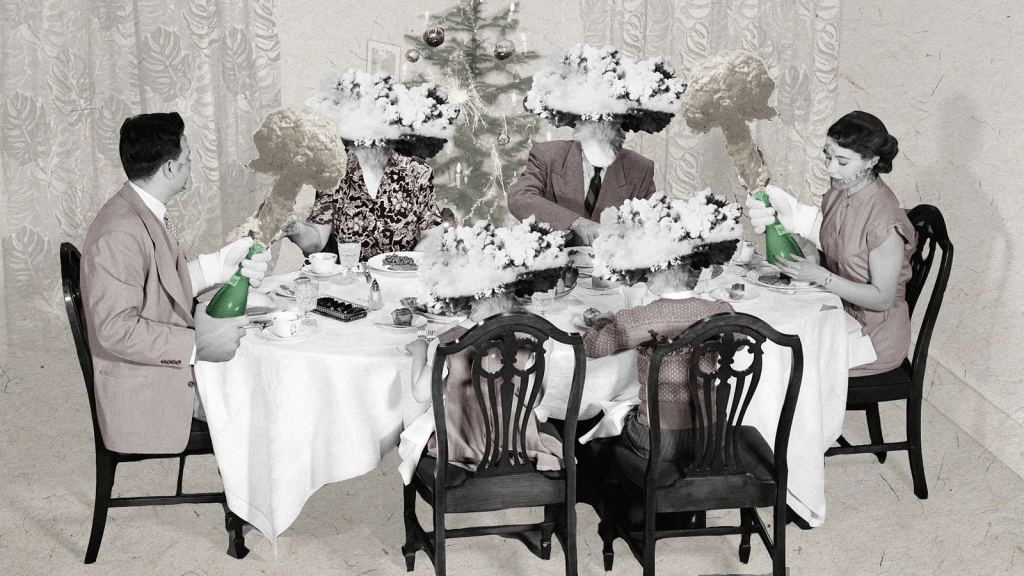
Christmas is a time of love, warmth – and often, huge family arguments. Here’s how to decode the primal forces that can cause painful rows, and enjoy a more peaceful season.

“A happy family,” so the saying goes, “is but an earlier heaven” – which must surely make an unhappy family a living hell.

As we enter the holiday season, many of us will be steeling ourselves for potential tension and argument. Whether it’s quiet disapproval over the quality of the cooking, a simmering resentment over alleged favouritism, or a fierce argument about our political and social values, family gatherings often bring out the worst in us. That’s if we choose to see our families at all – for many, there is no choice but to spend the holidays apart.

While family strife may be a source of entertainment in dramas like Succession, the real-life consequences are no joke.

“A really common consequence of estrangement is feeling isolated,” in addition to feelings of shame and being judged, says Lucy Blake, a developmental psychologist at the University of the West of England and author of the forthcoming book No Family Is Perfect: A Guide to Embracing the Messy Reality.

There is no easy cure to heal fractured relationships. But a better understanding of our family dynamics can help prepare us for the inevitable flashpoints and reveal ways to cope with the stress.

People are often reluctant to talk about unhappy gatherings and family estrangement – which can make those of us who experience it feel like we are somehow unusual. We may even assume that there is something wrong with us to have such poor relations. Social media networks can contribute to our sense of isolation, says Blake. “We often see a ‘performance’ of family, which can then make you feel more and more alone.” Few people are going to post a picture of a bust-up – you’re much more likely to see the gurning faces before a meal than the tears after a row.

Data from anonymous surveys suggests that fractious family relationships are astonishingly common, however. Blake points to one study, from the US, that questioned 633 middle-aged adults about their relationships with their own parents and their own children. In almost a third of the relationships studied, there was little ongoing contact, though most of these people felt some emotional ties – reporting both good and bad feelings about their kin. Of those who were more regularly in touch, many considered their relationships “conflicted” or “ambivalent”. Only 28% of the parent-child ties were engaged and harmonious.

Another paper, published earlier this year, examined data from a huge longitudinal study in Germany to try to identify the prevalence of estrangement. The researchers considered a parent and child to be estranged if they either had no contact, or if they had less-than-monthly contact combined with low emotional closeness. According to these criteria, around 20% of people experienced estrangement from their fathers, and 9% experienced estrangement from their mothers.

Not all clashes lead to such deep rifts, but even mild family rows can be very wounding – and tend to share some common causes.

A shared history

While any relationship has the potential for tension, family arguments often arise from clashing interpretations of the past, which even the slightest off-hand comment can then bring to the fore. And unlike friendships outside the clan, the emotional stakes are extraordinarily high.

“In families, there’s an almost primal sense that my most important loyalties are being challenged – that my love is being challenged,” says Terri Apter, a psychologist based in the UK and the author of numerous books about strained familial relationships, including Difficult Mothers and The Sister Knot. “There’s always the threat of a loss of status in the family, and a loss of connection.”

Even mild family rows can cause damage to relationships – and sometimes the effects can be longlasting (Credit: Javier Hirschfeld/Getty Images)

The triggers of those frustrations, and the ways they are expressed, will of course depend on your relative positions within the family tree. A parent may still believe that they have the authority to give guidance to an adult child – whether it’s about their appearance, career decisions, or romantic relationships. Their well-meaning comments may, however, remind their child of constant unfair criticisms from their adolescence. Among siblings, meanwhile, there may have been rivalries for who gets the most attention from the parents, or who feels most dominant. A grating comment from a big brother may give you the impression that he still thinks he knows everything, or your little sister’s bad mood may be a sign that she is “acting up” to be in the spotlight.

If you were only experiencing these events in isolation, you might see them quite differently. Your brother’s advice – in itself – may be a little irritating, but you could see that it was well-intentioned. Perhaps you might believe that your sister’s tantrum is a one-off and a sign of a bad day. With your family history, however, the slightest reminder of a previous resentment may lead you to feel like you are stuck in an unrelenting Groundhog Day, where past crimes are repeating in an endless loop.

“It doesn’t take a lot, in the present, to reawaken patterns that felt uncomfortable in the past,” says Apter. “And the fact that you don’t particularly like your own responses to the behaviour can compound the discomfort and tension.”

Clashing family cultures

Interacting with in-laws presents its own set of challenges, Apter says – since one family’s rules of behaviour can seem alien to another. Certain actions – such as who volunteers to do the dishes, or how you address the different relatives – can be taken for granted, and what passes as a friendly joke in one household may seem like an insult in another.

In some ways, stepping into another family is like learning to live in a new country; it’s going to take time to translate their behaviours and ways of expressing themselves into a language you can understand. As a result, simple gestures can be lost in translation, leading to conflicts that may escalate over time.

If the inevitable friction leads you or the in-laws to take offence, and your partner doesn’t take your side, it only adds to the hurt. It may be that, having lived the family script for so long, your partner simply cannot see your point of view, or that – because of the accepted roles within the family – they feel unable to intervene, but that doesn’t make it any easier to bear. You may feel completely abandoned in this unfamiliar territory. “Betrayal is often not too harsh a word, in these circumstances,” says Apter.

Apter emphasises that many disagreements are often unspoken. “Sometimes you feel silenced. And that leads to a sense of great discomfort and discontent – that you can’t be yourself or be spontaneous.”

Great expectations?

It may take a miracle to resolve all your family tensions this Christmas, but Apter suggests some steps to ease relations.

One positive move could be to avoid alcohol. “People sometimes drink a lot in the hope that that will make them better able to tolerate the tensions,” says Apter. “But it often makes them less able to moderate their irritation and to put it in context.”

You might also try to shift your expectations of the event. In many cases, our fear of tension, and our desire for the “perfect” day, can itself heighten our stress levels, which then makes arguments more likely.

“You have what psychologists would call high arousal, in which you’re hyper vigilant for certain dangers,” Apter explains. “And so the pressure for it to be a ‘good’ event can contribute to it being a very bad event.”

For this reason, it may be healthier to accept that some disagreement is inevitable, but that it needn’t “ruin” the event. “If you can get to that point where you can mend an argument easily, then that’s very helpful,” says Apter.

As part of this more accepting attitude, you could try to be more compassionate to yourself when you do feel irritated or upset, and make sure that you give yourself the necessary space for self-care. “You might recognise that you’ve got to have private time, maybe in another area in the house or outside the home, where you can breathe, and get back your sense of self,” says Apter.

Learning to adopt that mindset may be especially important this year, as many families around the world are reuniting after more than a year of pandemic-induced lockdowns and forced separation. “Expectations may be even higher because we missed Christmas last year, and there may be a little loss of memory for how uncomfortable it can be,” Apter says.

Ultimately, there is no perfect family, and there will be no perfect Christmas – or Diwali, Chanukah, Chinese New Year, or any other festive get-together. But a recognition of our own and each other’s flaws, and the potential for discord, may – ironically – help us all to have a more relaxed celebration.


BBC.com

Coping with Bereavement at Christmas

Christmas can be an incredibly difficult period for those who have been bereaved. Adverts, television programmes, and even Christmas music which emphasise love and togetherness around the Christmas tree can really put the boot in if you’re aching with the grief of bereavement.

Christmas is a time of heightened feeling, laden with memories for many of us. Reactions to bereavement differ from person to person. For some grieving people, Christmas can be a very joyful time, in which happy times with lost loved ones can be fondly remembered. But this isn’t always the case. If you’re worried that you’re going to be struggling with grief this Christmas – no matter how long ago your bereavement was – here is some advice on coping with bereavement at Christmas:

SHOULD YOU CELEBRATE CHRISTMAS AFTER A BEREAVEMENT?

The way people treat Christmas following a bereavement differs a lot. Some people worry that it is disrespectful to celebrate a festival like Christmas while mourning, while others think that following the traditions in which the deceased once participated is a good way to honour their memory. There is no ‘right’ or ‘wrong’ way to celebrate Christmas (or not!) after a bereavement. You must do what feels right for yourself and your family. However, it is important not to torture or ‘punish’ yourself by deliberately shunning much-loved festivities (or vice versa).

If you are spending Christmas with other bereaved family members, do be sensitive to the fact that their grief and your grief may be occurring in very different ways. It’s not uncommon for bereaved families to come into conflict over the Christmas period, as family members may differ in their idea of how to respect the deceased during this time. Some may take objection to celebrating Christmas at all, while others may try hard to emphasise the positives of the season. Often, some family members wish to stick rigidly to established festive rituals and routines which others feel will bring up painful memories. If your mode of dealing with Christmas during this time differs from that of your loved ones, do be aware that nobody is trying to disrespect the deceased or to minimise their loss – they’re simply coping with that loss in a different way. Everyone’s grief is valid. If you’re struggling to communicate with your grieving loved ones during this time, a counsellor may be able to help.

HOW CAN YOU MANAGE YOUR GRIEF AT CHRISTMAS?

Don’t wrestle with Christmas pressures. There’s an intense amount of pressure around Christmas – to do certain things, buy certain things, be with certain people. This pressure can be difficult even for those who are not struggling with grief. Don’t cave to any pressures you do not feel will be good for you. If you want to stay home on your own and have a quiet day, you do that. If you’d rather throw a big party for the whole family, you do that, too. But don’t feel that you HAVE to do anything.

 Practise self-care. Be kind to yourself. This is not the same as indulging your every whim (although a bit of self-indulgence can help!). It means following a lifestyle which works well for your physical and mental health. Try to keep your sleep patterns regular, eat healthily, and take some exercise every now and again. Christmas can disrupt normal lifestyles and routines significantly, so make a point of taking extra care of yourself during this period.

 Remember that you are not alone. A great many people have to struggle with the memories of their loved ones’ passing around this time. Even those who have not lost loved ones close to Christmas will undoubtedly be remembering those who used to join them for Christmas dinner but have since passed on. While it may seem as though everyone else is enjoying a happy time surrounded by perfect, loving families, the truth is that almost everyone will be sparing a thought for absent loved ones during this time.

LONELINESS AT CHRISTMAS AFTER A BEREAVEMENT

If bereavement has left you alone at Christmas, we understand that this can be very hard. Loneliness is a difficult and dangerous thing at the best of times, but it feels particularly brutal at Christmas.

If you are going to be alone for Christmas, and would rather not be, there are options open to you. People or organisations in your local community may be opening their doors for Christmas meals and events. If you are not sure where to look for these, contact Community Christmas, who may be able to help. If you have loved ones but cannot reach them physically for Christmas, a phone call or even a simple card can make the world of difference. Do not be afraid to reach out and ask for company and support. This is the season of goodwill, after all, and people can be very generous with their time and their homes.

Of course, the option of counselling around Christmas is always available to you, should you feel the need.

HOW CAN COUNSELLING HELP WITH GRIEF AND LOSS AT CHRISTMAS?

If you’re worried about grief and loss at Christmas, it can be helpful to speak with an accredited counsellor. Your counsellor will help you to work through your memories, your feelings, and your worries in a safe and supportive way. They may also provide you with strategies which will make the festive period an easier and perhaps even a happier time for you moving forward. Many people find that, as the years pass, Christmas transitions from a time marred by the pain of bereavement to a time of fond reflection, during which happy memories of lost loved ones can be shared and treasured. This transition can be a long process, but counselling from an accredited therapist with whom you have a good rapport can really help you to move this process along.

National Counselling Society

How to Cope with Estrangement at Christmas

Dealing with the pain of estrangement can be difficult at the best of times, let alone when it’s Christmas and the absence of family may be more noticeable. After a difficult year of restrictions, hearing about the ‘Christmas bubbles’ some families are forming may also add to the feeling of loss that estrangement can bring, so we asked gransnetters for their tips and advice on how to cope with estrangement at Christmas time. 

Seven ways to cope with family estrangement at Christmas

Focus on yourself and what you want to do

“On Christmas Day I got up early, had several cups of tea, fed the dogs and then wrapped up warm and took them for a long, slow walk. We got back home, I made a hot drink, put the fire on and cuddled up with the dogs until we’d all thawed out.

My Christmas dinner was egg and chips with brown bread and butter and then I curled up with the dogs and watched three Star Wars films, one after the other. It was wonderful! I went to bed happy, relaxed and ready for whatever was coming next. Please don’t think of Christmas Day alone, but of Christmas Day on your own – a vastly different kettle of fish.”

Whether you’re alone for Christmas, or spending it with other family and friends, try to create a day including things you enjoy and that will make you happy. It could be that you ignore traditions and do something you’ve always wanted to do, for example, an alternative feast and film marathon like this gransnetter, or make the day as festive as possible (with all the trimmings). The important thing is that you try to make plans (whether alone or with others) that will bring you joy. Stuck for ideas? Check out our page on things to do if you’re alone for Christmas.

One gransnetter recommends doing something altruistic to raise your spirits: “Volunteer! There are so many people in need this time of year, and lots of amazing organisations. Focusing on giving to others in need will help you embrace what the season is all about, peace and goodwill. You’ll feel so good about your good deeds, you’ll forget to feel bad.”

If you’re deliberating whether to decorate or not, one gransnetter has this advice: “If you’ve always celebrated Christmas, decorated your home and your tree, don’t stop. It’s very tempting to not bother because it’s just too painful but you can’t ignore it, not really. You see homes with their lovely decorations and, for me, to not do my best to embrace this time of the year would simply reinforce what we have lost, and make it harder see what we still have.”

Talk to a trusted friend

“I would talk to your friends and get it out in the open. You may find that talking about it helps get it in perspective and makes it more manageable. I would have a plan for the day, make the most of the things that you have and do something that will keep you busy and engaged.”

Christmas is a hard time of year to be estranged from family, so it’s important that you have a support network in place in case you need to talk through your feelings and acknowledge the sadness you might feel. Communicating how you feel to a trusted friend (who isn’t involved in the estrangement) is important for your mental health, and they can always offer support in the form of taking your mind off things by having a good catch-up too.

 Or chat to the Gransnet community

“Most importantly, talk about how you feel and if you think that those closest to you are ‘all talked out’, talk to us here on GN. You are not alone. Like me, and I’m sure it’s the same for so many estranged people, you’ll be surprised at just how many are going through what we are.”

If you are unsure who to open up to, the Gransnet forums are open 24/7 and there’s a dedicated estrangement topic, where users share advice and offer support to those in similar situations. There’ll also be quite a few of the Gransnet community around at Christmas, especially with restrictions meaning many are spending the day alone, so whether it’s for support or virtual merriment to cheer you up, you can chat anonymously on the forums. 

Remember it’s just a day

“I think Christmas can be a minefield most years, but this year is particularly problematic with bubbles and worries about infection. I think there is so much hype surrounding Christmas and the sometimes unrealistic picture of saccharine family harmony.”

The pressure Christmas can cause shouldn’t be underestimated – a survey by the Mental Health Foundation found that more than half of adults in the UK are worried about the mental health of a loved one over the festive period. With sadness caused by estrangement on top of the usual Christmas stresses, it can seem overwhelming – particularly if it’s your first year estranged. Try to remember that it is a short period, and to take each step and day at a time, as Christmas will soon be over and you’re not alone in feeling this way. We have a page on how to deal with loneliness at Christmas that might be useful in finding some coping mechanisms.

Avoid activities that will make you feel worse

“If there are things that you feel are just too hard to do, don’t do them. It’s eight years for us now and I still can’t go to our church’s children’s nativity service or watch them on tv, so I don’t.”

Identify triggers and avoid them where possible. If it’s one of your first Christmases estranged, this might be difficult as you may not necessarily know the things that will bring on feelings of loss until you encounter them, but if the thought of going to or watching something makes you feel uneasy about the memories it may provoke, it’s best to give it a miss if you can. 

It might also be worth avoiding social media such as Facebook and Instagram around the time if you feel you may become upset at photos of families spending Christmas together. In this instance, it’s important not to compare yourself and your situation to others, as this is likely to be detrimental to you, and bear in mind that not everything on social media is as it seems.

Think carefully before you communicate

“We’ve never sent anything to our estranged son which to be honest is purely for self preservation, as neither of us could cope with anything we’d sent being returned, or being castigated for sending him something in the first place. Do what feels right for you, do what will help you get through your first or yet another Christmas with estrangement.”

The sentimentality of Christmas may incite nostalgia, and make you want to pick up the phone or put pen to paper to try to reconcile, but before you make any hasty decisions think through whether this is the right thing for you to do. If you receive no reply, will it make you feel worse than before? Would you want to make contact like this if it was any other time of year? Connecting with an estranged relative is obviously a very sensitive topic, but it’s essential that you think things through clearly and objectively before making any big decisions. Our page on estrangement has more information on this.

If you’re struggling with not seeing your grandchildren over Christmas, and are unable to make contact, one gransnetter recommends creating a memory box and putting a card in there for them each year. This way you are acknowledging your grandchild’s Christmas without creating further hostility with their parents: “This will be the first year we haven’t sent them a card in the post, we’ve decided we don’t need to do that anymore, so we will be getting a card for each of them to go in the memory box.”

Be kind to yourself and get help if you need it

It’s been an unimaginably difficult year for many, so go easy on yourself, and remember that even when coping with loss through estrangement, you’re still allowed to feel joy and happiness at Christmas. If you are really struggling and feeling low, it’s important that you seek advice and guidance to help you through this hard time. Here are some organisations which may help if you’re worried about your mental health:

  • Relate – offer relationship counseling, including family issues
  • Mind – offer mental health support 
  • Silverline – helpline for older people
  • Samaritans – if you urgently need emotional support, you can contact them by emailing jo@samaritans.org or by calling 116 123.

Gransnet

Estranged from Family at Christmas

Unhappy families: Nine out ten adults estranged from family find Christmas difficult.

A new report looking at the experiences of people who are estranged from family members and the challenges they face has highlighted the particular difficulties associated with Christmas.

“Social media plays a part because it’s a highlight reel of people’s family lives, with Facebook feeds filled with pictures of families celebrating together.” Lucy Blake

Hidden Voices – Family Estrangement in Adulthood, a collaboration between the charity Stand Alone and the Centre for Family Research at the University of Cambridge, is the first in depth piece of UK research on family estrangement. It examines the experiences of over 800 people who self-identify as being estranged from their whole family or a key family member, such as their mother, father, siblings or children.

Becca Bland, Chief Executive of Stand Alone, says: “Family is a huge part of our individual and collective lives and an unconditionally loving, supportive group of relations is idealised in society. Yet this is not always attainable for those who are estranged from their family or a family member. I’m sure this research will be challenging to read, but I’m hopeful that as a society we have the strength to keep listening to people in this position, with the view to eventually understanding why our adult family relationships are not always as unconditionally close and supportive as we might wish and imagine them to be.”

The report provides an understanding of family estrangement and its characteristics as well as detailing the challenges participants faced when living without contact with family or a key family member. Common factors that contribute to relationship breakdown with parents, siblings and children include emotional abuse, clashes of personality and values, and mismatched expectations about family roles and relationships.

However, estrangement does not necessarily mean there is no contact between family members. A minority of respondents have minimal contact with the person they are estranged from. Similarly, estrangements are not always stable, and cycling in and out of estrangement is not uncommon. Those who wished their estranged relationships could be different wanted a relationship that was more positive, unconditionally loving, warm and emotionally close.

Most often, respondents who were estranged from an adult child reported that their daughter or son had cut contact with them. Of those who had initiated estrangement from a parent, respondents had done so at various ages, with most doing so in their late 20s and early 30s.

The report shows that the festive period is often the most challenging time for those touched by family estrangement and can be a key time of isolation and vulnerability, with 90% of respondents saying they found the Christmas period a key time of challenge. Other challenging times were reported as birthdays (85%), being around other families (81%) and the death of family members (79%).

“Almost every estranged person finds Christmas the hardest period,” explains Dr Lucy Blake from the Centre for Family Research. “There’s a strong societal expectation of what a family looks like. Social media plays a part too because it’s a highlight reel of people’s family lives, with Facebook feeds filled with pictures of families celebrating together. The reality doesn’t always look like this, but people often find it difficult to talk about that.”

Stigma around the topic of family estrangement is also an issue: two-thirds (68%) of respondents felt that there was stigma around the topic of family estrangement and described feeling judged and feeling as if they were contradicting societal expectations. One in four respondents had turned to their GP for support but reported finding them not at all helpful.

However, not all experiences of estrangement were negative. Around four out of five respondents felt there had been some positive outcomes of their experiences of estrangement, such as greater feelings of freedom and independence.

Reference
Lucy Blake, Becca Bland and Susan Golombok. Hidden Voices – Family Estrangement in Adulthood. 10 December 2015

University of Cambridge

Emotional Blackmail of Parents

by Carl E Pickhardt

By expressing strong emotion, adolescents can manipulate their parents.

Children do it all the time. Powerless when refused what they want by a parent, they may signify displeasure by communicating disappointment, hurt, or outrage. What happens next is formatively important, and in most parent/child relationships this response occurs some of the time.

Faced with the child’s sulking, crying, or tantrum, the parent feels regret or remorse for saying “no,” or simply seeks relief from the emotional intensity and so relents. “All right, just this once, you can have it (or do it), since it matters so much to you. Just stop making such a fuss!”

Now the child brightens up, and learns how there is persuasive power in the strong expression of emotion, particularly unhappiness. It can be used to get his way.

In fact, one psychologist, John Narciso (see his book “Declare Yourself,” 1975) called this category of behaviors “get my way techniques.” Another psychologist, Susan Forward, wrote a book about this emotional manipulation (“Emotional Blackmail,” 1997.) In one of my early books, “Keys to Single Parenting” (1996) I called it “emotional extortion.” In counselling, I still call it by that name.

During adolescence, when getting freedom from parents becomes increasingly important, manipulation of parental authority through lying, pretence, and pressuring becomes more common. Emotional extortion can combine all three.

Thus when pleading and argument fail to win a parent over or back a parent down, the tactics of emotional extortion can come into play. The particular emotions exploited vary according to the emotional susceptibility of the parents, but the objective is always the same—to get parents to give in or change their mind.

Remember, from closely observing these adults who have so much power over their lives, children know their parents far better than parents know their children. Children, and particularly adolescents, are expert in the “pushing the buttons” of emotional susceptibility in parents, often using this knowledge in conflict to win their ways. Many children growing up with a parent who is not safe to be around learn this manipulative behavior to survive and must then unlearn it later on, or else they will afflict a significant adult relationship with emotional extortion to their cost. Consider a few of the forms emotional extortion can take.

If a parent is sensitive to approval, then the teenager will express love through appreciation, affection, or pleasing to soften the mother or father up. This emotional extortion works when the parent feels, “How can I refuse when my teenager, who is usually so hard to get along with, is now acting so nice?”

If a parent is sensitive to rejection, the teenager, loudly or quietly, will express anger through acting offended, injured, or wronged to soften the mother or father up. This emotional extortion works when the parent feels, “I can’t stand it when my teenager acts like she doesn’t like me.”

If a parent is sensitive to inadequacy, the teenager will express criticism through attacking the parent’s character, caring, or competence to soften the mother or father up. This emotional extortion works when the parent feels, “I can’t stand being judged a failure in my teenager’s eyes.”

If a parent is sensitive to guilt, the teenager will express suffering through acting unhappy, hurt, or sad to soften the mother or father up. This emotional extortion works when the parent feels, “I can’t stand feeling responsible for my teenager’s unhappiness.”

If a parent is sensitive to pity, the teenager will express helplessness through acting hapless or resigned to soften the mother or father up. This emotional extortion works when the parent feels, “I can’t stand feeling sorry for my teenager when she just gives up and acts victimized by whatever decision I’ve made.”

If a parent is sensitive to abandonment, the teenager will express apathy through acting like the relationship doesn’t matter anymore and doesn’t care in order to soften the mother or father up. This emotional extortion works when the parent feels, “I can’t stand the loneliness when my child acts like there’s no caring for our relationship.”

If a parent is sensitive to intimidation, the teenager may express explosiveness, loudly talking or acting like he’s going to lose physical control and threaten harm to soften the mother or father up. This emotional extortion works when the parent feels, “I can’t stand being frightened of getting hurt.”

To discourage these manipulations, parents must refuse to play along with the extortion. After all, your adolescent cannot emotionally manipulate you without your permission. You must resist your own susceptibilities to rejection, guilt, intimidation and the like and refuse to let these emotional vulnerabilities influence your decisions.

Give in to these tactics, and you will feel badly about yourself, your teenager, and your relationship, and more important may reluctantly allow what you know is unwise that could cause your adolescent to come to harm. “I know I shouldn’t have let her go. I didn’t want to. But she was so unhappy with me for refusing, I just couldn’t say ‘no.’ And now look at what has happened!”

Parents must not only hold firm in the face of this emotional manipulation, they must hold the teenager to declarative account. Thus when the teenager uses intense anger or suffering to overcome a parental refusal, the parent needs to be able to say and mean: “Acting emotionally upset is not going to change my mind. However, if you want to tell me specifically about why you are feeling so upset, I certainly want to listen to what you have to say.”

Declaration creates understanding, but emotional manipulation creates distrust. At worst, when feelings are expressed for extortionate effect, then the authentic value of those feelings can become corrupted.

Declare what you want or do not want to have happen in specific terms, then discuss and negotiate the disagreement. Do not use the strong expression of emotion to get your way, or you will encourage that extortion from your teenager by your own bad example.

This article does not only apply to children and teenagers, adult children can also behave this way.

Psychology Today

Psychological Impact on Children raised in Cults

by Brighton and Hove Psychotherapy.

Indoctrination from an Early Age

The indoctrination of children in cults differs from that of adults in that children are extremely vulnerable to adult influence – the people they look up to, especially their parents. Children’s brains are still developing, and they are like sponges, absorbing the world around them, the world of adults who create the environment they exist in. A child will absorb the world view of those around them and accept this as their reality because this is all they have known.

The Cult Leader’s Demands Always Comes First

In cults, the cult leader or doctrine always takes priority over anything else. The child who grows up in a cult will never be the centre of attention in their parent’s world because they will most likely be totally self-absorbed with the cult leader and the cult demands. These demands are usually great and unattainable because the leader is likely to be highly perfectionistic, insatiable, and persecutory of those who do not meet their ideals. Moreover, a cult leader will employ fear tactics with their disciples and keep them in a state of perpetual adoration towards them and shame towards themselves. In this state of fear, shame and total preoccupation with another, there is no room for the age-appropriate demands of a child who actually needs their parent’s care and attention.

“Have No Needs”

A child who grows up in a cult learns to have no needs because they quickly learn that they do not matter. To survive in the cult and gain some crumbs of attention from their parents, they will have no choice but conform to the leader’s demands, try to fit in as much as possible and override their natural developmental needs. This means the child will miss out on normal stages of development, if not also on education and normal peer interactions because of the insular and isolated nature of most cults.

Isolation and Abuse

Sending a child to school means interacting with the outside world, which most cults find threatening. Depending on how isolated a cult becomes, they will supply their own schooling, have children interact only with other cult children and make sure there is no outside influence that could lead the child to question their upbringing.

Keeping a child isolated from society also makes them vulnerable to abuse – sexual, physical, spiritual, emotional, and psychological. Isolated groups create their own rules and decide what is right or wrong. In the cult I grew up in for instance, children and teenagers were conveniently seen and treated as adults.  This meant that we were required to work long hours, worship and meditate with the adults. This also meant that schooling was minimal and there was no age-appropriate censorship to adult-only stuff. The cult leader – a self-proclaimed enlightened master – was seen as an expert in raising children, despite him not having any children himself or knowing anything about child development. If the cult leader condones inappropriate, harmful, or even criminal behaviour, then his disciples collude because all that matters is what the leader thinks. His truth matters above all truths, and they are always above societal rules and norms, including the law. Under these circumstances, children are extremely vulnerable to predators.

The Objectification of Children

In cults, children are either seen as an inconvenience or used as means for growing the cult. In both situations, children are seen as objects and not encouraged to develop their own identity. In cults, nothing is in the best interest of a child. Everything is in the best interest of the leader and the organisation. Despite this well-known fact, cult leaders will make it seem that everything they do is for your good and the good of your children, even if there is plenty of evidence to the opposite (see ‘Gaslighting’ below). They will make you quash your doubts, question your sanity, and give up everything you have, including your children, in the service of “the greater good”. This “greater good” has very few winners, which are usually the leader and his inner circle.

Gaslighting

A central feature of cults is gaslighting – a term coined from the movie ‘Gaslight’ where it a young woman is manipulated by her husband into believing that she is descending into insanity. Cults do this on a large scale, which is designed to keep its disciples or followers in a state of perpetual doubt about their opinions and follow the opinions and ideas of the cult leader. It is an exercise in maintaining power over others and abdicating any responsibility for one’s actions. For instance, in the cult I grew up in the self-proclaimed enlightened master would attribute all personal suffering to his disciples and never take any responsibility. This extended to the sexual, financial, and psychological exploitation of ‘his people’ including children. When questioned, he would say that you had not surrendered to him enough and that this was your reason for suffering.

Leaving

When the child grows up and is lucky enough to leave the cult, they will have to contend with a long process of rebuilding or recovering their own identity. Everything that they are has been attributed to the cult or exists because of the cult. Sometimes, when a former child choses to leave, their family will want nothing to do with them. Or they may need to cut contact with their family to survive psychologically.

The Recovery Process

Cult recovery is a long and challenging process which requires the right support. Finding a group of like-minded individuals who share similar backgrounds is advisable, as well as finding a therapist who is experienced and knowledgeable about this type of work. Explaining to people what you have gone through is never easy. Former cult members and those who grew up in cults can feel a lot of shame about their past and have difficulty articulating what they have been through. Most people lack an appreciation of what it is like to live in a high control group and its effects.

Regaining One’s Mind and Setting Boundaries

Those who were born or grew up in cults will often need to learn or re-learn how to live in society. Although cults range in terms of how isolated and restricted their members are, the indoctrination of children is so deep that it will take a very long time to regain their own mind, learn to think for themself and have their own opinions. This extends to knowing one’s own preferences, wishes and needs. Because having own thoughts and opinions was frowned upon or even dangerous, it takes time to regain a sense of safety in doing normal things, having personal preferences, and even feeling entitled to personal space. Growing up in an environment where nothing belongs to you, all the thinking is done for you and personal space is not a thing, has big implications in later life when it comes to setting personal boundaries.

Sam Jahara is a UKCP Registered Psychotherapist and Clinical Superviser. She is experienced in working with the psychological impact of high-control groups and cults on individuals, families and organisations. She has also spoken about her personal experience of growing up in a cult in recent public interviews.

Brighton and Hove Psychotherapy

Time to go with the Flow?

by Sheri McGregor

Have you read about that man in Munich, Germany, who floats to work every day? He got tired of the stops and starts of traffic, the long waits that got him nowhere fast, and the road rage. This man, Benjamin David, did something different. He looked to what was in his environment to help him, decided on a plan, prepared himself, and plunged into the river. Now, he floats along with the current each day—and it delivers him effortlessly to his workplace. He goes with the flow. (Read about him here.)

Maybe it’s a stretch to compare this man to parents rejected by adult children—or maybe not. Especially as estrangement drags on, it can feel like we’re stuck in a sort of traffic limbo. We may be the recipient of anger we don’t deserve, or get angry ourselves. The tiniest breakthrough can get our hopes up and then drop us into a pit. Like when the cars go from a standstill to a crawl and we breathe a sigh of relief… only to get snagged in another snarl of traffic up ahead. 

CHANGE DIRECTIONS 

Like this man who made a change for the better, parents rejected by adult children can assess their situations, realize they’re getting nowhere, and try something different. A realistic analysis is the first step to a solution, and new direction that drives progress.

Parents around the globe continue to send holiday cards or gifts yet remain estranged.  As the holiday music jingles and the messages of family and restoration abound, they feel a mix of obligation, hope, and confusion. They start to ponder whether to reach out again this year. 

They may worry that not reaching out may be used as proof they don’t care. Or that a heartfelt message of love will be viewed as a manipulation tactic to “guilt” the son or daughter into responding. Grandparents who want to make sure their grandchildren know they’re loved face a dilemma: How can they choose gifts for the special family members they no longer know? Or worse, will their gifts given to innocent grandchildren be subverted to the trash bin? 

WHEN YOUR ADULT CHILD WANTS NOTHING TO DO WITH YOU:
START A NEW ERA 

As this year comes to an end and a new one begins, I implore you to consider what one of my adult children who is not estranged recently said about estrangement from the sibling who is:

“We’re about to start a new era.” 

We really are beginning a new era, moving into the third decade of the millennium, and far beyond the time when our estrangement from one adult son began. It’s a new era for our family as a whole, with fresh starts, changes in direction, and a time of renewed joy. Being stressed over something we couldn’t change has no place in our family’s future.

How about you? As 2019 comes to a close, can you ring the holiday bell to end an era of heartache, and think of the season as a time of rebirth and joy? 

GET OUT OF THE TRAFFIC JAM 

Make decisions that move you forward rather than keep you stuck. If you’re pondering whether or not to reach out this holiday, reflect on a few critical questions. Consider using a pen and paper to fully explore your thoughts. Ask yourself: 

  • Whether or not my estranged offspring has ever replied, has my reaching ever made a difference? 
  • If I’m worried about how my behavior will be construed or misconstrued, what are my fears specifically? Do they make sense? Or are they keeping me stuck?

Don’t Stress

There’s an old story about a woman whose daughter asks her why she cuts two inches off each end of the roast and throws them away. “That’s the way my mother did it,” she says. Curious, the daughter asks her grandmother the same question—and gets the same answer. Dying to know why it’s so important to cut two inches off either side, the girl calls her great grandmother to inquire. She’s surprised when her great grandmother laughs, saying, “Because the roast wouldn’t fit the pan!” 

At one point, reaching out may have kept the hope that you would reunite alive. Even when your adult child wants nothing to do with you, it has been a way to demonstrate (at least from your point of view) that you still love your child and were ready to forgive. But what’s the purpose now? Is it helping, or keeping you stuck in a cycle of hope and disillusionment? Is the expended energy doing you good, or are you only throwing it away? 

Times change. Feelings do, too. At what point do you listen to the message your child’s silence (anger, gossip, abuse. . .) sends? Is it time to decide to put your energy toward your own life, your emotional wellness, and the people who love you?  

Like the man in Munich did, is it time to take the plunge … and go with the flow?  

To prepare and plan for your new era, get a copy of Done With The Crying. Its advice and information based on current research and the input of thousands of parents rejected by adult children will help you take the plunge into a happy life beyond the pain of familial estrangement. Or, if you’ve read it once, now might be a good time to do some of the exercises again (the new Done With The Crying WORKBOOK: for Parents of Estranged Adult Childrenwill help). Or, maybe it’s time to move BEYOND it all and get my award-winning 2021 book to help: Beyond Done With The Crying More Answers and Advice for Parents of Estranged Adult Children

Give yourself a supportive gift: permission to go with the flow. 

Rejected Parents

Why Liars Tell Pointless Lies

  • Pathological liars often tell lies that seem pointless.
  • If we look closer, their lies are often motivated by internal needs.
  • Many pathological liars tell lies because they ultimately want attention from others.

I’ve asked hundreds of people if they have ever known a pathological liar. The vast majority have said yes. One of the themes that regularly emerges when people discuss encounters with pathological liars is that they seem to lie for no reason at all. That is, their lies seem to be completely pointless and serve no purpose. I suspect this might not be true.

Pathological Lying Cases

My colleague Drew Curtis and I have studied pathological lying very intensively for many years and this recurrent theme of pointless lying bears out not only in the anecdotal accounts we record but also in the historical records of pathological liars from over a century ago.

In one record of pathological lying dating back to the early 1900s, the psychiatrist, William Healy, wrote of a young patient, “During all our acquaintance with Adolf we have known his word to be absolutely untrustworthy. Many times he has descended upon his friends with quite unnecessary stories, leading to nothing but a lowering of their opinion of him. Repeatedly his concoctions have been without ascertainable purpose.”

Almost 100 years later, psychologist Cheryl Birch wrote of a young female pathological liar, “First, it is clear that her lying was never initiated for any of the most common external motives. Her lies were not altruistic, white lies, and she did not lie to obtain money, sex, or a higher title (power) in her external environment.”

The clear suggestion in both cases was that pathological lying was entirely unreasonable. The lies were pointless and irrational. They were pathological.

In a more recent study that I conducted with my colleague Renee Beach, we asked 251 people if they had ever met or known someone who they considered to be a pathological liar. Over 91 percent of people answered yes.

When we asked them what proportion of the lies seemed to be told for no apparent reason or motive, our participants estimated 49 percent. Taken together, there seems to be a fair amount of consensus that pathological liars tell lies that in great measure seem to be purposeless.

Motivations for Pathological Liars

However, it is important to consider that an inability to identify rational motives for a lie does not necessarily mean that the liar had no motivation for their dishonesty. The fact that an outside observer sees no reason for an action does not mean that reasons are absent. After all, many of our fundamental motivations in life are internal states that cannot be detected by the outside observer. For instance, the psychiatrist Charles Ford argued that a warped need for self-esteem may drive some people to lie pathologically.

I agree with Ford. I believe that pathological liars usually do have purposes for their lies. After all, people rarely do anything for no reason at all. Even if one is not consciously aware of the triggers for their behaviour, a trigger must exist. No effect is without a cause.

However, the reasons for pathological lies are likely foreign to most of us. Most of us can usually get what we want without having to resort to lying. It may be that pathological liars want many of the same things you and I want such as connection, love, and a sense of value, but they haven’t figured out an honest way to get them.

Attention

In our book Pathological Lying, Curtis and I argue that pathological liars are often lying for attention. Most people desire attention, and they have perfectly honest ways of getting it. They behave and present themselves in such ways that the desired attention naturally comes their way.

When people cannot get the attention they desire, they sometimes go to extremes. They engage in provocative behaviors, outlandish presentations, absurd antics, or even put themselves in danger to have people simply pay attention to them. Many pathological liars seem to tell untruths aimed at garnering attention.

Some common themes we have found in our research are people dishonestly presenting themselves as heroes or as brave victims. In the heroic examples, we find pathological liars portraying themselves as CIA operatives hunted by multiple enemy states, Navy SEALS who rescued hostages under enemy fire, or vigilantes who solved crimes and outwitted the mafia. In the victim roles, people have woven fabricated tales about being kidnapped by gangs, being chased by police, falling ill with life-threatening ailments, or even being attacked by alligators and sharks. In all of those examples, the pathological liars have seemingly wanted people to notice them, to find them compelling, or to see them as important.

Tripartite Theory and Pathological Lying

So, are the lies that pathological liars tell truly pointless falsehoods? I submit that they are not. According to the Tripartite Theory of Dishonesty, people lie when they expect to derive value from lying and when they see the expected costs to be low or at least tolerable. Pathological liars may simply see value in lying (misplaced as it may be) where others do not. Additionally, they may not foresee the grave cost of telling lies that cause others to remain honest.

In other words, pathological liars have their reasons. They are simply reasons that most of us find preposterous.

Psychology Today

Attention Seeking Behaviour in Adults

What you need to know……

What is it?

For adults, attention-seeking behaviour is a conscious or unconscious attempt to become the center of attention, sometimes to gain validation or admiration.

What it may look like

Attention-seeking behaviour can include saying or doing something with the goal of getting the attention of a person or a group of people.

Examples of this behavior include:

  • fishing for compliments by pointing out achievements and seeking validation
  • being controversial to provoke a reaction
  • exaggerating and embellishing stories to gain praise or sympathy
  • pretending to be unable to do something so someone will teach, help, or watch the attempt to do it

What can cause this behavior?

Attention-seeking behavior may be driven by:

  • jealousy
  • low self-esteem
  • loneliness

Sometimes attention-seeking behavior is the result of cluster B personality disorders, such as:

Jealousy

Jealousy may come about when someone feels threatened by another person currently getting all the attention.

This, in turn, can lead to attention-seeking behaviour to change the focus.

Self-esteem

Self-esteem is a broad term covering a variety of complex mental states involving how you view yourself.

When some people believe that they’re being overlooked, bringing back the lost attention is may feel like the only way to restore their balance.

The attention that they get from this behavior may help provide them with the feeling of reassurance that they are worthy.

Loneliness

According to the Health Resources and Services Administration, 1 in 5 Americans say they feel lonely or socially isolated.

Loneliness can result in an urge to seek attention, even in people who don’t normally exhibit attention-seeking behaviour.

Histrionic personality disorder

According to the National Library of Medicine Trusted Source, histrionic personality disorder is characterized by feeling underappreciated when not the centre of attention.

For someone to receive a diagnosis of histrionic personality disorder, they need to meet at least 5 of the following criteria:

  • uncomfortable when not the center of attention
  • provocative or seductive behavior
  • shallow and shifting emotions
  • using appearance to draw attention
  • vague or impressionistic speech
  • exaggerated or dramatic emotions
  • is suggestible
  • treating relationships as more intimate than they are

Borderline personality disorder

Borderline personality disorder is a continuing pattern of instability in self-image, interpersonal relationships, emotion, and impulsivity.

According to the National Institute of Mental Health Trusted Source, for someone to receive a diagnosis of borderline personality disorder, they need to display at least 5 of the following criteria:

  • frantic efforts to avoid real or imagined abandonment
  • a pattern of intense and unstable interpersonal relationships with extremes between devaluation and idealization
  • a decidedly or persistently unstable self-image or sense of self
  • engaging in potentially self-damaging, impulsive behavior
  • recurring self-harm or suicidal behavior, including threats or gestures
  • emotionally instability in daily reactions, such as through irritability, anxiety, or intense sadness
  • chronic feelings of emptiness
  • inappropriately intense anger that’s often difficult to control
  • transient, stress-related paranoia or disassociation

Narcissistic personality disorder

Those with narcissistic personality disorder typically have a need for admiration with a lack of empathy.

According to the American Psychiatric Association, for someone to receive a diagnosis of narcissistic personality disorder, they need to display at least 5 of the following criteria:

  • a grandiose sense of self-importance
  • a preoccupation with fantasies of power, unlimited success, brilliance, ideal love, beauty
  • a belief in their own uniqueness, especially that they should only associate with, and will only be understood by, high-status institutions and high-status people
  • demand for excessive admiration
  • a sense of entitlement and unreasonable expectation of favorable treatment or automatic compliance with their expectations
  • taking advantage of others to achieve their own ends
  • unwillingness to identify with or recognize the needs and feelings of others
  • envy of others and belief that others are envious of them
  • haughty, arrogant attitudes or behaviors

What you can do about it

If you notice this behavior is constantly recurring, it’s probably best for the person display the behavior to visit an experienced mental health professional.

If left unchecked, attention-seeking behaviour can often become manipulative or otherwise harmful.

The bottom line

Attention-seeking behavior may stem from jealousy, low self-esteem, loneliness, or as a result of a personality disorder.

If you notice this behaviour in you or someone else, a mental health professional can provide diagnosis and treatment options.

Healthline

Narcissistic Parental Alienation Syndrome

Is your child being coerced into disliking you? This is known as narcissistic parental alienation syndrome.

You may have found that your once-healthy relationship with your children has become increasingly strained after your difficult divorce. Your children are now avoidant, disrespectful, or even cruel.

You may have noticed your kids have started to sound like your ex-partner when they criticize you. As a result, you might suspect that your ex is bad-mouthing you and possibly even manipulating your children into disliking you.

This phenomenon, known as narcissistic parental alienation syndrome, is a severe issue many parents worldwide have experienced.

What is narcissistic parental alienation syndrome?

Narcissistic parental alienation syndrome, or parental alienation syndrome (PAS), occurs when one parent coercively tries to alienate their child from an otherwise loving parent. This manipulation then results in the child’s dislike or rejection of the alienated parent.

The term first emerged in the 1980s when American child psychiatrist Richard Gardner began noticing this behavior during child-custody disputes.

Gardner found that one parent would purposefully program (or brainwash) the child with certain ideas and attitudes about the other parent, even when these ideas were at odds with the child’s actual experiences.

The child would then “join in” vilifying the targeted parent, often because these behaviors were highly reinforced and rewarded by the alienating parent.

Importantly, the term PAS is only applicable when the targeted person is considered a good parent and hasn’t done anything to warrant this alienation. This term does not apply if the alienated parent is truly abusive.

What is narcissistic parental brainwashing?

Narcissistic parental brainwashing occurs when a parent with narcissistic tendencies psychologically manipulates the child into thinking false narratives about the other parent. This could entail painting the other parent as dangerous, unloving, unintelligent, or somehow not good for the child.

Many PAS children respond to this programming in such a way that they seem to completely forget or suppress any positive feelings or experiences they’ve had with the targeted parent.

Warning signs of parental alienation syndrome

Signs of PAS may include the following:

  • unjustified or irrational campaign to vilify loving parent
  • chil
  • d’s extreme idealization of one parent over the other (black-and-white thinking)
  • vilification of the targeted parent’s entire family and friends
  • support of the child’s negative actions and attitudes toward the targeted parent
  • denial of guilt or lack of empathy over the cruel treatment toward the targeted parent
  • the child’s “own” opinion are highly emphasized by the manipulative parent (e.g. “Chelsea just doesn’t like her dad, and she shouldn’t be forced to see him.”
  • the child uses the same tone that the narcissistic parent uses toward the targeted parent

Examples of narcissistic parental alienation

Narcissistic parental alienation may look like the following:

The offending parent purposefully interferes with the targeted parent’s time with the child. E.g. The other parent shows up to “volunteer” in the school cafeteria when they know you will be having lunch with your child.

The offending parent tells the child that the other parent isn’t interested in their life. “Your mother probably isn’t going to show up to get you today. She abandoned you before and will probably do it again.”

The offending parent is uncompromising regarding the parenting schedule. E.g. You ask to switch custody days because you have an important doctor’s appointment on Wednesday, but the other parent refuses to compromise, causing you to miss a day with your child.

The offending parent consistently talks badly about the other parent. “Your father doesn’t have any morals.”

The offending parent rewards the child for talking badly about the other parent. “I don’t blame you for feeling that way. Let’s go get some ice cream together.”

The offending parent acts hurt when the child is kind to the targeted parent.

The child copies the offending parent’s words and tone while speaking to the targeted parent. “You can never be on time, Dad.”

The offending parent would rather harm the child than benefit the targeted parent. E.g. The parent refuses to let your child go on a fun trip with you for nonsensical reasons.

The child feels like they have to “choose” between parents.

What causes narcissistic parental alienation?

Evidence suggests that parental alienation often occurs in very tense and volatile separations or divorces, particularly when there are bitter child custody battles.

However, for PAS to even occur, one parent must be willing to act unusually cruelly and callously. These behaviours often point to narcissistic personality disorder (NPD), which is characterized by a grandiose sense of self, a strong need for admiration, and a lack of empathy.

These parents tend to value their interests over the child’s well-being and will stop at nothing to “win” against or “punish” the other parent.

How to navigate narcissistic parental alienation syndrome

It’s can be difficult for a targeted parent to navigate parenting with a co-parent showing signs of narcissistic parental alienation syndrome.

If you suspect your co-parent is trying to alienate you from your child, try your best to have a friend or family member present when you speak with them. This can help you stay grounded if the co-parent is consistently gaslighting you or using manipulation.

You may also want to work with a licensed therapist or family therapist to find ways to navigate this difficult situation. Additionally, in severe cases, you may want to consider hiring a lawyer.

Let’s recap

Narcissistic parental alienation syndrome occurs when a parent with narcissistic traits attempts to maliciously alienate their child from an otherwise loving parent. This is often accomplished by attacking the other parent’s character in front of the child.

This manipulation can then lead to the child’s own rejection and feelings of dislike toward the targeted parent.

If you are living with this situation, consider reaching out to a mental health professional to help you navigate this challenging situation.

Psych Central