Shadow Work

An excellent article by Coventum

Shadow work is not just a practice of psychology. And definitely not about fixing what’s broken. It’s about discovering what’s been buried—your emotions, wounds, truths, and power.

Rooted in Jungian psychology and practiced for centuries through shamanic, spiritual, and mystical traditions, shadow work is the practice of meeting your unconscious self with honesty and compassion. It’s the journey of bringing light to what has long been kept in the dark.

“Until you make the unconscious conscious, it will direct your life and you will call it fate.” — Carl Jung

What Is Shadow Work?

Shadow work is the practice of uncovering and integrating the unconscious parts of yourself—your fears, desires, shame, and hidden strengths. These “shadow parts” are often formed in childhood and buried by the ego to protect your identity. However, they don’t disappear. They project themselves onto others, influence your reactions, and can create patterns that keep you stuck.

To do shadow work is to observe your triggers, trace them to their roots, and reclaim what you’ve disowned. This practice is both psychological and spiritual—a return to wholeness.

Yes, you can do shadow work by yourself, and no, it’s not just for therapists or spiritual gurus. It’s for anyone ready to know themselves, fully.

Next, we’ll explore beginner-friendly methods for accepting your shadow side.

1. Observe Your Triggers

Anything that causes an intense emotional reaction—anger, shame, jealousy, discomfort—could be a window into your shadow. Pay close attention to the situations, people, or themes that spark a disproportionate emotional response.

“If you hate a person, you hate something in them that is part of yourself.” — Hermann Hesse

For example, if the sex scenes in the movies and TV shows you watch embarrass or anger you, this may indicate repressed sexuality, or if the scenes of violence and war make you happy inside, this can be interpreted as suppressed anger/hatred.

“Usually we punish the things that remind us of the parts of ourselves that we disagree with and that we are most uncomfortable with, and we often see these parts of ourselves that we deny.” -Robert A Johnson

Use these moments as data points. Ask yourself: What exactly triggered me? What emotion came up? What memory does this remind me of?

2. Take Note of Your Inner Conversations

Throughout your life, you have exhibited some behaviors, said words that you cannot understand, and then wondered why you acted or spoke this way. An archetype/sub-personality/fragment within you has taken all control.

With these parts; We can communicate through internal dialogue and/or active imagination, or simply by writing on paper or computer. In this way, we integrate these parts of us into our conscious mind.

Writing is one of the simplest shadow works exercises. You don’t need to be a writer—just be honest. Here are some powerful shadow work journal prompts to start with:

  • What emotions am I most uncomfortable feeling, and why?
  • What qualities in others do I secretly admire or resent?
  • When do I feel fake or performative?
  • What am I afraid people might find out about me?
  • Who triggers me the most—and what do they reflect back to me?

Even five minutes a day can spark surprising clarity.

3. Practice Inner Dialogue

Another beginner-friendly approach is to have a silent (or written) dialogue with a part of you that feels hidden or disruptive. This is a key practice in Jungian shadow work and can be done through meditation or imagination.

Sit in a quiet space. Close your eyes. Ask: Who wants to speak? What do you need me to hear? Then listen—without judgment.

Sometimes the part that speaks is younger, angry, fearful, or wild. All parts have something to teach.

Remember, filling our conscious mind with perfect/ideal thoughts is characteristic of most Western philosophies/theologies, and these philosophies generally do not face the shadows and dark side of the world. A person cannot become enlightened simply by imagining the light, but rather by making the darkness conscious.

4. Accept, Don’t Fix

A crucial shift: shadow work is not about fixing your shadow self—it’s about reintegrating it. The goal is not perfection or constant positivity. The goal is wholeness, honesty, and reclaiming power.

5. Creativity as Expression

Art, dance, poetry, music, and movement are excellent ways to engage with your unconscious mind. Don’t censor yourself. Let your emotions guide your creations.

Creative practices bring your shadow into form and make it easier to observe and integrate. This is also where our Pentacle Necklace comes in—a symbol of harmony between the five elements, including your inner chaos.

6. Use the World as a Mirror

What annoys you about others? What behaviours do you judge harshly? These projections are often mirrors of your disowned qualities.

Not all triggers are projections—but many are. Learning to discern which shadows are yours, which are others’, and which are shared is part of the work.

Try asking:

  • Is this reaction about me or them?
  • What part of me feels threatened?
  • What would I never allow myself to be—and why?

This is powerful reflection work. And with time, it leads to radical self-awareness.

It is also a possibility that two people may reflect similar qualities. Or, qualities that complement each other may be mirrored mutually. For example, one person tends to be overly self-sacrificing and another tends to control others. From the collision of these two, one may be the controlled and the other the controlling, where opposite but complementary qualities may be mutually projected onto each other. Examples can be multiplied. A person may be projecting jealousy, anger, greed, and all the qualities we can think of to the other side and the world.

7. Shadow Work Therapy (Optional But Powerful)

You don’t have to do shadow work alone. In fact, many people benefit from working with Jungian therapists or trauma-informed coaches.

Professional guidance can help you move through blockages faster and more safely—especially if you’re dealing with trauma, grief, or anxiety.

8. Work With Archetypes & Mythic Energy

Symbols like Lilith, Nyx, and the Crow aren’t just myth—they’re psychological mirrors. Working with dark feminine archetypes can be deeply supportive in shadow work.

References:

For more information visit Coventum

The Difficulty of Grieving A Complicated Relationship

By Sam Carr

There is a scene in the pilot episode of HBO’s American black comedy-drama series Succession where Kendall Roy locks himself in the bathroom, no longer able to hold in his rage and resentment towards his father. Billionaire media mogul, Logan Roy, is portrayed as a narcissistic, emotionally abusive, power-hungry father who has inflicted a lifetime of neglect and abuse on his children.

After his mini-breakdown, Kendall composes himself, returns to the dining room, and puts on a brave face with the rest of the family to celebrate his father’s birthday. There is an uncomfortable sense that family life is an artificial performance. Not too far from the surface are the pain, resentment and anger of decades of dysfunctional family life.

Trauma specialist, Caroline Spring, wrote that the “happy family” is a myth for many, a performed cultural ideal that masks a myriad of unpalatable truths. This can also be true in death, as people negotiate the loss of family members they blatantly disliked during life, or who caused them nothing but suffering and pain.

It’s difficult to say how many funerals are characterised by singing the praises of people many of those present either openly or secretly resented or cannot forgive.

It’s not necessarily that the deceased wasn’t loved or that their loss doesn’t still sting. Grieving dysfunctional, toxic or hurtful relationships creates a different level of complexity.

In Succession, when the tyrannical Logan Roy finally dies his children’s sadness is palpable. However, family therapists have argued that such grief can be complicated by the fact that the bereaved are often mourning a relationship they wish they’d had with the deceased or are angry and remorseful about the fact that things were never repaired.

There is also the possibility for internal conflict when cultural or familial pressure to celebrate the deceased collides with an internal need to acknowledge the fact that they were mean, abusive, and neglectful.

Artificial forgiveness

Bereavement psychologists suggest that forgiving the deceased is important to preserving mental health. After all, as Nelson Mandela suggested, resentment “is like drinking poison and waiting for the other person to die”.

In simple terms, psychologist Robert Enright defined forgiveness as rooting out negative thoughts, feelings and behaviours towards someone, and finding a way to develop positive thoughts, feelings and behaviours about them too. He suggested such forgiveness is highly relevant in cases where the offending party is dead.

In his book, Dying Matters, palliative care physician, Ira Byock, argued that suffering can be eased through deathbed rituals designed to foster forgiveness. As part of a “good death”, he encourages people to engage in five steps, where they say:

Forgive me. I forgive you. Thank you. I love you. And Goodbye.

The idea being that such forgiveness rituals help “wipe the slate clean”.

However, it has been argued that this sort of forgiveness is artificial.

Grief psychologist, Lorraine Hedtke, believes such practices pressure people into what she calls an “artificial ending”. Sometimes people end up silencing suffering or minimising and denying pain in service to a cultural pressure to accelerate forgiveness. She also questions whether forgiveness is really something we can conjure up in “once and forever” rituals.

Death is not the end

Of course, death is not the end of our psychological relationship with the deceased. Hedtke offers the example of an abusive, angry, tyrannical father, much like Succession’s Logan Roy, whose six sons had few kind words to say about him on his death.

Neither the man’s death, nor his funeral, she wrote, were the time or place any of his children felt able to make false declarations of forgiveness. At the funeral they had few kind words or fond memories and could not recall appreciative connections with their father. Only in the years that followed did they begin to construct a more forgiving version of him.

Eventually the brothers were able to retain their original reality – that he was indeed a mean and vindictive father – and also begin to appreciate and understand him in a different light too. This was sparked by a random conversation about a long-forgotten fishing trip, prompting them to remember a positive quality that had previously gone unnoticed.

Even after death, Hedtke argues, relationships change and evolve. In some cases, perhaps this sort of change is only possible after someone’s death.

Studies have also suggested that people’s capacity to forgive the dead may be connected to psychological factors like attachment. Psychologists Elizabeth Gassin and Gregory Lengel found that people with high attachment avoidance were less likely to reach forgiveness for someone they were close to who had died. This makes sense because attachment avoidance is a tendency to repress or shut away our feelings for the other. It is difficult to forgive someone if we are unable to acknowledge or face our feelings about them.

So with all this in mind, it might be hard for the Roy children to forgive Logan straight away. Theirs was a fraught and complicated relationship. Their journey to forgiveness and through grief might take time but that is normal.

The Conversation

Mannerisms of A Person who Survived Narcissistic Abuse

by Ashley Cropper

Image – Your Life Lifter

Finally getting out of a relationship with a narcissist doesn’t mean you just walk away and everything resets — if only.

The way you moved, spoke, and reacted around them wasn’t random; it was survival. And even when they’re no longer in your life, some of those habits stick around for a long time to come. These mannerisms aren’t flaws, just reminders of what you had to do to get through it. If any of these feel familiar, know that you’re not alone. Keep working through your experience and finding ways to process them so that you can truly move forward without the baggage of their abuse.

1. They say sorry way too much.

Apologising becomes second nature after constantly being made to feel like everything was their fault. Even when they haven’t done anything wrong, “sorry” just slips out, like a reflex. It’s easier to apologise first than to risk upsetting someone, even if there’s no reason to think they’re actually mad. It can be for little things, like taking up space in a room or accidentally bumping into someone. The need to smooth things over before there’s even a problem is just something they learned along the way. Over time, they start realising they don’t need to apologise for simply existing.

2. They hesitate before saying what they really think.

When every opinion was once picked apart or twisted against them, speaking up starts to feel risky. They might pause before answering simple questions, trying to figure out the “right” thing to say. Even harmless opinions like what they want for dinner can make them feel like they’re putting themselves in the line of fire. It’s not that they don’t have thoughts or preferences. It’s just that, for a long time, sharing them came with consequences. Eventually, they start realising that safe people won’t punish them for having a voice.

3. They over-explain everything.

When someone’s spent years being gaslit, they get used to having to “prove” their reality. They might give way more detail than necessary when telling a story, just to make sure they won’t be misunderstood. Even when no one is doubting them, they feel the need to justify every little thing. It’s the same with making decisions, explaining why they chose something before anyone even questions them. They’re just used to having to defend themselves, even when there’s no fight to be had. Eventually, they learn that they don’t owe anyone a 10-minute breakdown of why they picked one option over another.

4. They struggle to make decisions on their own.

When every choice was once criticised, even small decisions can feel overwhelming. They might freeze up over what movie to watch or what restaurant to pick, worrying they’ll “get it wrong.” The fear of making a mistake, even when it doesn’t matter, sticks around for a while. It’s not because they don’t care or are trying to be difficult. It’s just that they got used to someone making them second-guess every move. Learning to trust their own choices again takes time, but it happens.

5. They downplay their own feelings.

After years of being told they were “too sensitive” or “overreacting,” they start believing it. They might brush off things that actually hurt, convincing themselves it wasn’t that bad. Even when something really bothers them, their first instinct is to push it aside. They might say things like, “I don’t want to be dramatic, but…” or “It’s not a big deal.” It’s just what happens when someone’s been made to feel like their emotions are an inconvenience. Eventually, they start unlearning that and realising their feelings are valid.

6. They get tense when someone’s mood suddenly changes.

People who’ve been around narcissists know how quickly things can flip. One second everything’s fine, the next, there’s tension in the air, and they have no idea why. So they get really good at noticing tiny shifts in body language, tone, or energy. It’s like an automatic response — they pick up on the smallest signs of frustration and start preparing for what’s coming. Even when no one’s actually upset, their brain still sends out a warning. Over time, they realise that not every sigh or pause means danger, but that instinct doesn’t fade overnight.

7. They can’t accept compliments to save their lives.

When someone’s been picked apart for long enough, nice words can feel… weird. Compliments don’t quite register, or they feel the need to downplay them. “Oh, this outfit? I just threw it on,” or “I got lucky, that’s all.” It’s easier to brush off praise than accept it. It’s not that they don’t appreciate it; they just don’t know how to believe it. Being treated with kindness feels foreign after being criticised for so long. Eventually, they start letting the good words sink in instead of automatically deflecting them.

8. They’re super tuned in to other people’s emotions.

Living with a narcissist means always being on high alert for their mood swings. Over time, survivors develop a hypersensitivity to other people’s emotions. They can walk into a room and immediately sense if something feels “off.” It’s not just empathy — it’s survival. They learned to read the energy of a situation to avoid conflict. But constantly scanning for signs of trouble is exhausting, and they eventually start realising they don’t have to do that with safe people.

9. They pause before answering simple questions.

Even casual conversations can feel like a test. When you’ve been with someone who twisted your words, you learn to tread carefully. Even answering “How was your day?” might come with a pause while they run through all the possible ways their response could be taken. They’re not hiding anything; they’re just used to walking on eggshells. Eventually, they get to a place where they don’t feel the need to filter themselves so much. But at first, even harmless questions can feel loaded.

10. They hate asking for help.

When someone’s been made to feel like a burden, asking for help feels impossible. They might convince themselves they should be able to handle everything alone. Even when they’re struggling, the idea of leaning on someone feels unnatural. It’s not that they don’t need support; they just don’t want to be an inconvenience. Over time, they start learning that healthy relationships involve give and take. But breaking the habit of doing everything solo takes time.

11. They get nervous when things are going too well.

For survivors, peace can feel unfamiliar. When they’re in a stable, loving relationship or things in life are actually going smoothly, a little voice in their head whispers, “This won’t last.” They’re used to good moments being followed by chaos. Even when they want to relax and enjoy things, part of them stays on guard. They seem like they don’t trust happiness because they were trained to expect the rug to be pulled out from under them. Eventually, they realise that real, healthy love doesn’t come with hidden conditions.

12. They sometimes don’t trust their own judgement.

When someone’s spent years being told they’re wrong, they start believing it. Even after leaving, they struggle to trust their instincts. “Am I overreacting?” “Am I the problem?” “What if I’m being unfair?” Making choices without second-guessing themselves feels foreign. But the more they rebuild their confidence, the more they start recognising that they were never the issue. Learning to trust themselves again is part of the healing process.

13. They feel guilty for setting boundaries.

For so long, saying “no” or putting themselves first meant backlash. Narcissists don’t respect boundaries, so survivors learned that standing up for themselves just made things worse. Even after leaving, setting limits can make them feel selfish or anxious. They might feel like they need to over-explain why they can’t do something or worry that people will be upset with them. But after a while, they start realising that boundaries aren’t mean, they’re necessary — and the right people will respect them.

14. They’re still figuring out what safe love looks like

After being conditioned to accept toxic love, healthy relationships can feel confusing. They might not trust kindness at first or feel uneasy when there’s no drama. It takes time to rewire their brain to see love as something safe, not something they have to earn. But little by little, they start recognising what real love feels like. And when they do, they realise they never have to settle for anything less again.

The Sense Hub

The Power of Charismatic Leadership

By Social Psychology

Image – Marketing Certificate

From the mesmerizing allure of charismatic leaders to the dark depths of psychological manipulation, the cult of personality phenomenon has left an indelible mark on history and continues to shape our modern world. It’s a captivating dance of power, influence, and human psychology that has fascinated scholars and laypeople alike for generations. But what exactly drives this phenomenon, and why do some individuals seem to possess an almost supernatural ability to captivate the masses?

Let’s dive into the intriguing world of cult of personality psychology, where the lines between admiration and obsession blur, and the human mind becomes a playground for those who know how to pull the right strings.

Unravelling the Cult of Personality: A Psychological Tapestry

At its core, a cult of personality is a form of intense adoration and devotion directed towards a single individual, often a political or religious leader. It’s not just about liking someone; it’s about elevating them to an almost godlike status. Think of it as fandom on steroids, with a dash of blind faith thrown in for good measure.

This phenomenon isn’t new. Throughout history, charismatic figures have emerged, capturing the hearts and minds of the masses. From ancient pharaohs to modern-day politicians, the ability to cultivate a cult of personality has been a powerful tool for those seeking to consolidate power and influence.

But why does this matter in our modern, supposedly enlightened society? Well, my friend, the cult of personality is alive and kicking, and it’s not just limited to totalitarian regimes or fringe religious groups. In fact, you might be part of one without even realizing it. From tech moguls to social media influencers, the psychology behind cult of personality continues to shape our world in subtle and not-so-subtle ways.

The Secret Sauce: Charisma and Social Influence

At the heart of every cult of personality lies a crucial ingredient: charisma. It’s that je ne sais quoi that makes some people irresistibly magnetic. But what exactly is charisma, and how does it work its magic on our brains?

Charisma is like a psychological superpower. It’s the ability to connect with others on an emotional level, to inspire and motivate, and to make people feel seen and understood. Charismatic leaders often possess a unique combination of confidence, eloquence, and empathy that draws others to them like moths to a flame.

But charisma alone isn’t enough. The real power comes from understanding and leveraging psychological influence. These leaders are masters of persuasion, using a variety of techniques to sway opinions and shape beliefs. They tap into our deepest desires and fears, offering simple solutions to complex problems and promising a better future if we just follow their lead.

It’s like a magic trick, really. While we’re busy being dazzled by their charm and grand visions, these leaders are subtly reshaping our perceptions and beliefs. And here’s the kicker: we often don’t even realize it’s happening.

The Perfect Storm: Cognitive Biases and Group Dynamics

Now, you might be thinking, “I’m too smart to fall for that kind of manipulation.” But here’s the thing: our brains are wired in ways that make us surprisingly susceptible to cult of personality dynamics.

Enter cognitive biases, those pesky mental shortcuts that can lead us astray. Take confirmation bias, for instance. We tend to seek out information that confirms our existing beliefs and ignore evidence that contradicts them. So once we’ve bought into a leader’s narrative, we’re more likely to dismiss any negative information about them.

Then there’s the halo effect, where we attribute positive qualities to someone based on one favorable trait. If a leader is charismatic and confident, we might automatically assume they’re also intelligent, honest, and competent, even without evidence to support those assumptions.

But it’s not just about individual psychology. The psychology of the masses plays a crucial role too. Humans are social creatures, and we’re hardwired to seek belonging and acceptance. When we become part of a group that follows a charismatic leader, we experience a sense of community and purpose that can be incredibly powerful.

This is where things can get a bit dicey. As we become more invested in the group, our individual identity can start to blur with the collective identity. We might find ourselves adopting beliefs and behaviors that we wouldn’t normally agree with, all in the name of fitting in and maintaining our place in the group.

The Dark Side: Narcissism and Manipulation

Now, let’s talk about the elephant in the room: not all charismatic leaders have our best interests at heart. In fact, many individuals who cultivate cults of personality share some rather unsavory psychological traits.

Narcissism is often at the top of the list. These leaders tend to have an inflated sense of self-importance, a deep need for admiration, and a lack of empathy for others. They’re like emotional vampires, feeding off the adoration of their followers while giving little in return.

But it doesn’t stop there. Many cult of personality leaders are skilled manipulators, using a variety of tactics to maintain control over their followers. They might employ love bombing, showering new members with affection and attention to create a sense of belonging. Or they might use gaslighting, making followers question their own perceptions and memories.

These leaders often create a compelling ideological narrative, offering a simple worldview that explains complex problems and promises utopian solutions. It’s like a soothing balm for our anxieties about the world, providing a sense of certainty in uncertain times.

And here’s where it gets really insidious: these leaders are experts at exploiting their followers’ vulnerabilities. They tap into our deepest fears and insecurities, positioning themselves as the only solution to our problems. It’s a psychological trap that can be incredibly difficult to escape once you’re caught in it.

The Follower’s Journey: From Devotion to Disillusionment

So what happens to the people who fall under the spell of a cult of personality? The psychological impact can be profound and long-lasting.

One of the most striking effects is identity fusion. Followers begin to see their own identity as inseparable from the leader or the group. It’s like their sense of self gets absorbed into this larger entity. This can lead to a loss of individuality and critical thinking skills.

Cognitive dissonance is another common experience. When faced with information that contradicts their beliefs about the leader, followers often experience mental discomfort. To resolve this, they might engage in elaborate mental gymnastics to rationalize away any negative information.

Emotional dependence is also a hallmark of cult of personality dynamics. Followers come to rely on the leader for their sense of self-worth and direction in life. This can create an intense loyalty that persists even in the face of clear evidence of wrongdoing.

But what happens when the bubble bursts? When followers become disillusioned with their leader, the psychological consequences can be severe. It’s like waking up from a dream, only to find that reality is far harsher than you remembered. Many ex-cult members describe feelings of shame, confusion, and a profound sense of loss.

From Stalin to Social Media: Cults of Personality in Action

Religious figures have also been known to cultivate powerful cults of personality. From charismatic televangelists to leaders of new religious movements, these individuals often inspire intense devotion from their followers. The psychology of cults shares many similarities with political cults of personality, highlighting the universal nature of these dynamics.

And let’s not forget about the brave new world of social media influencers. These digital-age celebrities have the power to shape opinions and behaviors on a massive scale. While not all influencers cultivate cults of personality, the potential for such dynamics in the online space is significant and worthy of attention.

Fighting Back: Safeguarding Against Cult of Personality Dynamics

So, how do we protect ourselves and our society from the potentially harmful effects of cults of personality? It’s not easy, but there are steps we can take.

First and foremost, critical thinking is our best defense. We need to cultivate the habit of questioning our beliefs and assumptions, especially when it comes to charismatic leaders. This doesn’t mean becoming cynical or distrustful of everyone, but rather developing a healthy skepticism and willingness to consider alternative viewpoints.

Media literacy is also crucial in our information-saturated world. Learning to evaluate sources, spot manipulation tactics, and understand the broader context of news and information can help us resist the allure of simplistic narratives peddled by cult of personality leaders.

On a societal level, we need to foster healthy leadership models that prioritize accountability, transparency, and genuine service to others. This means moving away from the “great man” theory of leadership and towards more collaborative, inclusive approaches.

For those already caught in the grip of a cult of personality, psychological interventions can be helpful. Counselling and support groups can provide a safe space for individuals to process their experiences and rebuild their sense of self.

Finally, we need robust societal safeguards against authoritarian tendencies. This includes strong democratic institutions, a free press, and an educated populace capable of holding leaders accountable.

The Road Ahead: Understanding for a Better Future

As we wrap up our journey through the fascinating world of cult of personality psychology, it’s clear that this phenomenon is far more than just an interesting quirk of human behavior. It’s a powerful force that has shaped history and continues to influence our world in profound ways.

Understanding the psychological mechanisms behind cults of personality is crucial for navigating our complex social and political landscape. By recognizing the signs of unhealthy leader-follower dynamics, we can better protect ourselves and others from manipulation and exploitation.

But let’s not forget that charisma and strong leadership aren’t inherently bad things. When combined with genuine empathy, integrity, and a commitment to the greater good, these qualities can inspire positive change and bring out the best in people.

As we move forward, there’s still much to learn about the psychology of cults of personality. How do these dynamics play out in different cultural contexts? What role will emerging technologies play in shaping future cults of personality? These are just a few of the questions that researchers will grapple with in the years to come.

In the end, understanding cult of personality psychology isn’t just an academic exercise. It’s a vital skill for anyone who wants to navigate our complex world with clarity and purpose. By sharpening our critical thinking skills and fostering healthy leadership models, we can work towards a future where the power of charisma is harnessed for the benefit of all, rather than the glorification of the few.

So the next time you find yourself captivated by a charismatic leader or swept up in a movement, take a moment to pause and reflect. Ask yourself: Is this genuine inspiration, or am I being swept along by the currents of a cult of personality? Your answer might just make all the difference.

Neuro Launch


The Psychology of Hero Worship

Exploring the fascination with Idols and Icons by Social Psychology.

Image – My Weekly Preview

The Psychological Foundations of Hero Worship

At its core, hero worship is deeply rooted in how we form attachments and learn from others. Remember when you were a kid, and you wanted to be just like your mom or dad? That’s attachment theory in action, baby! As we grow, we start to look beyond our immediate family for role models, and that’s where heroes come in.

Attachment theory suggests that we’re hardwired to seek out strong, protective figures. It’s an evolutionary thing – back in the day, attaching yourself to the strongest member of the tribe meant better chances of survival. Today, we might not need someone to protect us from saber-toothed tigers, but we still look for figures who embody strength, success, and security.

But it’s not just about feeling safe. Social learning theory tells us that we learn by observing and imitating others. Heroes serve as powerful role models, showing us what’s possible and how to behave. When you see an activist standing up for what’s right or an entrepreneur building a successful business from scratch, it’s not just inspiring – it’s educational.

Here’s where it gets really interesting: hero worship can actually boost our self-esteem. By identifying with a hero, we can feel a sense of connection to their greatness. It’s like basking in reflected glory. When your sports team wins, don’t you feel like you’ve won too? That’s your brain playing a neat little trick on you, helping you feel good by association.

But our brains aren’t always playing fair. Cognitive biases can skew our perception of heroes, making them seem even more impressive than they really are. The halo effect, for instance, makes us attribute positive qualities to someone based on one outstanding trait. So if an actor is really good-looking, we might assume they’re also kind, intelligent, and talented – even if we don’t have any evidence for those other qualities.

Types of Hero Worship and Their Psychological Implications

Now, hero worship isn’t a one-size-fits-all deal. It comes in different flavors, each with its own psychological quirks. Let’s break it down:

Celebrity Worship Syndrome: This is the big kahuna of hero worship in modern times. It’s that feeling when you just can’t get enough of your favorite star, hanging on their every word and action. The Celebrity Obsession Psychology: Unraveling the Fascination with Fame explores this phenomenon in depth. At its mildest, it’s harmless fun. But taken to extremes, it can lead to an unhealthy obsession that impacts daily life.

 Political Figure Idolization: Ever seen someone defend their favorite politician with the fervor of a religious zealot? That’s political hero worship in action. It can lead to a sort of tribalism, where the idolized figure can do no wrong in the eyes of their followers. This type of hero worship can have significant implications for democracy and critical thinking.

 Sports Hero Adoration: From little league to the big leagues, sports stars often find themselves the object of intense admiration. This form of hero worship can be particularly powerful because it often starts in childhood and is reinforced by shared experiences and community bonding.

Religious Leader Veneration: This is perhaps the oldest form of hero worship, dating back to the earliest human societies. Religious leaders are often seen as conduits to the divine, imbuing them with an almost supernatural aura in the eyes of their followers.

Each of these types of hero worship taps into different psychological needs and can have varying impacts on individuals and society as a whole. The Cult of Personality Psychology: Exploring the Power of Charismatic Leadership delves deeper into how certain individuals can command such devoted followings.

The Positive Aspects of Hero Worship Psychology

Before we start wagging our fingers at hero worship, let’s give credit where it’s due. This psychological phenomenon isn’t all bad – in fact, it can be downright beneficial when approached in a balanced way.

First off, heroes can be incredibly inspiring. When we see someone overcome great odds or achieve something remarkable, it lights a fire in us. It makes us think, “If they can do it, maybe I can too!” This inspiration can be a powerful motivator, pushing us to reach for our own goals and dreams.

Take the story of Malala Yousafzai, for instance. This young Pakistani activist stood up for girls’ education in the face of terrifying opposition. Her courage has inspired countless people around the world to fight for education and equality. That’s the power of a hero – they can motivate us to be better versions of ourselves.

Heroes can also serve as catalysts for personal growth and self-improvement. When we admire someone’s qualities or achievements, we often try to emulate them. Maybe you start hitting the gym after being inspired by an athlete’s dedication, or you pick up a book on leadership after admiring a successful CEO. In this way, hero worship can be a stepping stone to self-improvement.

The Hero’s Journey Psychology: Exploring the Transformative Power of Mythic Narratives shows us how stories of heroic transformation can inspire our own personal growth journeys.

Another positive aspect of hero worship is its ability to build communities and foster shared values. Think about fan communities – whether it’s Trekkies bonding over their love for Captain Kirk or Harry Potter fans united by their admiration for Hermione Granger. These shared heroes create a sense of belonging and connection.

Lastly, heroes can provide us with resilience and coping mechanisms. In times of hardship, we can draw strength from the stories of our heroes who faced adversity and triumphed. It’s like having a mental toolkit of inspiration to dip into when the going gets tough.

The Dark Side of Hero Worship

Now, let’s flip the coin and look at the potential pitfalls of hero worship. Like that extra slice of pizza, too much of a good thing can lead to some uncomfortable consequences.

One of the biggest dangers of hero worship is the development of unrealistic expectations. When we put our heroes on pedestals, we often forget that they’re human too. They make mistakes, they have flaws, and they sometimes let us down. When reality doesn’t match up to our idealized version of a hero, it can lead to crushing disappointment.

Remember the shock and disillusionment when Lance Armstrong’s doping scandal came to light? Fans who had idolized him as the epitome of perseverance and athletic excellence were left reeling. It’s a stark reminder that our heroes are fallible, and placing too much faith in them can set us up for a hard fall.

Hero worship can also lead to a loss of critical thinking and autonomy. When we’re too enamored with a figure, we might start to accept everything they say or do without question. This can be particularly dangerous in the realms of politics or religion, where blind faith can lead to manipulation and the suppression of individual thought.

The Superhero Complex Psychology: Unraveling the Mind Behind the Cape explores how an overidentification with heroic ideals can sometimes lead to problematic behavior.

Speaking of manipulation, hero worship can create opportunities for exploitation. Unscrupulous individuals who find themselves the object of adoration might use their influence for personal gain or to push harmful agendas. History is littered with examples of charismatic leaders who exploited their followers’ devotion with disastrous consequences.

On a more personal level, intense hero worship can have a negative impact on self-worth and identity. When we’re constantly comparing ourselves to idealized figures, it’s easy to feel like we don’t measure up. This can lead to feelings of inadequacy and a distorted sense of self.

Hero Worship in the Digital Age

Now, let’s zoom in on hero worship in our hyper-connected, digital world. The internet and social media have fundamentally changed the way we interact with our heroes, bringing new dimensions to this age-old phenomenon.

Social media has made heroes more accessible than ever before. With a few taps on your smartphone, you can see what your favorite celebrity had for breakfast or get real-time updates from a political figure you admire. This unprecedented access can make us feel closer to our heroes, intensifying the sense of connection and potentially amplifying the effects of hero worship.

The rise of influencer culture has also created a new breed of heroes. These aren’t traditional celebrities or historical figures, but everyday people who’ve gained followings through their social media presence. The Psychology of Fandom: Exploring the Mind Behind Fan Culture sheds light on how these new types of heroes are shaping modern fan behavior.

One fascinating aspect of digital-age hero worship is the development of parasocial relationships. These are one-sided relationships where a fan feels a deep connection to a media figure, even though they’ve never met in real life. Social media can intensify these parasocial bonds, making fans feel like they truly know and understand their heroes.

But with great power comes great responsibility (thanks, Spider-Man!). The digital age presents both challenges and opportunities in managing hero worship. On one hand, the constant exposure can fuel obsessive behaviors and unrealistic expectations. On the other hand, social media allows for more direct 
 communication
 between heroes and their admirers, potentially fostering more realistic perceptions.

Balancing Admiration and Critical Thinking

So, where does all this leave us? How do we navigate the complex waters of hero worship in a way that’s healthy and beneficial?

The key lies in striking a balance between admiration and critical thinking. It’s okay to look up to people who inspire us – in fact, it can be incredibly motivating and enriching. But it’s crucial to remember that our heroes are human, with all the complexities and flaws that entails.

Cultivating a nuanced understanding of our heroes allows us to appreciate their strengths while acknowledging their weaknesses. This balanced approach can actually deepen our admiration, making it more genuine and grounded in reality.

It’s also important to diversify our sources of inspiration. Relying too heavily on a single hero can limit our perspectives and make us vulnerable to disappointment. By drawing inspiration from a variety of sources, we can create a more robust and resilient framework for personal growth.

The Future of Hero Worship

As we look to the future, it’s clear that hero worship isn’t going anywhere. It’s too deeply ingrained in human psychology and culture. But the forms it takes and how we engage with it will likely continue to evolve.

We might see a shift towards more diverse and inclusive heroes, reflecting changing societal values. The rise of artificial intelligence could even lead to the emergence of AI heroes or mentors. Imagine having a personalized AI role model tailored to your specific needs and aspirations!

The Superhero Syndrome Psychology: Exploring the Complexities of Heroic Self-Perception offers insights into how our relationship with heroic ideals might evolve in the future.

Understanding hero worship psychology is crucial not just on a personal level, but in a broader social context too. It influences everything from our personal development to our political choices, from our consumer behavior to our cultural productions.

By developing a more nuanced understanding of hero worship, we can harness its positive aspects while mitigating its potential drawbacks. We can use it as a tool for inspiration and growth, rather than falling into the trap of blind idolization.

In the end, perhaps the most heroic thing we can do is to recognize the potential for heroism within ourselves. As the saying goes, not all heroes wear capes – sometimes, they’re ordinary people doing extraordinary things. And who knows? Maybe someday, someone will look up to you as their hero.

So the next time you find yourself starstruck by a celebrity or in awe of a historical figure, take a moment to reflect. Appreciate their qualities, learn from their experiences, but remember – you’ve got your own heroic journey to embark on. And that, my friends, is where the real adventure begins.

Neuro Launch

When Adult Child Turns Against you in Favour of a Narcissist Parent

Image – Quotesgram.com

Isnt it bad enough, that after you get the strength and courage to leave your narcissist, and after youve already lost your self-worth, your youth, your time, lots of your money, your sanity, and whatever else you lost because of being in a narcissistic relationship, now you have to lose your kids too? It just isnt fair; and it isnt right.

Youve watched your narcissist manage to convince joint friends and other community members and sometimes even family members that you are the crazy one and he/she is the victim, by his/her masterful manipulation strategies. People are hoodwinked and dont even realize it. Your good name is slandered. You feel alone, humiliated, discouraged, disheartened, and vengeful.

Now, your kids are subjected to the smear campaign against you and you find it is actually working. It is enough to make you either curl up in the fetal position and give up, or rage with anger like an erupting volcano. Of course, to do either would confirm the reality of the premise of the smear campaign that you are deranged and crazy.

And if you talk about the situation, others will not understand and will simply conclude on their own that the other party must be right you are psychotic. Its a no win situation. Say nothing and your name is tarnished. Say anything and your craziness is confirmed.

And if you talk to your own kids about the situation you are drawing them into the middle of your relationship problems with their other parent which is a big no no.

Does going no contact include going no contact with your own children as well?

When you seek help from a therapist, you often find that he/she is just as much at a loss as you, because those in the counseling community are often not well-equipped to handle such relationship dynamics. No one is, really.

The courts rarely help and often exacerbate the problem. And if your children are not minors, then court involvement is pointless. Besides that, you cant legally force anyone to see the truth. Denial is denial and brainwashing is not easily countered.

So, what is a parent to do under these circumstances? Here are some helpful suggestions:

Do not be defensive. I know this is hard, but it is essential for your own peace of mind. Remember, during your entire relationship with the narcissist you were always put on the defense. Dont let him/her continue to keep you on that course, even through your children. You dont have to defend yourself. You dont have to be a perfect human being, always showing others why you are worthy.

In practical terms, the way you do this is to change course whenever you have the feeling of defensiveness. If you feel defensive, then dont talk, dont try to get anyone else to see the truth. Go for a walk. Write in your journal. Call a friend and vent. Do something else until the feeling is no longer pressing you.

Be strong. Do not give into the feeling of hopelessness and defeat. You have no leverage if you give up and give in to your weakest self. Your children are best served by feeling your strength and by not seeing you being manipulated by the other parent. You are best served by remaining steadfast, stable, strong, and resolute.

Do not give in to the need for approval from your children. Hustling for the approval of any person is not healthy or wise, even if the person happens to be your offspring. Once you need your children to approve of you then you have given your power away to them (and by proxy, to the other parent.)In order to do this you must keep validating yourself and getting external validation from your safe relationships and from your spiritual resources.

Realize you are not alone. Other parents struggle too. While, being among company with other parents is not a solution to the problem, it is important for keeping a proper perspective. What I mean by this, is that other parents, even those not in narcissistic relationships, also struggle with relationship (and other) problems with their children.

Many parents have children that reject them or turn to drugs or unhealthy relationships despite their parents desires. Adult children often choose a lifestyle or belief system that is against everything their parents stood for while raising them. There will be no good end to trying to force your children to see things your way.

Many parents also struggle with other difficult parenting conditions, such as having their children face some personal problem where the parent was unable to help such as a health problem, bullying or criminal or other out of their control situation.

Keep a healthy perspective.As mentioned above, it is important to keep the proper perspective. Having a balanced perspective is necessary for keeping your sanity. The best way to do this is to not react on your feelings, but rather to think things through with balance and maturity.

In essence, don’t horriblize the situation, remain calm, and be a problem solver. Reacting with strong emotions will not help you, thinking things through unemotionally will help you in the end. Look at the big picture, and resist the urge to join, “The War of the Roses” with your ex.

State your position once and then move on. It is fair for you to state your position on a matter to your children in order to shed light on the truth. Having your own voice is important for recovery from narcissistic abuse. That being said dont be a broken record; state your position once, and move on.

Practice Acceptance. Dont dwell on the negativity of it all. Narcissists do nothing but create a vortex of drama that leads your life into a cesspool. Drag yourself out of the cesspool and land on solid ground, where peace and sunshine abound. Dont allow the narcissist to steal your joy, even if he/she manages to manipulate your children into his/her web of deception and ugliness.

Psych Central

Complexity of Grief with Estrangement

by Kaytee Gillies

  • The complexity of grief is difficult to describe or understand, especially when it’s a family member one has been estranged from.
  • We have every right to feel sad, angry, resentful, or even guilty, whether the estrangement was our choice or not.
  • When we lose those we were distanced from, the pain is still there. Yet, many do not understand, so it can feel isolating.

Grieving the loss of a parent from whom you were estranged is a very difficult experience. You have the grief that comes from loss and the permanence of death. Death is a very traumatic experience, and that grief can never be replicated or compared. However, the grief that follows when someone has been estranged from a family member or loved one can sometimes feel worse. It is filled with guiltshame, and a sense of loss—or of grieving what wasn’t there.

With estrangement, there is so much unknown: Some people might struggle with guilt or anger, having wanted a reconciliation, yet they are unable because it is too late. This brings the loss of what could have—and should have— been, coupled with the knowledge of what is unattainable. Many others might struggle with resentment. One client put it perfectly: “I don’t even have the luxury of grieving the loss of my dad because, instead, I’m grieving the loss of who my dad was—and our lack of a healthy relationship.” My client echoed the feelings and sentiments that many others, myself included, have felt.

The questions and judgments from others make it all the more difficult for survivors of estrangement. There are the insensitive and unaware questions or comments such as “But they’re your family; you should have talked to them” or guilt trips such as “Why are you sad? You didn’t talk to them anyway.” To someone who has never been estranged, it’s impossible to understand. To them, it might just seem like a petty argument or disagreement, and they might automatically blame the survivor for their feelings of grief.

Many estrangements are due to traumas, conflict within the family, mental illness, abuse, or other elements that make the relationship difficult—or impossible—to navigate. Too many well-meaning friends will tell you to “just move on,” not knowing that it’s not that simple. Comments like this place the blame for the estrangement on an already vulnerable and often traumatized individual.

Here are five steps to help you navigate the grief experience of losing a parent from whom you were estranged:

Validate and honor your feelings. You have every right to feel sad, angry, resentful, or even guilty. You do not owe anyone an explanation for these feelings, nor do you need permission to feel them. Survivors of family estrangement are often blamed for the estrangement, whether it was your choice or not, and are often made to feel that their feelings aren’t valid with comments such as “Well, you didn’t talk anyway, so it can’t be that hard.”

Negative feelings do not mean you need to act differently. Many survivors feel that negative feelings, specifically guilt, mean we were wrong and that the estrangement was our “fault,” or that there was something we should have done differently. This is not only unfair, but it is also unrealistic. Allow yourself to acknowledge these feelings, but try not to let them gaslight you into thinking your experiences didn’t happen.

Seek support from those who understand. During your grieving process, choose to spend time with those who validate you and your feelings. Whether they are friends, family, support groups, or others who understand, you need people in your corner who are not going to challenge your feelings or make you feel like you have to “prove” your grief, which can make you feel misunderstood and uncomfortable.

Remember that grief is like riding a wave. You will have good days, or even good weeks, when you think you’re all done grieving, only to hear a familiar song or smell a nostalgic smell that brings you right back. Know that this is normal and that it is part of the process.

Seek professional support if needed. Do not be afraid to seek professional support from a therapist. Navigating grief is extremely difficult, especially if there was any sort of dysfunction in the family relationship. Most of my clients have histories of traumatic or dysfunctional families, and the death of a parent or family member does not take that dysfunction away. They still have the unhealthy messages and unhealed traumas to unpack and work through—even more with the addition of grief.

Psychology Today

Suicidal Feelings

(Image – Unsplash)

Why do I feel suicidal?

Suicidal feelings can affect anyone, of any age, gender or background, at any time.

If you are feeling suicidal it is likely that you have felt increasingly hopeless and worthless for some time. You may not know what has caused you to feel this way but it is often a combination of factors.

Common causes of suicidal feelings

Struggling to cope with certain difficulties in your life can cause you to feel suicidal. These difficulties may include:

If you are unsure of why you feel suicidal, you may find it even harder to believe that there could be a solution. But whatever the reason, there is support available to help you cope and overcome these feelings.

Can medication cause suicidal feelings?

Some medications, such as antidepressants, can cause some people to experience suicidal feelings. This side effect is often associated with a type of antidepressant called selective serotonin reuptake inhibitors (SSRIs). But all antidepressants have this as a possible risk.

Some research shows that young people under the age of 25 are more likely to experience suicidal feelings when taking these medications. 

Some antipsychotic medications and mood stabilisers also cause some people to experience suicidal feelings.

If you experience suicidal feelings while taking psychiatric medication, you should talk to your GP as soon as possible about this.

Feeling suicidal

Suicide is the act of intentionally taking your own life.

Suicidal feelings can mean having abstract thoughts about ending your life or feeling that people would be better off without you. Or it can mean thinking about methods of suicide or making clear plans to take your own life.

If you are feeling suicidal, you might be scared or confused by these feelings. You may find the feelings overwhelming. 

But you are not alone. Many people think about suicide at some point in their lifetime.

What does it feel like to be suicidal?

Different people have different experiences of suicidal feelings. You might feel unable to cope with the difficult feelings you are experiencing. You may feel less like you want to die and more like you cannot go on living the life you have.

These feelings may build over time or might change from moment to moment. And it’s common to not understand why you feel this way.

How you might think or feel

  • hopeless, like there is no point in living
  • tearful and overwhelmed by negative thoughts
  • unbearable pain that you can’t imagine ending
  • useless, not wanted or not needed by others
  • desperate, as if you have no other choice
  • like everyone would be better off without you
  • cut off from your body or physically numb
  • fascinated by death. 

What you may experience

  • poor sleep, including waking up earlier than you want to
  • a change in appetite, weight gain or loss
  • no desire to take care of yourself, for example neglecting your physical appearance
  • wanting to avoid others
  • making a will or giving away possessions
  • struggling to communicate
  • self-loathing and low self-esteem
  • urges to self-harm.

How long will I feel suicidal?

How long suicidal feelings last is different for everyone. It is common to feel as if you’ll never be happy or hopeful again.

But with treatment and support, including self-care, the majority of people who have felt suicidal go on to live fulfilling lives.

The earlier you let someone know how you’re feeling, the quicker you’ll be able to get support to overcome these feelings. But it can feel difficult to open up to people.

You may want others to understand what you’re going through, but you might feel:

  • unable to tell someone
  • unsure of who to tell
  • concerned that they won’t understand
  • fearful of being judged
  • worried you’ll upset them.

If you feel like this, you might find it helpful to show our pages on supporting someone else with suicidal feelings to someone you trust. This can be a good way of starting the conversation and can give them suggestions of how they can help you.

It’s important to remember that you deserve support, you are not alone and there is support out there.

Mind.org

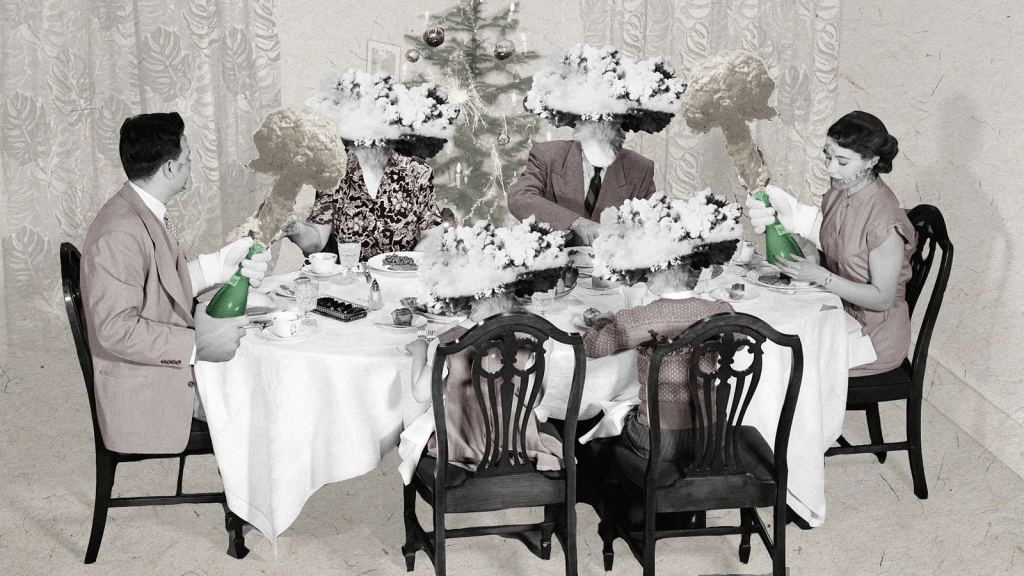
Family Rifts Triggered by Christmas

Why Festive Gatherings can be so Toxic by David Robson

Christmas is a time of love, warmth – and often, huge family arguments. Here’s how to decode the primal forces that can cause painful rows, and enjoy a more peaceful season.

“A happy family,” so the saying goes, “is but an earlier heaven” – which must surely make an unhappy family a living hell.

As we enter the holiday season, many of us will be steeling ourselves for potential tension and argument. Whether it’s quiet disapproval over the quality of the cooking, a simmering resentment over alleged favouritism, or a fierce argument about our political and social values, family gatherings often bring out the worst in us. That’s if we choose to see our families at all – for many, there is no choice but to spend the holidays apart.

While family strife may be a source of entertainment in dramas like Succession, the real-life consequences are no joke.

“A really common consequence of estrangement is feeling isolated,” in addition to feelings of shame and being judged, says Lucy Blake, a developmental psychologist at the University of the West of England and author of the forthcoming book No Family Is Perfect: A Guide to Embracing the Messy Reality.

There is no easy cure to heal fractured relationships. But a better understanding of our family dynamics can help prepare us for the inevitable flashpoints and reveal ways to cope with the stress.

People are often reluctant to talk about unhappy gatherings and family estrangement – which can make those of us who experience it feel like we are somehow unusual. We may even assume that there is something wrong with us to have such poor relations. Social media networks can contribute to our sense of isolation, says Blake. “We often see a ‘performance’ of family, which can then make you feel more and more alone.” Few people are going to post a picture of a bust-up – you’re much more likely to see the gurning faces before a meal than the tears after a row.

Data from anonymous surveys suggests that fractious family relationships are astonishingly common, however. Blake points to one study, from the US, that questioned 633 middle-aged adults about their relationships with their own parents and their own children. In almost a third of the relationships studied, there was little ongoing contact, though most of these people felt some emotional ties – reporting both good and bad feelings about their kin. Of those who were more regularly in touch, many considered their relationships “conflicted” or “ambivalent”. Only 28% of the parent-child ties were engaged and harmonious.

Another paper, published earlier this year, examined data from a huge longitudinal study in Germany to try to identify the prevalence of estrangement. The researchers considered a parent and child to be estranged if they either had no contact, or if they had less-than-monthly contact combined with low emotional closeness. According to these criteria, around 20% of people experienced estrangement from their fathers, and 9% experienced estrangement from their mothers.

Not all clashes lead to such deep rifts, but even mild family rows can be very wounding – and tend to share some common causes.

A shared history

While any relationship has the potential for tension, family arguments often arise from clashing interpretations of the past, which even the slightest off-hand comment can then bring to the fore. And unlike friendships outside the clan, the emotional stakes are extraordinarily high.

“In families, there’s an almost primal sense that my most important loyalties are being challenged – that my love is being challenged,” says Terri Apter, a psychologist based in the UK and the author of numerous books about strained familial relationships, including Difficult Mothers and The Sister Knot. “There’s always the threat of a loss of status in the family, and a loss of connection.”

Even mild family rows can cause damage to relationships – and sometimes the effects can be longlasting (Credit: Javier Hirschfeld/Getty Images)

The triggers of those frustrations, and the ways they are expressed, will of course depend on your relative positions within the family tree. A parent may still believe that they have the authority to give guidance to an adult child – whether it’s about their appearance, career decisions, or romantic relationships. Their well-meaning comments may, however, remind their child of constant unfair criticisms from their adolescence. Among siblings, meanwhile, there may have been rivalries for who gets the most attention from the parents, or who feels most dominant. A grating comment from a big brother may give you the impression that he still thinks he knows everything, or your little sister’s bad mood may be a sign that she is “acting up” to be in the spotlight.

If you were only experiencing these events in isolation, you might see them quite differently. Your brother’s advice – in itself – may be a little irritating, but you could see that it was well-intentioned. Perhaps you might believe that your sister’s tantrum is a one-off and a sign of a bad day. With your family history, however, the slightest reminder of a previous resentment may lead you to feel like you are stuck in an unrelenting Groundhog Day, where past crimes are repeating in an endless loop.

“It doesn’t take a lot, in the present, to reawaken patterns that felt uncomfortable in the past,” says Apter. “And the fact that you don’t particularly like your own responses to the behaviour can compound the discomfort and tension.”

Clashing family cultures

Interacting with in-laws presents its own set of challenges, Apter says – since one family’s rules of behaviour can seem alien to another. Certain actions – such as who volunteers to do the dishes, or how you address the different relatives – can be taken for granted, and what passes as a friendly joke in one household may seem like an insult in another.

In some ways, stepping into another family is like learning to live in a new country; it’s going to take time to translate their behaviours and ways of expressing themselves into a language you can understand. As a result, simple gestures can be lost in translation, leading to conflicts that may escalate over time.

If the inevitable friction leads you or the in-laws to take offence, and your partner doesn’t take your side, it only adds to the hurt. It may be that, having lived the family script for so long, your partner simply cannot see your point of view, or that – because of the accepted roles within the family – they feel unable to intervene, but that doesn’t make it any easier to bear. You may feel completely abandoned in this unfamiliar territory. “Betrayal is often not too harsh a word, in these circumstances,” says Apter.

Apter emphasises that many disagreements are often unspoken. “Sometimes you feel silenced. And that leads to a sense of great discomfort and discontent – that you can’t be yourself or be spontaneous.”

Great expectations?

It may take a miracle to resolve all your family tensions this Christmas, but Apter suggests some steps to ease relations.

One positive move could be to avoid alcohol. “People sometimes drink a lot in the hope that that will make them better able to tolerate the tensions,” says Apter. “But it often makes them less able to moderate their irritation and to put it in context.”

You might also try to shift your expectations of the event. In many cases, our fear of tension, and our desire for the “perfect” day, can itself heighten our stress levels, which then makes arguments more likely.

“You have what psychologists would call high arousal, in which you’re hyper vigilant for certain dangers,” Apter explains. “And so the pressure for it to be a ‘good’ event can contribute to it being a very bad event.”

For this reason, it may be healthier to accept that some disagreement is inevitable, but that it needn’t “ruin” the event. “If you can get to that point where you can mend an argument easily, then that’s very helpful,” says Apter.

As part of this more accepting attitude, you could try to be more compassionate to yourself when you do feel irritated or upset, and make sure that you give yourself the necessary space for self-care. “You might recognise that you’ve got to have private time, maybe in another area in the house or outside the home, where you can breathe, and get back your sense of self,” says Apter.

Learning to adopt that mindset may be especially important this year, as many families around the world are reuniting after more than a year of pandemic-induced lockdowns and forced separation. “Expectations may be even higher because we missed Christmas last year, and there may be a little loss of memory for how uncomfortable it can be,” Apter says.

Ultimately, there is no perfect family, and there will be no perfect Christmas – or Diwali, Chanukah, Chinese New Year, or any other festive get-together. But a recognition of our own and each other’s flaws, and the potential for discord, may – ironically – help us all to have a more relaxed celebration.

BBC.com

How to Cope with Estrangement at Christmas

Dealing with the pain of estrangement can be difficult at the best of times, let alone when it’s Christmas and the absence of family may be more noticeable. After a difficult year of restrictions, hearing about the ‘Christmas bubbles’ some families are forming may also add to the feeling of loss that estrangement can bring, so we asked gransnetters for their tips and advice on how to cope with estrangement at Christmas time. 

Seven ways to cope with family estrangement at Christmas

Focus on yourself and what you want to do

“On Christmas Day I got up early, had several cups of tea, fed the dogs and then wrapped up warm and took them for a long, slow walk. We got back home, I made a hot drink, put the fire on and cuddled up with the dogs until we’d all thawed out.

My Christmas dinner was egg and chips with brown bread and butter and then I curled up with the dogs and watched three Star Wars films, one after the other. It was wonderful! I went to bed happy, relaxed and ready for whatever was coming next. Please don’t think of Christmas Day alone, but of Christmas Day on your own – a vastly different kettle of fish.”

Whether you’re alone for Christmas, or spending it with other family and friends, try to create a day including things you enjoy and that will make you happy. It could be that you ignore traditions and do something you’ve always wanted to do, for example, an alternative feast and film marathon like this gransnetter, or make the day as festive as possible (with all the trimmings). The important thing is that you try to make plans (whether alone or with others) that will bring you joy. Stuck for ideas? Check out our page on things to do if you’re alone for Christmas.

One gransnetter recommends doing something altruistic to raise your spirits: “Volunteer! There are so many people in need this time of year, and lots of amazing organisations. Focusing on giving to others in need will help you embrace what the season is all about, peace and goodwill. You’ll feel so good about your good deeds, you’ll forget to feel bad.”

If you’re deliberating whether to decorate or not, one gransnetter has this advice: “If you’ve always celebrated Christmas, decorated your home and your tree, don’t stop. It’s very tempting to not bother because it’s just too painful but you can’t ignore it, not really. You see homes with their lovely decorations and, for me, to not do my best to embrace this time of the year would simply reinforce what we have lost, and make it harder see what we still have.”

Talk to a trusted friend

“I would talk to your friends and get it out in the open. You may find that talking about it helps get it in perspective and makes it more manageable. I would have a plan for the day, make the most of the things that you have and do something that will keep you busy and engaged.”

Christmas is a hard time of year to be estranged from family, so it’s important that you have a support network in place in case you need to talk through your feelings and acknowledge the sadness you might feel. Communicating how you feel to a trusted friend (who isn’t involved in the estrangement) is important for your mental health, and they can always offer support in the form of taking your mind off things by having a good catch-up too.

 Or chat to the Gransnet community

“Most importantly, talk about how you feel and if you think that those closest to you are ‘all talked out’, talk to us here on GN. You are not alone. Like me, and I’m sure it’s the same for so many estranged people, you’ll be surprised at just how many are going through what we are.”

If you are unsure who to open up to, the Gransnet forums are open 24/7 and there’s a dedicated estrangement topic, where users share advice and offer support to those in similar situations. There’ll also be quite a few of the Gransnet community around at Christmas, especially with restrictions meaning many are spending the day alone, so whether it’s for support or virtual merriment to cheer you up, you can chat anonymously on the forums. 

Remember it’s just a day

“I think Christmas can be a minefield most years, but this year is particularly problematic with bubbles and worries about infection. I think there is so much hype surrounding Christmas and the sometimes unrealistic picture of saccharine family harmony.”

The pressure Christmas can cause shouldn’t be underestimated – a survey by the Mental Health Foundation found that more than half of adults in the UK are worried about the mental health of a loved one over the festive period. With sadness caused by estrangement on top of the usual Christmas stresses, it can seem overwhelming – particularly if it’s your first year estranged. Try to remember that it is a short period, and to take each step and day at a time, as Christmas will soon be over and you’re not alone in feeling this way. We have a page on how to deal with loneliness at Christmas that might be useful in finding some coping mechanisms.

Avoid activities that will make you feel worse

“If there are things that you feel are just too hard to do, don’t do them. It’s eight years for us now and I still can’t go to our church’s children’s nativity service or watch them on tv, so I don’t.”

Identify triggers and avoid them where possible. If it’s one of your first Christmases estranged, this might be difficult as you may not necessarily know the things that will bring on feelings of loss until you encounter them, but if the thought of going to or watching something makes you feel uneasy about the memories it may provoke, it’s best to give it a miss if you can. 

It might also be worth avoiding social media such as Facebook and Instagram around the time if you feel you may become upset at photos of families spending Christmas together. In this instance, it’s important not to compare yourself and your situation to others, as this is likely to be detrimental to you, and bear in mind that not everything on social media is as it seems.

Think carefully before you communicate

“We’ve never sent anything to our estranged son which to be honest is purely for self preservation, as neither of us could cope with anything we’d sent being returned, or being castigated for sending him something in the first place. Do what feels right for you, do what will help you get through your first or yet another Christmas with estrangement.”

The sentimentality of Christmas may incite nostalgia, and make you want to pick up the phone or put pen to paper to try to reconcile, but before you make any hasty decisions think through whether this is the right thing for you to do. If you receive no reply, will it make you feel worse than before? Would you want to make contact like this if it was any other time of year? Connecting with an estranged relative is obviously a very sensitive topic, but it’s essential that you think things through clearly and objectively before making any big decisions. Our page on estrangement has more information on this.

If you’re struggling with not seeing your grandchildren over Christmas, and are unable to make contact, one gransnetter recommends creating a memory box and putting a card in there for them each year. This way you are acknowledging your grandchild’s Christmas without creating further hostility with their parents: “This will be the first year we haven’t sent them a card in the post, we’ve decided we don’t need to do that anymore, so we will be getting a card for each of them to go in the memory box.”

Be kind to yourself and get help if you need it

It’s been an unimaginably difficult year for many, so go easy on yourself, and remember that even when coping with loss through estrangement, you’re still allowed to feel joy and happiness at Christmas. If you are really struggling and feeling low, it’s important that you seek advice and guidance to help you through this hard time. Here are some organisations which may help if you’re worried about your mental health:

  • Relate – offer relationship counseling, including family issues
  • Mind – offer mental health support 
  • Silverline – helpline for older people
  • Samaritans – if you urgently need emotional support, you can contact them by emailing jo@samaritans.org or by calling 116 123.

Gransnet