False Memory Creation – Parental Alienation

by Sarah Squires

One of the hardest elements of parental alienation is when allegations are made by both
children and parents. Professionals have a duty of care to investigate and gather evidence. But
how reliable are the memories being recalled?
It has long been accepted that false memories exist and there are countless studies which
confirm how easy it is to “implant” a memory (which we will look into later) but for a practitioner
involved in a parental alienation case, it can be hard to identify real from false memories and
therefore recall confabulation can result in prosecution for the “abuser”, possibly jail and
definitely the loss of the relationship with their child.
It is therefore important that we understand what memory is, how it is stored and how false
memories can occur.

What is memory?

Bartlett (1932) describes memory as “imaginative reconstruction” meaning that memories
consist of numerous elements, pieced together and replayed in a format familiar to the teller.
The first two elements are:
● Declarative
● Nondeclarative

Semantic memory refers to the facts involved in the memory which you just know and are not
from personal experience. For example, the names for colours. Craik and Lockhart (1972) found
that complex semantic processing produced better recall than simple semantic processing.
Meaning it’s the details which help with the recall.

Episodic memory refers to the unique experience linked to the time and place in our lives.
Rogers et al (1977) found that episodic memory was more reliable than semantic in recall
situations. Meaning we remember things better which have a personal and emotional
connection to us. A study by Hayne and Imuta (2011) found that by the age of 3, children exhibit
rudimentary episodic memory skills, and that strict reliance on verbal recall may underestimate
their episodic memory ability.

Interestingly, more recent findings have suggested that it is the ability to retain, as opposed to
form, episodic memories that may be the source of the advantage inferred through age in older children, with 3-year-old children demonstrating good retention of episodic recollection across short but not long delays (Scarf et al., 2013).

Nondeclarative memory, also known as procedural memory, is the repository of information
about basic skills, motor (muscular) movement, verbal qualities, visual images, and emotions. It
is our unconscious memory based on what we have been taught and experienced in the world
around us.

Conditioning plays an important role in procedural memory and two main conditioning elements
have been identified: classic and operant.

Classic conditioning theory was developed by Pavlov following experiments with dogs.
He found that you could associate a behaviour to a previously non-associated action
through classic conditioning. He rang a bell and the dogs did not respond. He showed
them food, they salivated (required response). He then gave the food and rang the bell
at the same time, dogs salivated (required response). Finally he rang the bell on it’s own
and the dogs salivated (required response). The dogs had been conditioned to associate
the bell and food.

Operant conditioning was developed by Skinner (1948) and Thorndike (1905). They both
found that animals would repeat the same action if the outcome was pleasant (positive
reinforcement) and would stop an action if the outcome was negative (negative
reinforcement). The animals learnt this through trial and error. This became known as
the “law of effect”

Both are behavioural theories but these responses becomes procedural and so form part of our
long term memory.

In order for memory to be developed, we also need the cognitive abilities to piece it all together.
Jean Piaget (1932) developed 4 cognitive stages of childhood development:

  1. Sensorimotor Stage: Birth through about 2 years. During this stage, children learn about
    the world through their senses and the manipulation of objects.
  2. Preoperational Stage: Ages 2 through 7. During this stage, children develop memory and imagination. They are also able to understand things symbolically, and to understand the ideas of past and future.
  3. Concrete Operational Stage: Ages 7 through 11. During this stage, children become more aware of external events, as well as feelings other than their own. They become less egocentric, and begin to understand that not everyone shares their thoughts, beliefs, or feelings.
  4. Formal Operational Stage: Ages 11 and older. During this stage, children are able to use logic to solve problems, view the world around them, and plan for the future.

“Six-month-olds have a memory span of no more than about 24 hours, which gradually expands
to up to a month by 9 months. In the new study, 13-month-old babies could not remember
events they had witnessed and mimicked four months earlier– a task that came easily to their
elders, ages 21 months and 28 months.”
(https://www.upi.com/Older-children-remember-longer/47801036004400/)

Using this and the previous studies mentioned, we can see how memory develops in children
and the ages at which specific types of memory develop alongside their cognitive and language
abilities.

How false memories can be created

Freud (1923) first identified that likelihood of false memory, naming it confabulation and
reconstruction.
Confabulation is the unintentional manufacturing of information to fill in the missing details
during recall. It’s usual purpose it to make the story more coherent and can occur under
conditions of high motivation or emotion.
In 1997 Coan found that “our recollection of memories can be manipulated and even entire sets
of events can be confabulated”.
Reconstruction involves the distortion of the original memory through a series of filters including
our past experiences, beliefs, schemas and stereotypes.

Elizabeth Loftus and Cara Laney (2013) found that the verbage used to frame a question when
trying to illicit a memory recall can impact false memory recollection. For example, asking “did
you see THE dog?” was more likely to get a false memory recollection than asking “did you see
Adog?”
Nicholas Spanos (1996) found that 50% of participants were led to contrast complex, vivid and
detailed false memories using a process called “guided mnemonic restructuring” which involves
active encouragement.
Loftus and Laney also found that imagination inflation can occur as the more a subject
visualises/images the event, the more “real” it becomes.

In the same paper three key elements which impact the forming of false memory were identified
as:
● social pressure
● encouragement
● individual encouraged not to consider if the memory is true or not

Implications for parental alienation

In studies adults have been shown to be very susceptible to suggestion and manipulation to
create false memories if they are encouraged to by someone they have an interpersonal
relationship with meaning children, who are much more susceptible to their parent’s influence,
could easily “create” memories which they retain through rehearsal.

Attachment System Suppression and Phobic Anxiety Toward a Parent

The child’s symptoms evidence a selective and targeted suppression of the normal-range
functioning of the child’s attachment bonding motivations toward one parent, the
targeted-rejected parent, in which the child seeks to entirely terminate a relationship with this parent (i.e., a child-initiated cut-off in the child’s relationship with a normal-range and affectionally available parent). (Childress 2015)

A child who previously had a positive and secure attachment to the alienated parent, suddenly
hates them and vilifies them for everything they do and have done.

They have no good memories of the alienated parent. The age of the child is important as is
how long the child has been separated from the parent. However, we know that children are
capable of storing and recalling memories from a very young age and so for there to be a
complete absence of any good memories, may suggest manipulation or conditioning. For
example a child could say they love the alienated parent and get shouted at (negative
reinforcement) so they stop saying it and instead say “I hate them” and get rewarded (positive
reinforcement). Following the law of effect, the child would make more negative statements
towards the alienated parent in order to receive more rewards. There is also the added
dimension here of the attachment style of the parent. If they were previously rejecting-neglecting
the child, there is even more motivation for the child to say negative things as they will get their
primary needs met as well.

Fixed False Belief

The child’s symptoms display an intransigently held, fixed and false belief regarding the
fundamental parental inadequacy of the targeted-rejected parent in which the child
characterizes a relationship with the targeted rejected parent as being somehow
emotionally or psychologically “abusive” of the child. While the child may not explicitly
use the term “abusive,” the implication of emotional or psychological abuse is contained
within the child’s belief system and is not warranted based on the assessed parenting
practices of the targeted-rejected parent (which are assessed to be broadly normal
range) (Childress 2015).

In some instances there may be a genuine reason the child feels angry towards the alienated
parent. But the reaction is still disproportionate to the incident which has made them angry. As
an ex child protection social worker I have witnessed contact between abusive parents and their children and in almost all cases, the child will interact with the parent and the relationship will
return to its previous state. Obviously here the age of the child is important though. An
adolescent child may demonstrate more anger due to their increased understanding and their
own interrupted emotional state as they go through puberty. A younger child however, whose
memory is still developing, would struggle to recall memories from over two months ago.
Therefore it is important for practitioners to remember that a child will have both good and bad
memories of the alienated parent. Bad events do not delete good ones. If a child is unable (or
unwilling) to recall positive memories, this could indicate manipulation or conditioning. It may
also be possible that false memories have been implanted and cemented through rehearsal,
ensuring that the child thoroughly believes their accusations.

Splitting

The child evidences polarized extremes of attitude toward the parents, in which the
supposedly “favoured” parent is idealized as the all-good and nurturing parent while the
rejected parent is entirely devalued as the all-bad and entirely inadequate parent.
(Childress 2015)

The child has a very “black and white” view of their parents. One is all good, the other all bad.
No positive qualities can be recalled for the alienated parent and no negative ones for the
alienator.

Memory is very rarely erased (except in amnesia cases) and instead fade over time. So for a
child to be unable (or unwilling) to recall any positive qualities in their parent, suggests that
conditioning has taken place. For example, the alienating parent could classically condition the
child into believing the alienated parent is all bad by associating all bad memories with that
parent. “We can’t go on holiday this year because of your mother/father”. If this process is
repeated often enough, the child will be conditioned to believe the alienated parent is all bad.
Diversely, the alienating parent will be telling the child that they are the only one who loves them
and understands them, conditioning the child to see them as all good.

Role-Reversal Dynamic

In alienation, a child’s psychological boundaries may be compromised, and differentiation
from that parent may not occur. Instead, the child becomes infused with the mindset of the
pathogenic parent and alienated from the normal-range parent through covert psychological
manipulation on the part of the pathogenic parent. (Childress 2015)

The child will adamantly deny that anyone has influenced their decision.
Again, age will be an important factor here. Does the child have the cognitive ability (as outlined
above) to make these statements? Do they understand the consequences? It is therefore
important the practitioner explores the child’s understanding of what the statements mean and
uses memory recall exercises to confirm this. For example, a child who states that they have
decided they never want to see their parent again could be asked “what about at Christmas? Do
you not want a present from them?” and explore “what did you get from them last year?”. Future
and past tense exercises can help bypass the possibility of false memories because it is unlikely
(and impossible) for someone to have rewritten their entire history or talked about the future with
the child.

Absence of Empathy

The child displays a complete absence of empathy for the emotional pain being inflicted
on the targeted-rejected parent by the child’s hostility and rejection of this parent.
(Childress 2015)

The child will feel justified in their actions and cold towards the alienated parent.
According to Erikson’s Psychosocial (1950, 1963) stage theory, around age three and
continuing to age five, children assert themselves more frequently. They will play independently,
make up games and and initiate activities with others. This is the Initiative v’s Guilt stage.
Therefore it is important when a child is expressing that they are using their own initiative, that this behaviour is observed in other settings as well. Does the demonstrate the ability to think
independently about other subjects? Any inconsistency may suggest manipulation.

Grandiosity

The child displays a grandiose perception of occupying an inappropriately elevated
status in the family hierarchy that is above the targeted-rejected parent from which the
child feels empowered to sit in judgment of the targeted-rejected parent as both a parent
and as a person. (Childress 2015)

The child will always side with the alienating parent. The child does not want to hear the
alienated parent’s point of view.

This demonstrates elements of concrete thinking. i.e. seeing something as fixed and certain. It
is evident in very young children but as children age they begin to develop logical and
eventually abstract thinking as well (see Piaget’s development stages above). The absence of
logical thinking, which would be developmentally appropriate for their age, suggests either
developmental delay or manipulation.

Transgenerational Trauma and the Trauma Reenactment

This is the process by which differentiation between family members across generations
affects individuals and their personal differentiation process. The transmission occurs on
several levels involving both conscious teaching and unconscious programming of
emotional responses and behaviors. Due to the intricacies of the relationship dynamics,
some children develop more of a differentiated “self” than others. (Childress 2015)

The child may make accusations against the alienated parent which phrases and scenarios
which are inappropriate for their age. For example, a child might say “I hate mum/dad because
they made us homeless” but when you ask them what homeless means they have no
understanding of it.

Whilst not all allegations are false, those which use language which isn’t congruent with the
child’s natural speech, would suggest that false memories have been implanted. As outlined in
the above section on “how false memories are implanted”, this is relatively easy to do and
children will be highly sensitive to this kind of manipulation from a caregiver. Especially if it is
coupled with condition behaviours.

Avoidance of Parent

The child seeks to avoid exposure to the targeted parent due to the situationally
provoked anxiety or else endures the presence of the targeted parent with great distress.
“Childress 2015)

Anyone associated with the alienated parent will be rejected by the child for little or no reason.
Using Erikson’s psychosocial development model again, the crisis of trust vs mistrust occurs
during the first year or so of life. During this stage, the infant is uncertain about the world in
which they live. To resolve these feelings of uncertainty, the infant looks towards their caregivers
for stability and consistency of care. This forms the attachment.

Initially Bowlby (1969) believed that a child formed one primary attachment which superseded
all others. However later research has shown that children form multiple quality attachments to a
range of caregivers, including grandparents, aunts and uncles (Furnivall 2011). Therefore it is
important when a child is rejecting whole families or those associated with alienated parent, that
a practitioner explores early attachment and experiences with the wider family through taking
family history. The child is unlikely to have forgotten those experiences and, unless severe
abuse has taken place, it is unlikely the memories have been repressed. Therefore the child
may have been conditioned and manipulated into “forgetting”.

Conclusion

Both memory and parental alienation are complex theories and we have to draw upon many
additional theories in order to give a comprehensive picture of what is going on. However I hope
that this paper has demonstrated the important role that memory and memory manipulation
plays in parental alienation syndrome and provided some practical advice on what to look for.

False Memories by Sarah Squires

My comments – Although this article speaks of younger children, adult children can also act this way towards a targeted parent, creating false memories about them due to the manipulation and conditioning from the favoured parent. I have had contact with thousands of mothers who are experiencing this.
Abusive Adult Children and its Effect On Parents

by Sheri McGregor MA

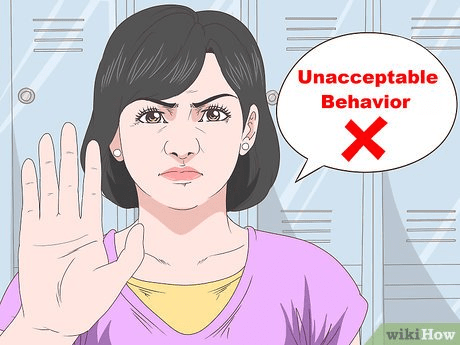
Abusive adult children influence parents’ self-image

Image – Wikihow

Abusive adult children: a scary reflection

Have you ever looked in one of those magnifying mirrors that highlights every imperfection? Fine facial hair looks forest-thick, and skin pores appear as large as craters. But there’s a value in looking closely—even if, as a friend says, “Those magnifying mirrors are scary.”

Whose Mirror?

The perverse opinions of abusive adult children can make parents see themselves in a warped mirror. One that distorts them so much they no longer recognize themselves. This might have happened over time, or overnight.

“All I could see were my failures,” recalls Barbara. “My own daughter told me I ruined her life, and she had a million detailed memories of how I did everything wrong.”

Imagine waking up one day and seeing a monstrosity reflected. That’s how parents can feel when an adult child’s abuse includes blame, accusations, and twisted memories.

In the beginning, Barbara spoke up. “It was as if my daughter woke up one day and had brand new memories,” Barbara explains. “She recounted her life with a black cloud of doom over her head, and the cloud was me.”

Because the vast majority of parents want their children’s happiness above all else, they reevaluate themselves through the son or daughter’s perspective. They’re willing to look at how their choices may have been seen through their child’s eyes. All parents make mistakes. Also, it’s possible a child didn’t understand a parent’s choices, the motivation driving them, or what might have been happening behind the scenes. Those sorts of things can be discussed and worked out by willing parties.

Unfortunately, of the one hundred or more emails I receive from parents of estranged or abusive adult children each week, many of them have tried—unsuccessfully. Barbara certainly did. Offers for mediation, counselling, or to just sit down and talk, have been met with such things as flat-out refusals, silence, or more abusive rants.

Seeing the real you

Many parents are surprised to find that there are so many like them who have suffered from cruelty, abandonment, put-downs, and endless blame. And because it’s a controversial subject, they’ve been afraid to tell anyone for fear of judgment. Or, as is often the case, they’re keeping quiet to protect their adult child’s reputation.

Barbara knew she had done her best. She’s like other parents whose self-image can get lost to a flawed reflection provided repeatedly by abusive adult children. I routinely hear from parents convinced they’re failures, deserving of the pain or abandonment their sons and daughters inflict. After all, they reason, if they were a good mother or father, their children would love them.

They may try everything to maintain a relationship. Barbara’s daughter threatened to keep her grandchildren away, so she walked on eggshells.  “If I said anything out of line, which could be anything depending on her mood, then the tirade would begin.” Eventually, Barbara’s then 36-year old daughter began posting lies on Facebook about her. At the time, Barbara was recovering from surgery. At her breaking point, she replied, publicly asking her daughter why she’d lied. The postings were deleted, but Barbara’s daughter went no-contact. “It wasn’t the first time,” says Barbara. “But it has been the longest estrangement so far.”

With a health scare that became a turning point, Barbara knew she had to make a change. That’s when she began to look for help. But after years of warped opinions from an abusive adult child, she had little self-confidence.  “If I raised this person who turned out to be so cruel, then how could I be a successful mother?” she asks.  “My daughter had reminded me what a failure I was every chance she got.”

Take a closer look.

When suffering parents discover my book, they tell me they’re shocked to read so many experiences that mirror their own. And although it’s sad to know there are so many suffering, the knowledge is also heartening. They’re no longer alone. In reading other parents’ accounts, they get a clearer view. They see themselves in others’ stories, and recognize they were also good parents who did their best.

Once parents have a clearer reflection, they can explore positive changes to help themselves move forward in their own lives. One of the first steps is to look more closely at how much an abusive adult child has affected their lives. The inflicted suffering entails more than sadness and grief. Bitterness, lack of confidence, anger, fear, and anxiety have often crept in. In Done With The Crying: Help and Healing for Mothers of Estranged Adult Children, there are many exercises, and one designed specifically to help with this vital step. Holding the magnifier up to examine changes in themselves is one of the first steps to making positive, concrete plans to regain confidence, find meaning, and happiness again.

Take action.

One woman who found this website and my book after 20 years of grief described her life as a “living death.” Now, she’s glad to have found a way out of the roller-coaster of emotions, the shame and sorrow, and to stop crying and to start celebrating life.

Barbara says it’s too late to reconcile with her daughter. There has been too much heartbreak, and her daughter has refused any sort of counseling or mediation. “I miss my grandchildren,” she says, “but I’m hoping to one day see them again.”

Barbara’s expresses the sentiment of many grandparents who, due to estrangement, have lost touch with precious ones. But I sometimes hear from grandparents who have received their wish. There’s a knock at the door one day, and it’s a grownup grandchild with that same sweet smile, wanting to reconnect. When that happens, you’ll want to be ready, so take care of yourself. As one grandmother recently advised, “Get dressed and put on lipstick every day.”

Don’t wait and hope, mired by inaction that only adds to your grief. You can clean the mirrors of guilt and shame and see yourself for the loving parent you have always been. Like thousands of parents who are learning to accept what they cannot change, and see their goodness again, you can be done with the crying. Take action for yourself and your happiness by reading more of the articles at this site, getting Done With The Crying: Help and Healing for Mothers of Estranged Adult Children and committing to the included exercises. Subscribe to my email newsletter (below) and take the survey. By taking action, you can be like so many parents who have recovered from the sadness and pain caused by abusive adult children, on-and-off or full-on estrangements. Treasure your life. You can find happiness and meaning again.

Rejected Parent

Sibling Rivalry

Why families need to pay more attention….. by Peg Streep

Perhaps, given the biblical story of Cain and Abel, it shouldn’t have come as a big surprise but in interviews for my forthcoming book on verbal abuse, I was struck by how many respondents reported being verbally abused by a sibling in their families of origin. In some cases, the abuse was an echo of parental verbal abuse, and the abuser was joining in both to keep him or herself safe from becoming the target and to establish loyalty to the abusive parent. This is especially true in a family where a mother or father is high in narcissistic traits, hypercritical, controlling, or highly combative. In these families, siblings are frequently pitted against each other. That was true for “Joe,” now 42:

“My father was a tyrant; there was a right way of doing things, which was his way, and a wrong way, and woe to the son who didn’t do it his way. My mother was his accomplice, using shaming to get us to stay in line, and praising the merits of ‘sibling rivalry.’ My brother is five years older and he bullied me to show my dad how strong he was. Believe it or not, I thought this was how all brothers were until I started to notice that my friends had brothers who were actually friends. I have as little to do with my parents and brother as possible and I have worked hard at making sure my own boys are never compared to each other or encouraged to belittle each other.”

This story focuses on a son’s experience but it happens between sisters as well, especially when a mother or father plays favourites or uses the achievements of one daughter to belittle or browbeat another, and the favoured daughter becomes verbally abusive to her sibling as well.

How the term “sibling rivalry” blinds us to sibling abuse


KEY POINTS

  • The term “sibling rivalry” can mislead parents, leading them to ignore sibling abuse.
  • Healthy competition requires balance of power between siblings. Parents can contribute by not playing favorites or using competion to criticize.
  • Physical aggression is strikingly common between and among siblings. Surprisingly, it can teach valuable skills when it is mutual or dyadic.
  • Sibling abuse is about power. It is always one-sided.
Obie Fernandez/Unsplash

Source: Obie Fernandez/Unsplash

Perhaps, given the biblical story of Cain and Abel, it shouldn’t have come as a big surprise but in interviews for my forthcoming book on verbal abuse, I was struck by how many respondents reported being verbally abused by a sibling in their families of origin. In some cases, the abuse was an echo of parental verbal abuse, and the abuser was joining in both to keep him or herself safe from becoming the target and to establish loyalty to the abusive parent. This is especially true in a family where a mother or father is high in narcissistic traits, hypercritical, controlling, or highly combative. In these families, siblings are frequently pitted against each other. That was true for “Joe,” now 42:

“My father was a tyrant; there was a right way of doing things, which was his way, and a wrong way, and woe to the son who didn’t do it his way. My mother was his accomplice, using shaming to get us to stay in line, and praising the merits of ‘sibling rivalry.’ My brother is five years older and he bullied me to show my dad how strong he was. Believe it or not, I thought this was how all brothers were until I started to notice that my friends had brothers who were actually friends. I have as little to do with my parents and brother as possible and I have worked hard at making sure my own boys are never compared to each other or encouraged to belittle each other.”

This story focuses on a son’s experience but it happens between sisters as well, especially when a mother or father plays favorites or uses the achievements of one daughter to belittle or browbeat another, and the favored daughter becomes verbally abusive to her sibling as well.

How the term “sibling rivalry” blinds us to sibling abuse

But, sometimes, a sibling’s verbal abuse isn’t an echo but an act of individual aggression, and it’s sad that parents don’t always recognize it as such and write it off as a function of “sibling rivalry” — a supposedly a “normal” occurrence in families with more than one child.

In his 2012 book Sibling Aggression, Jonathan Caspi noted that this normalization isn’t just limited to laypeople but to professionals as well. He writes that despite a growing body of research which shows otherwise, “the mistaken belief that sibling violence is not harmful normalizes it. Statements such as ‘My brother beat on me and I am fine’ and ‘Boys will be boys’ minimize honest appraisals of possible effects and validate its continued use.” He notes that practitioners too grew up with the same social context—thinking that sibling aggression is normal—and so their judgments about family dynamics are often clouded by their own internalized views. He surmises that this point of view limits research as well. He uses sibling aggression as an umbrella term which encompasses four categories which he arranges in order of effect, going from most mild to severe; in order, they are competition, conflict, violence, and abuse.

Understanding competition between siblings

Healthy competition can motivate and challenge siblings to develop their skills and talents. Famous siblings in sports — the Williams sisters or the Manning brothers — immediately come to mind. But when the aim of the competition is to highlight one sibling’s flaws or inadequacies, competition moves from being inspirational to being hurtful and damaging. (Think about the Jackson Five, their siblings, and their abusive father, for example.) Caspi notes that most of the time, one sibling’s advanced skills don’t damage another’s self-esteem.

Surveying conflict in sibling relationships

Every family experiences some amount of conflict and, as Caspi notes, constructive sibling conflict promotes social and emotional competence, teaches problem-solving, and helps a child hone his or her emotional regulation. My own thought is that, for this to happen, parents have to have modeled and implemented cooperative ways of dealing with disagreements and conflict. In households where verbal abuse is the default, this isn’t going to happen.

But even in a household where constructive behaviour has been modelled, it’s clear that constant negative conflict between siblings can alter the dynamics of a family as well as the sibling relationship.

Is roughhousing violence between siblings?

Caspi notes that the terms sibling violence and sibling abuse are often used interchangeably because they both entail physical and verbal acts that intend to do harm. However, he distinguishes violence from abuse. He writes: “Violence reflects mutual or bidirectional aggression in which both siblings aim to harm each other in a concert of perceived egalitarian relationship.” Sibling physical violence — hitting, biting, pinching, kicking — is astonishingly prevalent; some researchers’ estimates are as high as 96 percent of all families while others put it at 80 percent. But, as Caspi points out, physical violence is very difficult to distinguish from animated roughhousing or even rough-and-tumble play so these numbers may be greatly inflated because of parental confusion about what’s “normal” between siblings and what’s not. Most importantly, research supports Caspi’s contention that this kind of mutual sibling violence doesn’t damage self-esteem.

Some readers will share my initial confusion, reading that this “even-steven” and mutual mano a mano type of violence isn’t necessarily harmful or damaging, but that is what research shows. Let’s consider rough-and-tumble play, for example. Joseph L. Flanders, Vanessa Leo, and their colleagues cite research showing that physically aggressive behaviors are observable as early as 18 months but begin to taper off in most children by age two or three; their study looked at father-child rough-and-tumble play (RTP) to determine whether a father’s behavior influenced a higher incidence of continuing physical aggression in children. It’s widely recognized that fathers play with children differently than mothers do, regardless of gender, and that kids prefer Dad’s style of play over Mom’s.


KEY POINTS

  • The term “sibling rivalry” can mislead parents, leading them to ignore sibling abuse.
  • Healthy competition requires balance of power between siblings. Parents can contribute by not playing favorites or using competion to criticize.
  • Physical aggression is strikingly common between and among siblings. Surprisingly, it can teach valuable skills when it is mutual or dyadic.
  • Sibling abuse is about power. It is always one-sided.
Obie Fernandez/Unsplash

Source: Obie Fernandez/Unsplash

Perhaps, given the biblical story of Cain and Abel, it shouldn’t have come as a big surprise but in interviews for my forthcoming book on verbal abuse, I was struck by how many respondents reported being verbally abused by a sibling in their families of origin. In some cases, the abuse was an echo of parental verbal abuse, and the abuser was joining in both to keep him or herself safe from becoming the target and to establish loyalty to the abusive parent. This is especially true in a family where a mother or father is high in narcissistic traits, hypercritical, controlling, or highly combative. In these families, siblings are frequently pitted against each other. That was true for “Joe,” now 42:

“My father was a tyrant; there was a right way of doing things, which was his way, and a wrong way, and woe to the son who didn’t do it his way. My mother was his accomplice, using shaming to get us to stay in line, and praising the merits of ‘sibling rivalry.’ My brother is five years older and he bullied me to show my dad how strong he was. Believe it or not, I thought this was how all brothers were until I started to notice that my friends had brothers who were actually friends. I have as little to do with my parents and brother as possible and I have worked hard at making sure my own boys are never compared to each other or encouraged to belittle each other.”

This story focuses on a son’s experience but it happens between sisters as well, especially when a mother or father plays favorites or uses the achievements of one daughter to belittle or browbeat another, and the favored daughter becomes verbally abusive to her sibling as well.

How the term “sibling rivalry” blinds us to sibling abuse

article continues after advertisement

But, sometimes, a sibling’s verbal abuse isn’t an echo but an act of individual aggression, and it’s sad that parents don’t always recognize it as such and write it off as a function of “sibling rivalry” — a supposedly a “normal” occurrence in families with more than one child.

In his 2012 book Sibling Aggression, Jonathan Caspi noted that this normalization isn’t just limited to laypeople but to professionals as well. He writes that despite a growing body of research which shows otherwise, “the mistaken belief that sibling violence is not harmful normalizes it. Statements such as ‘My brother beat on me and I am fine’ and ‘Boys will be boys’ minimize honest appraisals of possible effects and validate its continued use.” He notes that practitioners too grew up with the same social context—thinking that sibling aggression is normal—and so their judgments about family dynamics are often clouded by their own internalized views. He surmises that this point of view limits research as well. He uses sibling aggression as an umbrella term which encompasses four categories which he arranges in order of effect, going from most mild to severe; in order, they are competition, conflict, violence, and abuse.

Understanding competition between siblings

Healthy competition can motivate and challenge siblings to develop their skills and talents. Famous siblings in sports — the Williams sisters or the Manning brothers — immediately come to mind. But when the aim of the competition is to highlight one sibling’s flaws or inadequacies, competition moves from being inspirational to being hurtful and damaging. (Think about the Jackson Five, their siblings, and their abusive father, for example.) Caspi notes that most of the time, one sibling’s advanced skills don’t damage another’s self-esteem.

Surveying conflict in sibling relationships

Every family experiences some amount of conflict and, as Caspi notes, constructive sibling conflict promotes social and emotional competence, teaches problem-solving, and helps a child hone his or her emotional regulation. My own thought is that, for this to happen, parents have to have modeled and implemented cooperative ways of dealing with disagreements and conflict. In households where verbal abuse is the default, this isn’t going to happen.

But even in a household where constructive behavior has been modeled, it’s clear that constant negative conflict between siblings can alter the dynamics of a family as well as the sibling relationship.

Is roughhousing violence between siblings?

Caspi notes that the terms sibling violence and sibling abuse are often used interchangeably because they both entail physical and verbal acts that intend to do harm. However, he distinguishes violence from abuse. He writes: “Violence reflects mutual or bidirectional aggression in which both siblings aim to harm each other in a concert of perceived egalitarian relationship.” Sibling physical violence — hitting, biting, pinching, kicking — is astonishingly prevalent; some researchers’ estimates are as high as 96 percent of all families while others put it at 80 percent. But, as Caspi points out, physical violence is very difficult to distinguish from animated roughhousing or even rough-and-tumble play so these numbers may be greatly inflated because of parental confusion about what’s “normal” between siblings and what’s not. Most importantly, research supports Caspi’s contention that this kind of mutual sibling violence doesn’t damage self-esteem.

Some readers will share my initial confusion, reading that this “even-steven” and mutual mano a mano type of violence isn’t necessarily harmful or damaging, but that is what research shows. Let’s consider rough-and-tumble play, for example. Joseph L. Flanders, Vanessa Leo, and their colleagues cite research showing that physically aggressive behaviors are observable as early as 18 months but begin to taper off in most children by age two or three; their study looked at father-child rough-and-tumble play (RTP) to determine whether a father’s behavior influenced a higher incidence of continuing physical aggression in children. It’s widely recognized that fathers play with children differently than mothers do, regardless of gender, and that kids prefer Dad’s style of play over Mom’s.

article continues after advertisement

RTP is characterized by aggressive behaviours such as “wrestling, grappling, jumping, and chasing in a play context.” Fathers often socialize both sons and daughters through this kind of physical play which is associated positively with emotional regulation, self-control, reading emotional cues, and even sensitivity to others. These are important skills for self-development and permit children to negotiate social rules in peer settings with more ease. What Flanders and his team found was that when fathers controlled and set limits during RTP, their children demonstrated lower levels of physical aggression in daily life; in contrast, the children of fathers who didn’t set limits and shucked off dominance were more likely to be more physically aggressive in later life.

So mutual or bi-directional physical aggression actually has its benefits, as counterintuitive as that may seem.

When it’s not mutual, it’s abuse

The distinction that Caspi makes between violence and abuse largely rests on power; if he considers the first to be “bidirectional” or “mutual,” then sibling abuse is “unidirectional hostility where one sibling seeks to overpower the other via a reign of terror and intimidation, and reflects an asymmetrical power arrangement.” The abusive sibling not only wants to humiliate and render the other powerless but he or she is intent on aggrandizing him or herself through the act. Caspi notes four kinds of sibling abuse—physical, sexual, psychological or verbal, and relational—but verbal abuse is by far the most prevalent. Among siblings, verbal abuse includes insults, name-calling, and threats to property. Again, because siblings do chivy for attention in the household, it may be difficult for the parents to distinguish between chivying, an expression of frustration, and verbal abuse which is about dominance.

Beyond sibling rivalry

It’s clear that we need to retire the term. If you’re an adult who experienced sibling abuse but have rationalized or downplayed it, now’s the time to stop and reflect on its effects. Speak out. You may get pushback because families guard their narratives fiercely but it’s time you stepped out of the role assigned you, whether that’s the “sensitive one” or “the wuss.”

If you’re a parent of siblings, pay close attention to not just your behaviours but theirs. Step in if necessary.

Psychology Today