by Web MD Editorial Contributors, Medically Reviewed by Smitha Bhandari MD
Image – Sydney Criminal Lawyers
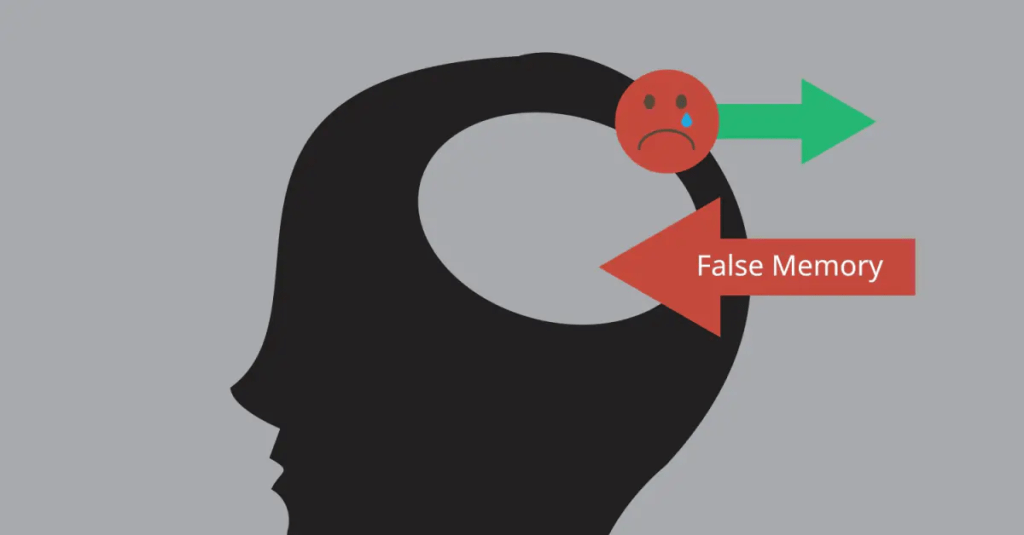
No one’s memory is 100% percent accurate, but some people make many memory errors. They believe in the accuracy of these faulty memories and can be convincing when talking about them. This is what scientists call confabulation. Some brain conditions can cause these errors in memory.
What Is Confabulation?
Confabulations are usually autobiographical, involving people misremembering their own experiences. Sometimes they place experiences in the wrong time or place. They may wrongly recall other details, large or small. Occasionally confabulations have little basis in reality. Details can be drawn from movies, television, and overheard conversations.
Of course, people with no brain disorders can have faulty memories. Normal mistakes in memory become confabulation when people remember false information in vivid detail, often claiming to relive the event. They may exhibit genuine emotions, such as grieving over a friend who has not died. Listeners often believe what they are hearing is true.
What Confabulation Is Not
Confabulation is not lying. Confabulation differs from other forms of falsehood. Confabulators have no reason to tell a lie and don’t realize that they’re not telling the truth. Their brains simply filled in some missing spots with false information. Some people have called this “honest lying”.
Confabulations are not delusions. Both involve false beliefs, but confabulation almost always involves a memory, while delusions are less anchored in the real world. Delusions occur mostly in psychiatric disorders such as schizophrenia. Confabulation is more common in brain disorders such as dementia.
Two Kinds of Confabulation
Confabulations can be either provoked or spontaneous. They’re provoked if they occur in response to a question. The person may feel compelled to answer even if they don’t know what to say. They’re spontaneous if they’re offered voluntarily. Spontaneous confabulations are usually less believable and might be fantastic or bizarre.
Conditions Linked to Confabulation
Confabulation is caused by brain damage or poor brain function, but researchers are unsure which parts of the brain are at fault. The frontal lobe or the basal forebrain may be involved. Confabulation occurs with several brain disorders. These are some of the most common.
Wernicke-Korsakoff syndrome. Confabulation was first studied by a Russian psychiatrist, Sergeievich Korsakoff. He noticed that his clients who overused alcohol often had faulty memories. He gave his name to a condition that occurs with an alcohol use problem. Wernicke-Korsakoff syndrome is caused by a vitamin B1 deficiency.
Alzheimer’s disease. Those with Alzheimer’s disease experience a range of symptoms. Delusions, such as believing that someone is stealing from them, are common. Provoked confabulations are common in early Alzheimer’s. Spontaneous confabulations can become a serious problem if the person with Alzheimer’s acts on their mistaken beliefs.
Traumatic brain injury. A blow to the head can cause problems in thinking and memory. Confabulation can be a special problem for those with traumatic brain injury. They may misreport events leading up to the injury or make mistakes about other important details.
Fetal Alcohol Spectrum Disorder. Exposure to alcohol in the womb can cause a person to have a variety of brain problems, including confabulation. Often those with fetal alcohol spectrum disorder are suggestible and eager to please. These characteristics can make them likely to create false memories.
Can Confabulation Be Treated?
Confabulation won’t go away unless the underlying condition is addressed. Doctors can treat some conditions. For example, Wernicke-Korsakoff syndrome is treated with vitamin B1. Other conditions lack effective treatments.
Those who live or work with confabulators can reduce problems by using strategies such as these:
Minimizing distractions
Avoiding leading questions
Allowing extra time for processing
Reducing stress
Using simple language
Checking to see if they understand
Some confabulators can be taught how to monitor themselves. Memory aids can help. They can keep memory diaries so they don’t feel pressure to remember everything.
Results of Confabulation
For the self. Confabulation performs several functions for those who do it:
It lets them make sense of their situation.
It enhances their sense of self.
It makes them relevant in the world.
For family members. Dealing with confabulation can make family members frustrated, angry, or sad. They should remember that their relative is not being untruthful on purpose. A support system is vital for those who confabulate. They may give inaccurate information in a variety of situations. Family can be a part of that support system.
In the legal system. Individuals who confabulate can make false confessions and give false testimony. Although they are not lying on purpose, the results can be serious. Those who interview people with certain brain disorders should understand confabulation. They should avoid long interviews, suggestive questions, and other techniques that could cause the subject to give false information.
Although memories seem to be a solid, straightforward sum of who people are, strong evidence suggests that memories are much more quite complex, highly subject to change, and often simply unreliable. Memories of past events can be reconstructed as people age or as their worldview changes. People regularly recall childhood events falsely, and through effective suggestions and other methods, it’s been proven that they can even create new false memories.
Why False Memories Are Common
A person’s malleable memories often involve the mundane, such as when we second-guess whether the stove really is off or on. But they can often be far more consequential, such as unreliable eyewitness recollections of a crime.
Human memory is pliable and easy to manipulate. A distorted memory or the introduction of later, false information can affect how we recall events we experienced firsthand. A person’s existing knowledge can impede and obstructs their own memory, leading to a newly formed, cobbled-together recollection that does not accurately reflect reality. Also, under certain circumstances, a person can be given false information and be convinced to believe that an event that never occurred actually did.
Should I question my memories?
Given that our recovered memories may be genuine or false, or a combination of the two, it is legitimate to question just how much of what you remember is real and how much is a misperception.
How can I identify a false memory?
Without material evidence, it’s hard to know for sure whether a memory is real or imagined. Even if you feel high conviction that a recollection is true, there is a high chance that the memory is flawed, by a little or a lot.
How do I get rid of false memories?
Just as a recollection can be altered into a false memory, it can be reversed as well. If you return to the memory and think closely about its details, you may be able to recreate the event over time. Through such a process, you reroute the false memory to a true one.
Why Memories Matter
A malleable memory can have especially dire consequences, particularly in legal settings when children are used as eyewitnesses. Research has found that a child may be especially susceptible to the implanting of false memories by parents or other authority figures. This becomes highly problematic when a case involves alleged sexual abuse or relies on the correct identification of a suspect by a child. But adults can also be tricked into remembering events that never happened, or changing the details of things that really did happen.
Why do I remember things that never happened?
Presented with incomplete information, the brain seeks to fill in the blanks. If you see a photo of a person you have never met, for example, and mutual friends have shared descriptive details on time spent with the person, you may start to believe that you have in fact met the individual.
Why do memories change over time?
Psychologist Elizabeth Loftus of the University of California at Irvine, an influential researcher on memory who has consulted on many high-profile legal cases involving disputed memories, including the McMartin preschool sexual abuse allegations, notes that everyone embellishes or adds to their memories during recall or recounting. Over time those changes, accurate or not, become part of the memory in the mind. Loftus warns that human memory is not a recording device, but more like a Wikipedia page: You can change it, but others can, too.
Most people struggle to recall events before the age of about 3 or 4, a phenomenon called childhood amnesia. In the first few years of life, a child’s body undergoes the process of neurogenesis, or the growth and development of nervous tissue. New nerve cells develop, and old cells get recycled or reformed, taking childhood memories away with them.
How Misinformation Is Easily Spread
On the internet, almost anyone claiming objectivity or impartiality can disseminate false memories through the dissemination of specious information. Misinformation, or “fake news,” has become ubiquitous through media such as doctored videos and photoshopped images as well as fabricated text. Such misinformation is especially persuasive with audiences who already harbor biases endorsed by the inaccurate messages.
Why is misinformation so detrimental?
Several recent events have proven that memory can become weaponized, often quite effectively. Once misinformation taken hold in a target’s mind, that new, false recollection hinders his or her ability to make informed decisions about policy and politicians. Fake news drives social discord and character assassination, and even corrupts crucial personal choices about health and well-being.
Biased thinking molds the way we remember. We all employ bias when perceiving, interpreting, and remembering information and events. This effect extends to the ways in which we tap our memories for information about fake news.
Can well-known events be altered?
In a study, researchers doctored images of well-known events and found that indeed a person’s recollection of even universally known, iconic events can be altered.
How to Spot Fake News
Investigate the source of the information and whether the site is reputable.
See who is listed in the “About” section or “Contact Us” page.
Check the author and scrutinize the person’s credibility.
Is the author a real person?
Don’t fall for clickbait headlines, read the entire post.
What is the purpose of the information?
Make sure the story is current and not lifted from old information.
Check the accompanying links for references and citations.
Search for more information on the claim.
Doctored images are sometimes obvious and can be searched via image sourcing tools.
Histrionic personality disorder (HPD) is a psychological condition that causes someone to engage in attention-seeking behaviour. Some aspects of this condition may cause a person to lie to manipulate others.
It is possible that those with HPD may lie more than those without this condition, as they may feel the need to manipulate others to attract their attention. There is no research indicating how frequently those with HPD lie compared with those in the general population. However, anecdotal evidence suggests people with HPD may lie or exaggerate the truth.
This article will closely examine HPD and its connection to lying and how to deal with lying and manipulation.
There are several traits relating toTrusted Source HPD that may cause a person to lie, exaggerate the truth, or manipulate, such as:
Feeling uncomfortable when not the center of attention: Those with HPD feel a need to be the center of attention and, therefore, may use lying or exaggeration as a way to attract attention to themselves.
Shallow or frequently shifting emotions: This means that people with HPD may exhibit emotions that seem insincere to others and change often depending on the situation.
Exaggerating emotions: Someone with HPD may exhibit emotions in an overly dramatic or exaggerated way to attract attention from others.
Manipulative tendencies are common for people with HPD, as they may feel a need to gain attention from those around them or use their emotions to control those around them. They may make up either positive or negative emotions or stories to get this attention.
What is histrionic personality disorder?
Personality disorders are psychological conditions that affect the way a person thinks, feels, and behaves. These conditions cause someone to behave outside of cultural expectations in ways that may cause distress and problems with functioning and maintaining relationships.
HPD is a cluster B personality disorder. Cluster B personality disorders cause a person to have difficulty regulating their emotions and maintaining personal relationships. ResearchersTrusted Source are not sure what causes HPD, but it likely has links to factors such as trauma in early childhood and certain parenting styles.
Other histrionic traits include:
frequent flirtatious or seductive behaviour
using appearance or clothing to attract attention
exaggerated or overly dramatic emotions
being easily influenced by others
thinking relationships with others are closer than they really are
Pathological lying describes somebody who persistently and compulsively tells lies to the point that it damages their personal and professional lives and relationships. Pathological lying can cause distress and harm to both the pathological liar and those around them and persists longer than 6 monthsTrusted Source . A person can not receive a diagnosis as a pathological liar, but a doctor may recognize pathological lying as part of a personality disorder.
According to research from 2020, pathological lying has a prevalence of around 8–13%Trusted Source . A person may lie pathologically to bring attention to themselves or to otherwise benefit from the lies they tell.
Maintaining any kind of relationship with someone who engages in lying and manipulative behavior can be difficult. This behavior can damage relationships and affect a person’s well-being.
It is important to remember that the individual telling lies or engaging in manipulative behavior may not be in control of their actions or may be acting due to their own distress. Avoiding judgment and blame while setting and maintaining strong boundaries may help a person protect themselves and their relationship.
Certain methods may help someone deal with lying and manipulation, such as:
not engaging with them or seeming uninterested
having strong boundaries and saying “no”
understanding they are responsible for their own feelings and behaviors
helping them identify their reasons for lying and manipulating
helping them find support from a doctor or therapist
Support for friends and family of those with personality disorders can help people maintain their own well-being and their relationship with someone with a personality disorder. Learning more about their condition can help with maintaining a healthy relationship in which all parties feel safe and comfortable.
Therapy may be a helpful tool for those living with others who have personality disorders to express their feelings and experiences and receive support. A person may use other tools, such as support groups and online resources, to find support.
HPD is a personality disorder that causes someone to exhibit exaggerated emotions and engage in extreme attention-seeking behavior. Part of this behavior may involve lying and manipulation to gain the attention of those around them.
Pathological lying is not a diagnosable condition but may occur when someone has a personality disorder.
Shadow work is not just a practice of psychology. And definitely not about fixing what’s broken. It’s about discovering what’s been buried—your emotions, wounds, truths, and power.
Rooted in Jungian psychology and practiced for centuries through shamanic, spiritual, and mystical traditions, shadow work is the practice of meeting your unconscious self with honesty and compassion. It’s the journey of bringing light to what has long been kept in the dark.
“Until you make the unconscious conscious, it will direct your life and you will call it fate.” — Carl Jung
What Is Shadow Work?
Shadow work is the practice of uncovering and integrating the unconscious parts of yourself—your fears, desires, shame, and hidden strengths. These “shadow parts” are often formed in childhood and buried by the ego to protect your identity. However, they don’t disappear. They project themselves onto others, influence your reactions, and can create patterns that keep you stuck.
To do shadow work is to observe your triggers, trace them to their roots, and reclaim what you’ve disowned. This practice is both psychological and spiritual—a return to wholeness.
Yes, you can do shadow work by yourself, and no, it’s not just for therapists or spiritual gurus. It’s for anyone ready to know themselves, fully.
Next, we’ll explore beginner-friendly methods for accepting your shadow side.
1. Observe Your Triggers
Anything that causes an intense emotional reaction—anger, shame, jealousy, discomfort—could be a window into your shadow. Pay close attention to the situations, people, or themes that spark a disproportionate emotional response.
“If you hate a person, you hate something in them that is part of yourself.” — Hermann Hesse
For example, if the sex scenes in the movies and TV shows you watch embarrass or anger you, this may indicate repressed sexuality, or if the scenes of violence and war make you happy inside, this can be interpreted as suppressed anger/hatred.
“Usually we punish the things that remind us of the parts of ourselves that we disagree with and that we are most uncomfortable with, and we often see these parts of ourselves that we deny.” -Robert A Johnson
Use these moments as data points. Ask yourself:What exactly triggered me? What emotion came up? What memory does this remind me of?
2. Take Note of Your Inner Conversations
Throughout your life, you have exhibited some behaviors, said words that you cannot understand, and then wondered why you acted or spoke this way. An archetype/sub-personality/fragment within you has taken all control.
With these parts; We can communicate through internal dialogue and/or active imagination, or simply by writing on paper or computer. In this way, we integrate these parts of us into our conscious mind.
Writing is one of the simplest shadow works exercises. You don’t need to be a writer—just be honest. Here are some powerful shadow work journal prompts to start with:
What emotions am I most uncomfortable feeling, and why?
What qualities in others do I secretly admire or resent?
When do I feel fake or performative?
What am I afraid people might find out about me?
Who triggers me the most—and what do they reflect back to me?
Even five minutes a day can spark surprising clarity.
3. Practice Inner Dialogue
Another beginner-friendly approach is to have a silent (or written) dialogue with a part of you that feels hidden or disruptive. This is a key practice in Jungian shadow work and can be done through meditation or imagination.
Sit in a quiet space. Close your eyes. Ask: Who wants to speak? What do you need me to hear? Then listen—without judgment.
Sometimes the part that speaks is younger, angry, fearful, or wild. All parts have something to teach.
Remember, filling our conscious mind with perfect/ideal thoughts is characteristic of most Western philosophies/theologies, and these philosophies generally do not face the shadows and dark side of the world. A person cannot become enlightened simply by imagining the light, but rather by making the darkness conscious.
4. Accept, Don’t Fix
A crucial shift: shadow work is not about fixing your shadow self—it’s about reintegrating it. The goal is not perfection or constant positivity. The goal is wholeness, honesty, and reclaiming power.
5. Creativity as Expression
Art, dance, poetry, music, and movement are excellent ways to engage with your unconscious mind. Don’t censor yourself. Let your emotions guide your creations.
Creative practices bring your shadow into form and make it easier to observe and integrate. This is also where our Pentacle Necklace comes in—a symbol of harmony between the five elements, including your inner chaos.
6. Use the World as a Mirror
What annoys you about others? What behaviours do you judge harshly? These projections are often mirrors of your disowned qualities.
Not all triggers are projections—but many are. Learning to discern which shadows are yours, which are others’, and which are shared is part of the work.
Try asking:
Is this reaction about me or them?
What part of me feels threatened?
What would I never allow myself to be—and why?
This is powerful reflection work. And with time, it leads to radical self-awareness.
It is also a possibility that two people may reflect similar qualities. Or, qualities that complement each other may be mirrored mutually. For example, one person tends to be overly self-sacrificing and another tends to control others. From the collision of these two, one may be the controlled and the other the controlling, where opposite but complementary qualities may be mutually projected onto each other. Examples can be multiplied. A person may be projecting jealousy, anger, greed, and all the qualities we can think of to the other side and the world.
7. Shadow Work Therapy (Optional But Powerful)
You don’t have to do shadow work alone. In fact, many people benefit from working with Jungian therapists or trauma-informed coaches.
Professional guidance can help you move through blockages faster and more safely—especially if you’re dealing with trauma, grief, or anxiety.
8. Work With Archetypes & Mythic Energy
Symbols like Lilith, Nyx, and the Crow aren’t just myth—they’re psychological mirrors. Working with dark feminine archetypes can be deeply supportive in shadow work.
The concepts of the golden child and the evil/scapegoated child can make us think of narcissistic parents assigning these roles in a family. However, these roles can also be assigned to adults in a cultic context, and understanding the implications of these roles can benefit cult recovery. In my clinical work, I meet people who have left a cultic environment, alone or together. They may be siblings who broke up with a narcissistic parent, they may be family who left a group as a unit, or they may be friends who withdrew from a cultic group together. Despite all the goodwill and love a survivor may receive, healing can be difficult as there are many wounds and triggers in the relationships between the former members. They might have different experiences in the same context for many reasons. In the recovery process, it can be helpful to try to understand the different roles and the dynamics among the cult leader, the golden child and the evil/scapegoated child. In this article I look at each one of these roles—the cult leader, the golden child, and the evil/scapegoated child, and how they can interact. I give an example of these roles from recent Swedish history and note some of the benefits understanding these roles can have for helping people recover from their cultic experience.
A Note on My Therapeutic Method
In my own practice, I work with Cognitive Behavioral Therapy (CBT). There are various forms of CBT, but they share a basis in research and in theory, for example in developmental psychology, learning psychology, cognitive psychology, and social psychology. As research develops, so does CBT. Today it also includes research in, for example, mindfulness and self-compassion. In CBT the therapist is active: Together with the client, we formulate goals, treatment plans, and an agenda for each meeting. CBT is a structured way of working with psychological problems, but there is also flexibility for the wishes and needs of the client. There are a wide variety of techniques like exposure, visualization, role-play, and mindfulness practices. The therapist and the client collaborate to find ways for the client to use therapy in their everyday life in the form of homework. A common misconception is that CBT is superficial, or just about the here and now. For some problems, such as arachnophobia (fear of spiders), you may not need to explore much background. But for other problems, like trauma and chronic trauma, exploring the client’s background is central. Psychoeducation is also a vital part of CBT. This means educating the client about the different ways to understand their problems and how to treat them. For example, a client with panic attacks is educated about how stress manifests in the body and the role catastrophic thoughts play in the development of an attack, as well as how to break the harmful cycle. There are no manuals for using CBT to treat clients coming out of cults, but in the same spirit as with other problems, it’s important for the cult client to understand what has happened to them psychologically, as an individual and as a member of a cultic group. Other benefits of psychoeducation are that it reduces magical thinking and increases the possibility of approaching issues more objectively, as the therapist can refer to research.
The Cult Leader
The cult leader as a traumatizing narcissist
In his 2014 article on the relational system of the traumatizing narcissist, Daniel Shaw describes two differing types of pathological narcissists who had, up to that point, been recognized by psychoanalytic writers. This person may be a parent, a sibling, a teacher, a cult leader, and so on. Of the two types, one is the deflated narcissist, who is thin skinned and shame-prone with fragile self-esteem, easily wounded or insulted. The other is the overinflated, grandiose, thick-skinned narcissist, who is manipulative, aggressive, exploiting, and controlling. These narcissists can be charismatic, seductive, and intensely attentive. Shaw describes the psychoanalytic view that the two types are complementary. Behind the deflated narcissist’s self-doubt and over-idealization is hidden grandiosity—he enjoys grandiosity by proxy, or longs to do so; and behind the overinflated narcissist’s entitled grandiosity is deep insecurity and the urgent need to ward off destabilization, and often psychosis, by manipulating and controlling others who will idealize him (Shaw, 2014). To these classic categories, Shaw adds the concept of the traumatizing narcissist that goes beyond defining a character or neurological pathology. He explains that the pathology is about subjugation of others: followers, spouses, siblings, children: By subjugating the other, the narcissist inflates and verifies his delusional grandiosity and omnipotence. To elevate oneself by subjugating another is the essence of what I mean by traumatizing narcissism. The chief means of subjugation is objectification—using the other as one’s object to possess, suppressing the subjectivity of the other, exploiting the other (Shaw, 2014).
The core here is that the narcissists care primarily about their own needs and feelings. If someone else is expressing their needs, the narcissist will make the other person look selfish and hurtful. Shaw explains that the narcissistic parent is being both envious of and resentful toward the child’s right to be dependent and demanding. The parent will make the child feel shame for their own needs and wishes and will learn to see themself as the parent does, as greedy, selfish, or weak (Shaw, 2014).
The cult leader as a person with disorganized attachment In her 2021 book, Terror, Love and Brainwashing: Attachment in Cults and Totalitarian Systems, Alexandra Stein describes the cult leader in a similar way but uses attachment theory to understand cult leaders and how they form groups. Attachment is an evolutionary mechanism developed for survival. Being attached to a caregiver is a means of protection and just as vital as seeking after food. The caregiver becomes a safe haven where the child finds protection and can be emotionally comforted. If the parent is good enough, the child will be securely attached and thereby develop a sense of being loved and valuable and will be trusting of others. If the parent is not good enough, the child will develop an insecure attachment and struggle to feel valuable and trusting of others. The worst scenario is if the caregiver is the one who is making the child feel scared or threatened. You can’t safely escape both from and to the same person. It becomes an impossible situation where the child will be confused and may dissociate. If this becomes a pattern in the relationship, that child will develop a disorganized attachment. Stein connects attachment theory with trauma research, explaining that disorganized attachment is a chronic trauma which will prevent the brain from adequately regulating emotions, responding to threats, and integrating thoughts and emotions. Since the dissociation is not global, a person with disorganized attachment can be highly functioning in other areas of their lives. According to Stein, this theory explains both the cult leader, who has experienced disorganized attachment in their own life, and the cult leader’s impact on followers. Regardless of what attachment pattern you grow up with, when you are recruited into a cultic group as an adult your attachment to the group will become disorganized (Stein, 2021). Stein shows how the cult leader starts a cult by recruiting one person (person zero) by alternating love and threats, manipulating the member, and isolating them from their safe havens until the member’s attachment is disorganized. The leader’s totalitarian ideology is not the end but a means to prevent the followers from reflecting adequately on their situation, because if they did, they might consider leaving the group. Stein further explains that there are two types of disorganized attachment: the dominant, aggressive type (the leader), and the passive, obedient type (the follower). What drives cult leaders is to make sure followers are attached to the leader (in a disorganized way), in order that the leader may avoid abandonment. The cult leaders do this in the best way they know, from their own experiences.
The cult leader assigning roles as a mean of control
These two models of understanding a cult leader have in common the chronic trauma experienced by the cult leader. Their own developmental trauma has resulted in well hidden low self-esteem and fear of being abandoned. Their behaviors look very much the same with lack of empathy, guilt, or regret; having a shallow charm; being egocentric, manipulative, lying, and grandiose. With this background, it’s easier to understand why they put so much effort into controlling their followers. There are many ways to assert control in a manipulative way. Assigning different roles is only one aspect of the control system.
The Golden Child and the Evil/Scapegoated Child
Research on narcissistic parents indicates that there are generally two types: the disinterested and the controlling. The disinterested parent loses interest in the child if the child does not provide the parent with continuous confirmation and flattery. On the other hand, if the child is successful, they will become a trophy. The controlling parent is obsessed with the child, monitors them, and finds it very difficult to respect their boundaries and autonomy. Both these types have low tolerance for failure. The child the parent prefers is regarded as a “golden child,” is seen as having all the virtues of the parent and is expected to give the parent prestige (Perrotta, 2020). Other researchers describe how narcissistic families with several children will designate one of them a golden child who is to be perfect in everything. The child “becomes a property and an extension of his parent who projects on him all the grandeur and perfection, as his images” (Costin, 2020). The opposite role is the scapegoat. That child is denigrated and humiliated, “permanently triangulated, i.e. compared, placed in the shadow of the golden child to accentuate his self-doubt and discourage him from any attempt to threaten this pathological model” (Costin, 2020). If the golden child rebels against the expectations of the parent, their status can change to scapegoat. In the most dysfunctional families “the parent can incite the golden child to mistreat the scapegoat child” (Perrotta, 2020). In a cultic context these roles can be assigned to children and/or adults. The “golden child” becomes a role model for the other followers, and the “evil child” or scapegoat is a person you can blame for everything that goes wrong. The leader can focus on this scapegoat to avoid recognizing their own shortcomings. These roles can quickly change and can shift between family or cult members at the whim of leadership. In CBT we often talk about behaviors in terms of what function they fulfill for the person and how they affect other people and relationships. This approach can be used to explore the functions of different roles in a cult and help the client make these links and connections. When I do this with my clients, I give examples of the different functions and outcomes when the leader is assigning the roles of the golden child and the evil child in a cultic group.
The golden child
Assigning someone the role of the golden child has several benefits for the leader. This person presents proof to the other members that it’s possible to come close to the goal of being a successful member and that the leadership and the ideology are working. On the other hand, there are also considerable risks with having an adult golden child. The golden child can get too popular and, in the end, replace the leader. The cult leader may try to minimize the risk of replacement and abandonment by damaging the potential attachment between the golden child and other members. This is a common technique of cult leaders, separating parents from children or spouse from spouse so the relationship with another person does not jeopardize the relationship with the cult leader. I experienced this firsthand in my own cult experience, which was in the Unification Church. A local leader in New York tried to make us more loyal to him than to the leader Moon himself. When this was revealed, the local leader was kicked out. We were told he had been attacked by Satan and therefore we should not have any contact with him. We were sent to a camp in upstate New York to learn to see him as the devil and reinforce our attachment to Moon. Once the golden child became a risk to the leader, he was turned into an evil child.
Another way of minimizing the risk a golden child presents to the leader is to give the golden child a role which other followers not only are impressed by, but also fear. For example, the golden child may be held up as an example of good behavior and assigned the role of teaching others how to be good members. The golden child is often also turned into an informer, reporting to the leader on other members’ behaviors. In the manipulative language of the Moonies, the leader Sun Myung Moon and his wife were called “the True Parents,” and the followers then automatically became their “children”. The informer system was presented as helping “brothers and sisters” to follow the right path, and if they did not, telling “mom or dad” about it by giving the information upwards to the closest leader. Since the goals always are unrealistic, the golden child will always ultimately fail, or at least not reach the leader’s goals. This may lead the leader to put pressure on the golden child to do whatever it takes to achieve results. By now the golden child is often desperate and may use the same behaviors as the leader to punish harshly those who fail or do not obey. In many cases the punishment is a direct instruction. The golden child becomes a punisher, an offender. A golden child knows that if they decline to be an informer or a punisher, the leader will be furious and severely punish what is seen as betrayal. Falling from grace is worse than never having grace. The stakes are higher. The golden child is in a trap. There is no way out. They will be severely punished, possibly become the evil child, or be ostracized or kicked out of the group with nowhere to go since they have probably by now burned all their bridges to the world outside.
The evil child
It is also beneficial for the leader to make followers obedient by setting an example of what happens when they do not obey. This can be done by creating a scapegoat or an “evil child”. The leadership chooses someone to blame for what are really their own mistakes or shortcomings or as a distraction from uncomfortable situations. The leader can take this one more step, by choosing as a scapegoat someone who is loyal and hardworking and does not see the attack coming. This instills fear in everyone–anyone can at any moment with no obvious reason be degraded or even kicked out. In an evil twist, the golden child can be pressured to punish whoever the leader doesn’t like, and the rest will most likely follow, heaping criticism on the designated scapegoat.
How roles change behaviour and self-image
Being assigned a role may also change one’s self-image. In social psychology we learn that we define ourselves by our behaviors. If you can change someone else’s behavior, you can also change their self-image. Someone assigned the role of golden child or a role model, being praised and rewarded, may come to view themselves as superior to other members, as special and chosen (by the leader), the one with good results. Harsh behavior towards others and reporting on their misdeeds are defined as being a good and loyal member which strengthens one’s self-image. You learn to think and act like the leader, regarding your own feelings, needs, and boundaries as expressions of selfishness/ego/demons that you need to try to get rid of. A person assigned the role of evil child or scapegoat may come to believe they are a bad person. I have met people who have been punished psychologically, physically, and socially (criticized or ostracized) by the whim of the leader, and they become desperate to get accepted again. They behave as if they did something terrible to earn humiliation and punishment, which in turn strengthens their self-image as an evil person. To understand this dynamic, it is helpful to apply Robert Cialdini’s principles of influence (Cialdini, 2021). One of these is the principle of reciprocation. First you give a person something, like a favor, or an unsolicited gift—as when a charity sends a free tote bag or calendar. Later you ask for something in return. The charity wants a donation. It will be difficult to turn that request down, since we usually are raised with the understanding that we need to repay what another person has provided. If not, we will feel guilt. This becomes manipulative when something is presented as a favor or a gift, but in fact it is a way to make you feel obligated to say yes to the request as a way of repaying the original gift.
Another principle of influence is that we first induce someone to make a small commitment; then we make a request for a larger commitment. Because humans desire to seem consequent to ourselves and to others, the victim may be more willing to agree to the larger request to be consistent with their prior commitment. The trick is to make the victim change their behaviors in many small steps because small steps are easier to accept. Once you take the first step, a sense of commitment is created which drives us to accept the next request. And the next one. Every step strengthens our commitment, and along with the new behaviors we change our self-image. An example of this is, when I met the Moonies, my first step was to go to an open house, and later sign up for a seven-day camp. When I also signed up for the 21-day camp, my handsome new teacher saw me writing a letter to a friend, looked at me very seriously, and said: “Now that you committed to take this seriously, taking time and energy to write letters is not serious.” In a cultic framework, first you are given attention, love, and a sense of community and acceptance. Later, as you transition from recruit to follower, the leader will ask more and more of you. As you achieve higher standing, you may be used as an example for others—that is, you become a golden child, and may be given the job of punishing followers. You will rationalize your cruel actions as beneficial because they support the leader and reinforce their ideology. Your loyalty to the leader is strengthened, and your bond with others is weakened. All this will impact your self-image. You are ‘helping’ others to do the ‘right’ thing, go to heaven, and avoid hell or being a self-centered person.
Understanding These Roles Can Facilitate Empathy, Forgiveness, and Restored Relationships
In the process of leaving a cultic group and trying to recover, those designated as the good and the evil child may face various difficulties. The roles affect their relationships with other former members, and their relationships with people outside of the group. For example, a person who was always the scapegoat can have the impression that the golden child did not suffer, and may also regard the golden child as evil, thinking that they themselves would never treat someone else in such a cruel way. On the other hand, the person who was the golden child and was forced to punish others can drown in guilt without seeing that they were also a victim. My experience as a therapist is that discussing these roles and understanding their dynamics can be helpful in recovery from a cultic group experience. When former members can see that they were all pawns in a cruel game, they may develop understanding and empathy with each other’s difficulties. The situation is not black and white. Understanding these different roles, those of the cult leader, golden child, and scapegoat, can be a basis for working with shame, guilt, and fear; can facilitate forgiveness; and, in the end, may even facilitate restoration of relationships. Of course, in extreme cases, a relationship may be neither appropriate nor possible. Clients need to build or reclaim their identity and learn to respect their own feelings and boundaries. Forgiveness might not be possible, but at least their story can be more comprehensible.
About the Author: Helena Löfgren is a licensed psychotherapist (CBT) and has a Bachelor of Psychology. She is also a former member of the Unification Church in New York. lofgrensanalys.se
From the mesmerizing allure of charismatic leaders to the dark depths of psychological manipulation, the cult of personality phenomenon has left an indelible mark on history and continues to shape our modern world. It’s a captivating dance of power, influence, and human psychology that has fascinated scholars and laypeople alike for generations. But what exactly drives this phenomenon, and why do some individuals seem to possess an almost supernatural ability to captivate the masses?
Let’s dive into the intriguing world of cult of personality psychology, where the lines between admiration and obsession blur, and the human mind becomes a playground for those who know how to pull the right strings.
Unravelling the Cult of Personality: A Psychological Tapestry
At its core, a cult of personality is a form of intense adoration and devotion directed towards a single individual, often a political or religious leader. It’s not just about liking someone; it’s about elevating them to an almost godlike status. Think of it as fandom on steroids, with a dash of blind faith thrown in for good measure.
This phenomenon isn’t new. Throughout history, charismatic figures have emerged, capturing the hearts and minds of the masses. From ancient pharaohs to modern-day politicians, the ability to cultivate a cult of personality has been a powerful tool for those seeking to consolidate power and influence.
But why does this matter in our modern, supposedly enlightened society? Well, my friend, the cult of personality is alive and kicking, and it’s not just limited to totalitarian regimes or fringe religious groups. In fact, you might be part of one without even realizing it. From tech moguls to social media influencers, the psychology behind cult of personality continues to shape our world in subtle and not-so-subtle ways.
The Secret Sauce: Charisma and Social Influence
At the heart of every cult of personality lies a crucial ingredient: charisma. It’s that je ne sais quoi that makes some people irresistibly magnetic. But what exactly is charisma, and how does it work its magic on our brains?
Charisma is like a psychological superpower. It’s the ability to connect with others on an emotional level, to inspire and motivate, and to make people feel seen and understood. Charismatic leaders often possess a unique combination of confidence, eloquence, and empathy that draws others to them like moths to a flame.
But charisma alone isn’t enough. The real power comes from understanding and leveraging psychological influence. These leaders are masters of persuasion, using a variety of techniques to sway opinions and shape beliefs. They tap into our deepest desires and fears, offering simple solutions to complex problems and promising a better future if we just follow their lead.
It’s like a magic trick, really. While we’re busy being dazzled by their charm and grand visions, these leaders are subtly reshaping our perceptions and beliefs. And here’s the kicker: we often don’t even realize it’s happening.
The Perfect Storm: Cognitive Biases and Group Dynamics
Now, you might be thinking, “I’m too smart to fall for that kind of manipulation.” But here’s the thing: our brains are wired in ways that make us surprisingly susceptible to cult of personality dynamics.
Enter cognitive biases, those pesky mental shortcuts that can lead us astray. Take confirmation bias, for instance. We tend to seek out information that confirms our existing beliefs and ignore evidence that contradicts them. So once we’ve bought into a leader’s narrative, we’re more likely to dismiss any negative information about them.
Then there’s the halo effect, where we attribute positive qualities to someone based on one favorable trait. If a leader is charismatic and confident, we might automatically assume they’re also intelligent, honest, and competent, even without evidence to support those assumptions.
But it’s not just about individual psychology. The psychology of the masses plays a crucial role too. Humans are social creatures, and we’re hardwired to seek belonging and acceptance. When we become part of a group that follows a charismatic leader, we experience a sense of community and purpose that can be incredibly powerful.
This is where things can get a bit dicey. As we become more invested in the group, our individual identity can start to blur with the collective identity. We might find ourselves adopting beliefs and behaviors that we wouldn’t normally agree with, all in the name of fitting in and maintaining our place in the group.
The Dark Side: Narcissism and Manipulation
Now, let’s talk about the elephant in the room: not all charismatic leaders have our best interests at heart. In fact, many individuals who cultivate cults of personality share some rather unsavory psychological traits.
Narcissism is often at the top of the list. These leaders tend to have an inflated sense of self-importance, a deep need for admiration, and a lack of empathy for others. They’re like emotional vampires, feeding off the adoration of their followers while giving little in return.
But it doesn’t stop there. Many cult of personality leaders are skilled manipulators, using a variety of tactics to maintain control over their followers. They might employ love bombing, showering new members with affection and attention to create a sense of belonging. Or they might use gaslighting, making followers question their own perceptions and memories.
These leaders often create a compelling ideological narrative, offering a simple worldview that explains complex problems and promises utopian solutions. It’s like a soothing balm for our anxieties about the world, providing a sense of certainty in uncertain times.
And here’s where it gets really insidious: these leaders are experts at exploiting their followers’ vulnerabilities. They tap into our deepest fears and insecurities, positioning themselves as the only solution to our problems. It’s a psychological trap that can be incredibly difficult to escape once you’re caught in it.
The Follower’s Journey: From Devotion to Disillusionment
So what happens to the people who fall under the spell of a cult of personality? The psychological impact can be profound and long-lasting.
One of the most striking effects is identity fusion. Followers begin to see their own identity as inseparable from the leader or the group. It’s like their sense of self gets absorbed into this larger entity. This can lead to a loss of individuality and critical thinking skills.
Cognitive dissonance is another common experience. When faced with information that contradicts their beliefs about the leader, followers often experience mental discomfort. To resolve this, they might engage in elaborate mental gymnastics to rationalize away any negative information.
Emotional dependence is also a hallmark of cult of personality dynamics. Followers come to rely on the leader for their sense of self-worth and direction in life. This can create an intense loyalty that persists even in the face of clear evidence of wrongdoing.
But what happens when the bubble bursts? When followers become disillusioned with their leader, the psychological consequences can be severe. It’s like waking up from a dream, only to find that reality is far harsher than you remembered. Many ex-cult members describe feelings of shame, confusion, and a profound sense of loss.
From Stalin to Social Media: Cults of Personality in Action
Religious figures have also been known to cultivate powerful cults of personality. From charismatic televangelists to leaders of new religious movements, these individuals often inspire intense devotion from their followers. The psychology of cults shares many similarities with political cults of personality, highlighting the universal nature of these dynamics.
And let’s not forget about the brave new world of social media influencers. These digital-age celebrities have the power to shape opinions and behaviors on a massive scale. While not all influencers cultivate cults of personality, the potential for such dynamics in the online space is significant and worthy of attention.
Fighting Back: Safeguarding Against Cult of Personality Dynamics
So, how do we protect ourselves and our society from the potentially harmful effects of cults of personality? It’s not easy, but there are steps we can take.
First and foremost, critical thinking is our best defense. We need to cultivate the habit of questioning our beliefs and assumptions, especially when it comes to charismatic leaders. This doesn’t mean becoming cynical or distrustful of everyone, but rather developing a healthy skepticism and willingness to consider alternative viewpoints.
Media literacy is also crucial in our information-saturated world. Learning to evaluate sources, spot manipulation tactics, and understand the broader context of news and information can help us resist the allure of simplistic narratives peddled by cult of personality leaders.
On a societal level, we need to foster healthy leadership models that prioritize accountability, transparency, and genuine service to others. This means moving away from the “great man” theory of leadership and towards more collaborative, inclusive approaches.
For those already caught in the grip of a cult of personality, psychological interventions can be helpful. Counselling and support groups can provide a safe space for individuals to process their experiences and rebuild their sense of self.
Finally, we need robust societal safeguards against authoritarian tendencies. This includes strong democratic institutions, a free press, and an educated populace capable of holding leaders accountable.
The Road Ahead: Understanding for a Better Future
As we wrap up our journey through the fascinating world of cult of personality psychology, it’s clear that this phenomenon is far more than just an interesting quirk of human behavior. It’s a powerful force that has shaped history and continues to influence our world in profound ways.
Understanding the psychological mechanisms behind cults of personality is crucial for navigating our complex social and political landscape. By recognizing the signs of unhealthy leader-follower dynamics, we can better protect ourselves and others from manipulation and exploitation.
But let’s not forget that charisma and strong leadership aren’t inherently bad things. When combined with genuine empathy, integrity, and a commitment to the greater good, these qualities can inspire positive change and bring out the best in people.
As we move forward, there’s still much to learn about the psychology of cults of personality. How do these dynamics play out in different cultural contexts? What role will emerging technologies play in shaping future cults of personality? These are just a few of the questions that researchers will grapple with in the years to come.
In the end, understanding cult of personality psychology isn’t just an academic exercise. It’s a vital skill for anyone who wants to navigate our complex world with clarity and purpose. By sharpening our critical thinking skills and fostering healthy leadership models, we can work towards a future where the power of charisma is harnessed for the benefit of all, rather than the glorification of the few.
So the next time you find yourself captivated by a charismatic leader or swept up in a movement, take a moment to pause and reflect. Ask yourself: Is this genuine inspiration, or am I being swept along by the currents of a cult of personality? Your answer might just make all the difference.
Attention-seeking behaviour refers to actions or behaviours individuals engage in to gain the attention, validation, or sympathy of others. This can manifest in various ways, and sometimes individuals resort to falsely claiming to have a mental illness as a means to fulfil their need for attention.
Sometimes people who want others to notice them might tell big, made-up stories or make their experiences sound more exciting than they really are. They might make up things about their feelings and struggles with their mind, and the things they’ve been through, just to get more people interested in what they’re saying. When they receive attention or sympathy as a result, they might feel validated and encouraged to continue the behaviour. Positive responses from others can reinforce their belief that faking a mental illness is an effective way to gain the attention they desire. Some people that experience boredom or satisfaction with their daily routine, falsely claiming a mental illness can introduce an element of excitement and unpredictability into their lives. Attention-seeking behaviour can provide a temporary break from the monotony and routine they might be experiencing.
When someone is doing things to get attention, it’s not always simple. It’s good to be kind and try to understand them. They might be doing this because they need something emotional that they’re not getting. Being there for them and connecting with them can help with these feelings.
We should also be careful not to mix up people who really need help with those who just want attention. It’s not good to ignore someone’s feelings without thinking about it. That can make things worse instead of better.
Avoiding responsibilities
Some people pretend to have a mental illness so they don’t have to do things they don’t want to do. They use the idea of being mentally unwell as an excuse to avoid tasks, responsibilities, or things they don’t like or find difficult.
Faking a mental illness might provide individuals with temporary relief from the pressures of their responsibilities. They might believe that claiming a mental health issue allows them to take a break or receive understanding from others, offering them a respite from their obligations. also can be used as a strategy to avoid accountability in cases where they’ve made mistakes or neglected their duties. Presenting themselves as mentally unwell can act as a temporary shield from repercussions.
When people make it seem like they’re really struggling mentally, they might hope that others will be nicer and more forgiving when they don’t do well at something. This can happen in places like school, work, or with friends or family. They think that if they act like they’re having a hard time, people will feel sorry for them and be more patient with their mistakes or problems.
Wanting to avoid responsibilities can also come from different reasons like being scared of failing, feeling not so good about oneself, wanting things to be easy, or not feeling motivated. Pretending to be mentally ill is a way to explain why they’re avoiding things, and they might think that doing this will make people feel bad for them and help them out.
Personal Gain
Sometimes, people might pretend to be mentally ill to get things for themselves. They might want special treatment, attention, or help that they wouldn’t get if they were honest. They might believe that acting like they have a mental illness will make people feel sorry for them and give them what they want.
One reason for this could be that they want others to notice and care about them. They might think that if they act like they’re struggling mentally, people will pay more attention to them and offer help. This attention could make them feel important and liked.
But even though this might seem like a good idea at first, it can cause problems in the long run. People might stop trusting them, and they could hurt their relationships with others. It’s better to be honest and find real ways to deal with challenges.
Manipulation
Manipulation is when someone tries to control or influence others in sneaky or unfair ways. It’s like trying to make people do what you want by using tricks or lies. People who manipulate might pretend to be your friend, but they’re really trying to get something from you.
One way manipulation can happen is by playing with your emotions. Someone might make you feel guilty or sad on purpose so that you’ll do what they ask. For example, they might say things like, “If you really cared about me, you would do this for me.” This makes you feel like you have to do what they want, even if it’s not right or fair.
Another way is by giving you compliments or being extra nice, but only when they want something. They might act really friendly and say nice things to make you like them and trust them. Then, when they need help or want you to do something, you might feel like you owe them because they were so nice before.
Sometimes, people who manipulate will twist the truth or make up stories to get sympathy. They might lie about being in a tough situation or having a hard time just to make you feel sorry for them. This can make you want to help them, even if they’re not being honest.
In the end, manipulation is not a good way to treat others. It can hurt your relationships and make people not trust you. It’s better to be honest and ask for things in a fair and respectful way. And if someone is trying to manipulate you, it’s okay to stand up for yourself and say no.
Stigmatisation of mental health
Stigmatising mental health means treating people with mental health problems unfairly because of misunderstandings and wrong ideas. This can make it hard for folks to ask for help and can lead to less understanding about mental health. One way this happens is when some people pretend to have a mental illness when they don’t really. This can make others believe wrong things about mental health and make it even harder for people who need help.
When people fake mental illnesses, it can make it tough for those who are really struggling. Others might not believe them or think they’re just pretending. This can make it lonely for people who need care and support.
Faking mental illnesses can also make real mental health problems look less serious. It can make others think these problems aren’t as important as physical health problems.
Stigmatising mental health can also stop people from talking about their feelings. When they’re worried others might judge them, they might not want to say what they’re going through. This means they might not ask for help when they need it.
To stop this, we need to be kind and learn about mental health. We can share real information to help people understand better. By being understanding and talking openly about mental health, we can make it easier for everyone to get the help and support they need.
Soufiane N. is a passionate writer and mental health advocate. Soufiane is the founder of The Mindful Messenger.







 Taking The Helm