The Cultural Story Behind Family Estrangement

by Rachel Haack MA MFTI

1. Postmodernism and Critical Theory in the Family System

Postmodernism taught us to question authority and dismantle universal truths. Critical theory taught us to look for oppression and power in every relationship. Both were useful lenses at first, until they became the only lenses.

Today, these frameworks have trickled all the way down into the family, where dynamics are no longer just relational but political.
Parents are recast as oppressors. Children as liberators. Love becomes suspect, and forgiveness looks like betrayal of the self.

Books like Adult Children of Emotionally Immature Parents and online influencers preaching “go no contact” have popularized this moral framework of hierarchy and harm. Once you interpret ordinary imperfection through a lens of oppression, the only moral response becomes disconnection.

2. Social Contagion and the Amplification of Ideas

Before smartphones, ideas spread through communities slowly: by conversation, print, and lived experience. Now they spread virally, without friction or context.

We’ve seen social contagions before: diagnostic trends like “multiple personality disorder” in the 1980s or the surge of “recovered memories.” Today, similar dynamics are playing out around “toxic parents,” “narcissistic mothers,” and “cutoff as healing.”

On TikTok and Instagram, creators share stories of liberation from their families, often rewarded with validation and applause. The more sensational the story, the more viral it becomes. And soon, estrangement itself, especially “no contact”, becomes not just a coping choice but a cultural script.

3. The Portable, Always-Connected World

In 1960, a college student might have called home once a month (collect!).
Letters were the norm. Distance was assumed. Love wasn’t measured in response time.

Now, the digital tether has changed our expectations entirely. Parents and adult children can be in contact multiple times a day, and when they’re not, it feels like something’s wrong.

This 24/7 accessibility has raised the relational temperature for everyone. We’re over-connected, overstimulated, and overwhelmed. Most adults are managing hundreds of micro-relationships through text, email, and social media. The guilt of not keeping up, of failing to “stay in touch”, becomes exhausting. And sometimes, that guilt turns into avoidance or conflict.

We’re living in what I call the age of too much para-connection, where everyone feels both crowded and lonely.

4. Concept Creep, Safetyism, and the Pathologizing of Discomfort

Over the past decade, psychological language has exploded into everyday conversation. Words that once had clinical meaning: trauma, abuse, narcissism, gaslighting, boundaries – are now used casually to describe any form of emotional pain or frustration. Psychologists Nick Haslam and Jonathan Haidt have called this phenomenon concept creep: when the definitions of harm and trauma expand to include ordinary stress, discomfort, and disagreement.

At the same time, a new cultural ideal has emerged, what Haidt and Greg Lukianoff call safetyism. Safety, once meaning freedom from physical danger, now includes freedom from emotional discomfort. To be “safe” means to never feel hurt, anxious, or misunderstood.

This shift sounds compassionate, but it has quietly redefined what we consider harmful. Normal friction in relationships: differences in temperament, misunderstanding, conflict, even the enduring “perpetual problems” that exist in every long-term bond – are now reinterpreted as forms of emotional danger.

When discomfort itself is seen as harm, repair begins to look like self-betrayal. Rather than learning tolerance for relational tension, we pathologize it. And soon, the ordinary pain of loving another imperfect human being starts to feel like something we must protect ourselves from, rather than something we can grow through.

5. The Reinforcement Loop: How Therapy Culture Confirms the Cutoff

This new sensitivity to harm is reinforced by the professionals and influencers shaping our public conversations about relationships. The dominant narrative says that no one cuts off contact with a parent without perfectly good reasons. The logic goes like this: because estrangement feels so unthinkable, it must also be justified.

Therapists and creators often tell their audiences, “You’ve done everything you could,” or “No one goes no contact lightly.” The implicit message is that disconnection is the only rational or healthy conclusion to a long-standing relationship problem.

In clinical spaces, this message is amplified by a moral pressure that runs deep in the helping professions. To challenge a client’s decision to cut off contact is framed as “causing harm.” To explore reconciliation is seen as enabling abuse. Therapists are warned that if we don’t affirm a client’s self-protective decisions, we risk becoming “excusers of abusers.” I receive messages such as “Yikes. This is dangerous.” to an instagram post addressing the nuance of estrangement.

Naturally, that strikes fear into the heart of any well-meaning clinician who wants to do right by their client. To imagine that our empathy could itself cause harm is paralyzing. And so, out of caution, many practitioners stop short of exploring repair or differentiation, even when disconnection may be premature or unnecessary.

What results is a therapeutic culture that affirms estrangement as inherently empowering: but rarely asks whether empowerment might also come from growth, dialogue, or courage in the face of discomfort.

6. The “Pure Relationship” and the Consumer Self

Sociologist Anthony Giddens coined the term the pure relationship—the belief that a relationship’s legitimacy depends on emotional satisfaction alone. It should be warm, mutually beneficial, and affirming at all times.

That idea, combined with our culture’s obsession with optimization, has quietly reshaped our relational ethics. We now evaluate our relationships the way we evaluate products: Does this still serve me? Does this make me happy?

When something feels hard, the impulse isn’t to repair, it’s to replace.
We live in a hyper-individualistic, portable, meritocratic, consumer world. We can move cities, change jobs, and find new communities with a swipe. The result is a growing inability to tolerate the inevitable discomforts of enduring relationships: the very tensions that make us grow up, soften, and mature. We don’t have to learn to live within our village: we can find a new one instead.

Estrangement, in this context, isn’t just a breakdown of love; it’s the logical conclusion of a culture that has made comfort and self-expression the highest virtues.

7. Luxury Beliefs and the New Village of One

Sociologist Rob Henderson coined the term luxury beliefs to describe ideas that signal social status but often carry hidden costs for others. In this context, the belief that cutting off “toxic” family members is always healthy functions like a luxury belief: it’s most easily embraced by those who can afford to lose their families and replace them (often with paid support networks).

Many modern cutoffs occur in families with greater resources, where autonomy is financially feasible. Our standard of living has made it possible to outsource almost every form of relational interdependence. We no longer need the messy village of extended family to survive; we can simply hire one.

If our in-law is irritating, we can pay for childcare.
If our mother’s help feels overwhelming, we can hire a postpartum doula.
If a relationship feels complicated, we can opt for convenience.

In this way, affluence enables avoidance. It allows us to curate our social lives around comfort and control rather than tolerance and reciprocity. The more economically independent we become, the less dependent we are on the people who stretch us.

And sometimes, that independence itself is a gift handed down from the very family being rejected. Many of the young adults now severing ties with parents do so after those same parents helped fund their education, co-signed their first lease, or quietly absorbed the cost of early adulthood. The support that made autonomy possible is later reinterpreted as control. Once financial reliance ends, the relationship can be rewritten through the language of freedom: They can’t control me anymore.

It’s a striking irony of privilege—the estrangement enabled by security. When you no longer need your family to survive, you also lose the incentive to work through what makes them difficult. And so, we drift further into what might be called the luxury of disconnection—a life where we can meet nearly all our needs without ever having to practice forgiveness, patience, or repair.

8. So What Do We Do With All This?

It’s easy to feel overwhelmed by all of this, to feel like you’re standing in the tide of something too large to resist. You can’t fight the world. You can’t change a culture on your own. You can’t go to battle against the zeitgeist without burning out in despair.

So here’s what I suggest: When things feel big, focus on the small.

You don’t have to fix the world. What we can do is adapt: by creating small, consistent acts of connection with those closest to us. Reorient to your values and live them out in the relationships right in front of you.

If you’re disheartened by the fact that we live in an individualistic, portable, meritocratic, consumer world, start by noticing where that shows up in your own relationships. Begin to reclaim the village around you.

  • Can you stay in relationship when it’s hard?
  • Can you practice forgiveness even when it isn’t reciprocated?
  • Who are you quick to write off—and who might you reach out to instead?

Nobody changes by being lectured into connection. We learn by observation and osmosis. Culture shifts not through argument, but through example.

So ask yourself:

  • Am I making it easier or harder for people to connect with me?
  • Do people feel seen in my presence?
  • Is there one small thing I can do differently in this relationship today?

That’s how change happens—not through revolution, but through micro-shifts. We don’t have to fix a generation or a cultural moment. We just need to live our values with quiet conviction in a world that spins around us.

Because while you can’t stop the tide, you can build something steady enough to stand in it.

 If this resonated with you, share it with someone who’s also trying to make sense of our disconnected age. The more we talk about it—and live differently inside it—the more repair becomes possible. Also, please consider becoming a paid subscriber, as it allows me to keep offering my articles for free to those in need. Thank you!

Substack.com

False Memory Creation – Parental Alienation

by Sarah Squires

One of the hardest elements of parental alienation is when allegations are made by both
children and parents. Professionals have a duty of care to investigate and gather evidence. But
how reliable are the memories being recalled?
It has long been accepted that false memories exist and there are countless studies which
confirm how easy it is to “implant” a memory (which we will look into later) but for a practitioner
involved in a parental alienation case, it can be hard to identify real from false memories and
therefore recall confabulation can result in prosecution for the “abuser”, possibly jail and
definitely the loss of the relationship with their child.
It is therefore important that we understand what memory is, how it is stored and how false
memories can occur.

What is memory?

Bartlett (1932) describes memory as “imaginative reconstruction” meaning that memories
consist of numerous elements, pieced together and replayed in a format familiar to the teller.
The first two elements are:
● Declarative
● Nondeclarative

Semantic memory refers to the facts involved in the memory which you just know and are not
from personal experience. For example, the names for colours. Craik and Lockhart (1972) found
that complex semantic processing produced better recall than simple semantic processing.
Meaning it’s the details which help with the recall.

Episodic memory refers to the unique experience linked to the time and place in our lives.
Rogers et al (1977) found that episodic memory was more reliable than semantic in recall
situations. Meaning we remember things better which have a personal and emotional
connection to us. A study by Hayne and Imuta (2011) found that by the age of 3, children exhibit
rudimentary episodic memory skills, and that strict reliance on verbal recall may underestimate
their episodic memory ability.

Interestingly, more recent findings have suggested that it is the ability to retain, as opposed to
form, episodic memories that may be the source of the advantage inferred through age in older children, with 3-year-old children demonstrating good retention of episodic recollection across short but not long delays (Scarf et al., 2013).

Nondeclarative memory, also known as procedural memory, is the repository of information
about basic skills, motor (muscular) movement, verbal qualities, visual images, and emotions. It
is our unconscious memory based on what we have been taught and experienced in the world
around us.

Conditioning plays an important role in procedural memory and two main conditioning elements
have been identified: classic and operant.

Classic conditioning theory was developed by Pavlov following experiments with dogs.
He found that you could associate a behaviour to a previously non-associated action
through classic conditioning. He rang a bell and the dogs did not respond. He showed
them food, they salivated (required response). He then gave the food and rang the bell
at the same time, dogs salivated (required response). Finally he rang the bell on it’s own
and the dogs salivated (required response). The dogs had been conditioned to associate
the bell and food.

Operant conditioning was developed by Skinner (1948) and Thorndike (1905). They both
found that animals would repeat the same action if the outcome was pleasant (positive
reinforcement) and would stop an action if the outcome was negative (negative
reinforcement). The animals learnt this through trial and error. This became known as
the “law of effect”

Both are behavioural theories but these responses becomes procedural and so form part of our
long term memory.

In order for memory to be developed, we also need the cognitive abilities to piece it all together.
Jean Piaget (1932) developed 4 cognitive stages of childhood development:

  1. Sensorimotor Stage: Birth through about 2 years. During this stage, children learn about
    the world through their senses and the manipulation of objects.
  2. Preoperational Stage: Ages 2 through 7. During this stage, children develop memory and imagination. They are also able to understand things symbolically, and to understand the ideas of past and future.
  3. Concrete Operational Stage: Ages 7 through 11. During this stage, children become more aware of external events, as well as feelings other than their own. They become less egocentric, and begin to understand that not everyone shares their thoughts, beliefs, or feelings.
  4. Formal Operational Stage: Ages 11 and older. During this stage, children are able to use logic to solve problems, view the world around them, and plan for the future.

“Six-month-olds have a memory span of no more than about 24 hours, which gradually expands
to up to a month by 9 months. In the new study, 13-month-old babies could not remember
events they had witnessed and mimicked four months earlier– a task that came easily to their
elders, ages 21 months and 28 months.”
(https://www.upi.com/Older-children-remember-longer/47801036004400/)

Using this and the previous studies mentioned, we can see how memory develops in children
and the ages at which specific types of memory develop alongside their cognitive and language
abilities.

How false memories can be created

Freud (1923) first identified that likelihood of false memory, naming it confabulation and
reconstruction.
Confabulation is the unintentional manufacturing of information to fill in the missing details
during recall. It’s usual purpose it to make the story more coherent and can occur under
conditions of high motivation or emotion.
In 1997 Coan found that “our recollection of memories can be manipulated and even entire sets
of events can be confabulated”.
Reconstruction involves the distortion of the original memory through a series of filters including
our past experiences, beliefs, schemas and stereotypes.

Elizabeth Loftus and Cara Laney (2013) found that the verbage used to frame a question when
trying to illicit a memory recall can impact false memory recollection. For example, asking “did
you see THE dog?” was more likely to get a false memory recollection than asking “did you see
Adog?”
Nicholas Spanos (1996) found that 50% of participants were led to contrast complex, vivid and
detailed false memories using a process called “guided mnemonic restructuring” which involves
active encouragement.
Loftus and Laney also found that imagination inflation can occur as the more a subject
visualises/images the event, the more “real” it becomes.

In the same paper three key elements which impact the forming of false memory were identified
as:
● social pressure
● encouragement
● individual encouraged not to consider if the memory is true or not

Implications for parental alienation

In studies adults have been shown to be very susceptible to suggestion and manipulation to
create false memories if they are encouraged to by someone they have an interpersonal
relationship with meaning children, who are much more susceptible to their parent’s influence,
could easily “create” memories which they retain through rehearsal.

Attachment System Suppression and Phobic Anxiety Toward a Parent

The child’s symptoms evidence a selective and targeted suppression of the normal-range
functioning of the child’s attachment bonding motivations toward one parent, the
targeted-rejected parent, in which the child seeks to entirely terminate a relationship with this parent (i.e., a child-initiated cut-off in the child’s relationship with a normal-range and affectionally available parent). (Childress 2015)

A child who previously had a positive and secure attachment to the alienated parent, suddenly
hates them and vilifies them for everything they do and have done.

They have no good memories of the alienated parent. The age of the child is important as is
how long the child has been separated from the parent. However, we know that children are
capable of storing and recalling memories from a very young age and so for there to be a
complete absence of any good memories, may suggest manipulation or conditioning. For
example a child could say they love the alienated parent and get shouted at (negative
reinforcement) so they stop saying it and instead say “I hate them” and get rewarded (positive
reinforcement). Following the law of effect, the child would make more negative statements
towards the alienated parent in order to receive more rewards. There is also the added
dimension here of the attachment style of the parent. If they were previously rejecting-neglecting
the child, there is even more motivation for the child to say negative things as they will get their
primary needs met as well.

Fixed False Belief

The child’s symptoms display an intransigently held, fixed and false belief regarding the
fundamental parental inadequacy of the targeted-rejected parent in which the child
characterizes a relationship with the targeted rejected parent as being somehow
emotionally or psychologically “abusive” of the child. While the child may not explicitly
use the term “abusive,” the implication of emotional or psychological abuse is contained
within the child’s belief system and is not warranted based on the assessed parenting
practices of the targeted-rejected parent (which are assessed to be broadly normal
range) (Childress 2015).

In some instances there may be a genuine reason the child feels angry towards the alienated
parent. But the reaction is still disproportionate to the incident which has made them angry. As
an ex child protection social worker I have witnessed contact between abusive parents and their children and in almost all cases, the child will interact with the parent and the relationship will
return to its previous state. Obviously here the age of the child is important though. An
adolescent child may demonstrate more anger due to their increased understanding and their
own interrupted emotional state as they go through puberty. A younger child however, whose
memory is still developing, would struggle to recall memories from over two months ago.
Therefore it is important for practitioners to remember that a child will have both good and bad
memories of the alienated parent. Bad events do not delete good ones. If a child is unable (or
unwilling) to recall positive memories, this could indicate manipulation or conditioning. It may
also be possible that false memories have been implanted and cemented through rehearsal,
ensuring that the child thoroughly believes their accusations.

Splitting

The child evidences polarized extremes of attitude toward the parents, in which the
supposedly “favoured” parent is idealized as the all-good and nurturing parent while the
rejected parent is entirely devalued as the all-bad and entirely inadequate parent.
(Childress 2015)

The child has a very “black and white” view of their parents. One is all good, the other all bad.
No positive qualities can be recalled for the alienated parent and no negative ones for the
alienator.

Memory is very rarely erased (except in amnesia cases) and instead fade over time. So for a
child to be unable (or unwilling) to recall any positive qualities in their parent, suggests that
conditioning has taken place. For example, the alienating parent could classically condition the
child into believing the alienated parent is all bad by associating all bad memories with that
parent. “We can’t go on holiday this year because of your mother/father”. If this process is
repeated often enough, the child will be conditioned to believe the alienated parent is all bad.
Diversely, the alienating parent will be telling the child that they are the only one who loves them
and understands them, conditioning the child to see them as all good.

Role-Reversal Dynamic

In alienation, a child’s psychological boundaries may be compromised, and differentiation
from that parent may not occur. Instead, the child becomes infused with the mindset of the
pathogenic parent and alienated from the normal-range parent through covert psychological
manipulation on the part of the pathogenic parent. (Childress 2015)

The child will adamantly deny that anyone has influenced their decision.
Again, age will be an important factor here. Does the child have the cognitive ability (as outlined
above) to make these statements? Do they understand the consequences? It is therefore
important the practitioner explores the child’s understanding of what the statements mean and
uses memory recall exercises to confirm this. For example, a child who states that they have
decided they never want to see their parent again could be asked “what about at Christmas? Do
you not want a present from them?” and explore “what did you get from them last year?”. Future
and past tense exercises can help bypass the possibility of false memories because it is unlikely
(and impossible) for someone to have rewritten their entire history or talked about the future with
the child.

Absence of Empathy

The child displays a complete absence of empathy for the emotional pain being inflicted
on the targeted-rejected parent by the child’s hostility and rejection of this parent.
(Childress 2015)

The child will feel justified in their actions and cold towards the alienated parent.
According to Erikson’s Psychosocial (1950, 1963) stage theory, around age three and
continuing to age five, children assert themselves more frequently. They will play independently,
make up games and and initiate activities with others. This is the Initiative v’s Guilt stage.
Therefore it is important when a child is expressing that they are using their own initiative, that this behaviour is observed in other settings as well. Does the demonstrate the ability to think
independently about other subjects? Any inconsistency may suggest manipulation.

Grandiosity

The child displays a grandiose perception of occupying an inappropriately elevated
status in the family hierarchy that is above the targeted-rejected parent from which the
child feels empowered to sit in judgment of the targeted-rejected parent as both a parent
and as a person. (Childress 2015)

The child will always side with the alienating parent. The child does not want to hear the
alienated parent’s point of view.

This demonstrates elements of concrete thinking. i.e. seeing something as fixed and certain. It
is evident in very young children but as children age they begin to develop logical and
eventually abstract thinking as well (see Piaget’s development stages above). The absence of
logical thinking, which would be developmentally appropriate for their age, suggests either
developmental delay or manipulation.

Transgenerational Trauma and the Trauma Reenactment

This is the process by which differentiation between family members across generations
affects individuals and their personal differentiation process. The transmission occurs on
several levels involving both conscious teaching and unconscious programming of
emotional responses and behaviors. Due to the intricacies of the relationship dynamics,
some children develop more of a differentiated “self” than others. (Childress 2015)

The child may make accusations against the alienated parent which phrases and scenarios
which are inappropriate for their age. For example, a child might say “I hate mum/dad because
they made us homeless” but when you ask them what homeless means they have no
understanding of it.

Whilst not all allegations are false, those which use language which isn’t congruent with the
child’s natural speech, would suggest that false memories have been implanted. As outlined in
the above section on “how false memories are implanted”, this is relatively easy to do and
children will be highly sensitive to this kind of manipulation from a caregiver. Especially if it is
coupled with condition behaviours.

Avoidance of Parent

The child seeks to avoid exposure to the targeted parent due to the situationally
provoked anxiety or else endures the presence of the targeted parent with great distress.
“Childress 2015)

Anyone associated with the alienated parent will be rejected by the child for little or no reason.
Using Erikson’s psychosocial development model again, the crisis of trust vs mistrust occurs
during the first year or so of life. During this stage, the infant is uncertain about the world in
which they live. To resolve these feelings of uncertainty, the infant looks towards their caregivers
for stability and consistency of care. This forms the attachment.

Initially Bowlby (1969) believed that a child formed one primary attachment which superseded
all others. However later research has shown that children form multiple quality attachments to a
range of caregivers, including grandparents, aunts and uncles (Furnivall 2011). Therefore it is
important when a child is rejecting whole families or those associated with alienated parent, that
a practitioner explores early attachment and experiences with the wider family through taking
family history. The child is unlikely to have forgotten those experiences and, unless severe
abuse has taken place, it is unlikely the memories have been repressed. Therefore the child
may have been conditioned and manipulated into “forgetting”.

Conclusion

Both memory and parental alienation are complex theories and we have to draw upon many
additional theories in order to give a comprehensive picture of what is going on. However I hope
that this paper has demonstrated the important role that memory and memory manipulation
plays in parental alienation syndrome and provided some practical advice on what to look for.

False Memories by Sarah Squires

My comments – Although this article speaks of younger children, adult children can also act this way towards a targeted parent, creating false memories about them due to the manipulation and conditioning from the favoured parent. I have had contact with thousands of mothers who are experiencing this.

Histrionic Personality Disorder and Lying

by Lori Lawrenz PsyD

Histrionic personality disorder (HPD) is a psychological condition that causes someone to engage in attention-seeking behaviour. Some aspects of this condition may cause a person to lie to manipulate others.

It is possible that those with HPD may lie more than those without this condition, as they may feel the need to manipulate others to attract their attention. There is no research indicating how frequently those with HPD lie compared with those in the general population. However, anecdotal evidence suggests people with HPD may lie or exaggerate the truth.

This article will closely examine HPD and its connection to lying and how to deal with lying and manipulation.

Understanding lying and histrionic personality disorder

There are several traits relating toTrusted Source
 HPD that may cause a person to lie, exaggerate the truth, or manipulate, such as:

Feeling uncomfortable when not the center of attention: Those with HPD feel a need to be the center of attention and, therefore, may use lying or exaggeration as a way to attract attention to themselves.

Shallow or frequently shifting emotions: This means that people with HPD may exhibit emotions that seem insincere to others and change often depending on the situation.

Exaggerating emotions: Someone with HPD may exhibit emotions in an overly dramatic or exaggerated way to attract attention from others.

Manipulative tendencies are common for people with HPD, as they may feel a need to gain attention from those around them or use their emotions to control those around them. They may make up either positive or negative emotions or stories to get this attention.

What is histrionic personality disorder?

Personality disorders are psychological conditions that affect the way a person thinks, feels, and behaves. These conditions cause someone to behave outside of cultural expectations in ways that may cause distress and problems with functioning and maintaining relationships.

HPD is a cluster B personality disorder. Cluster B personality disorders cause a person to have difficulty regulating their emotions and maintaining personal relationships. ResearchersTrusted Source
 are not sure what causes HPD, but it likely has links to factors such as trauma in early childhood and certain parenting styles.

Other histrionic traits include:

  • frequent flirtatious or seductive behaviour
  • using appearance or clothing to attract attention
  • exaggerated or overly dramatic emotions
  • being easily influenced by others
  • thinking relationships with others are closer than they really are
  • engaging in manipulative behaviors
  • engaging in impulsive behavior

Pathological lying

Pathological lying describes somebody who persistently and compulsively tells lies to the point that it damages their personal and professional lives and relationships. Pathological lying can cause distress and harm to both the pathological liar and those around them and persists longer than 6 monthsTrusted Source
. A person can not receive a diagnosis as a pathological liar, but a doctor may recognize pathological lying as part of a personality disorder.

According to research from 2020, pathological lying has a prevalence of around 8–13%Trusted Source
. A person may lie pathologically to bring attention to themselves or to otherwise benefit from the lies they tell.

Dealing with lying and manipulation

Maintaining any kind of relationship with someone who engages in lying and manipulative behavior can be difficult. This behavior can damage relationships and affect a person’s well-being.

It is important to remember that the individual telling lies or engaging in manipulative behavior may not be in control of their actions or may be acting due to their own distress. Avoiding judgment and blame while setting and maintaining strong boundaries may help a person protect themselves and their relationship.

Certain methods may help someone deal with lying and manipulation, such as:

  • not engaging with them or seeming uninterested
  • having strong boundaries and saying “no”
  • understanding they are responsible for their own feelings and behaviors
  • helping them identify their reasons for lying and manipulating
  • helping them find support from a doctor or therapist

Support for those living with others who have personality disorders

Support for friends and family of those with personality disorders can help people maintain their own well-being and their relationship with someone with a personality disorder. Learning more about their condition can help with maintaining a healthy relationship in which all parties feel safe and comfortable.

Therapy may be a helpful tool for those living with others who have personality disorders to express their feelings and experiences and receive support. A person may use other tools, such as support groups and online resources, to find support.

Summary

HPD is a personality disorder that causes someone to exhibit exaggerated emotions and engage in extreme attention-seeking behavior. Part of this behavior may involve lying and manipulation to gain the attention of those around them.

Pathological lying is not a diagnosable condition but may occur when someone has a personality disorder.

Medical News Today

Understanding the Golden Child and Evil Child

by Helena Lofgren

Image – Personality.co

The concepts of the golden child and the evil/scapegoated child can make us think of
narcissistic parents assigning these roles in a family. However, these roles can also be
assigned to adults in a cultic context, and understanding the implications of these roles
can benefit cult recovery. In my clinical work, I meet people who have left a cultic
environment, alone or together. They may be siblings who broke up with a narcissistic
parent, they may be family who left a group as a unit, or they may be friends who
withdrew from a cultic group together. Despite all the goodwill and love a survivor may
receive, healing can be difficult as there are many wounds and triggers in the
relationships between the former members. They might have different experiences in the
same context for many reasons. In the recovery process, it can be helpful to try to
understand the different roles and the dynamics among the cult leader, the golden child
and the evil/scapegoated child.
In this article I look at each one of these roles—the cult leader, the golden child, and the
evil/scapegoated child, and how they can interact. I give an example of these roles from
recent Swedish history and note some of the benefits understanding these roles can have
for helping people recover from their cultic experience.


A Note on My Therapeutic Method

In my own practice, I work with Cognitive Behavioral Therapy (CBT). There are various
forms of CBT, but they share a basis in research and in theory, for example in
developmental psychology, learning psychology, cognitive psychology, and social
psychology. As research develops, so does CBT. Today it also includes research in, for
example, mindfulness and self-compassion. In CBT the therapist is active: Together with
the client, we formulate goals, treatment plans, and an agenda for each meeting. CBT is
a structured way of working with psychological problems, but there is also flexibility for
the wishes and needs of the client. There are a wide variety of techniques like exposure,
visualization, role-play, and mindfulness practices. The therapist and the client
collaborate to find ways for the client to use therapy in their everyday life in the form of
homework.
A common misconception is that CBT is superficial, or just about the here and now. For
some problems, such as arachnophobia (fear of spiders), you may not need to explore
much background. But for other problems, like trauma and chronic trauma, exploring the
client’s background is central.
Psychoeducation is also a vital part of CBT. This means educating the client about the
different ways to understand their problems and how to treat them. For example, a client with panic attacks is educated about how stress manifests in the body and the role
catastrophic thoughts play in the development of an attack, as well as how to break the
harmful cycle. There are no manuals for using CBT to treat clients coming out of cults,
but in the same spirit as with other problems, it’s important for the cult client to
understand what has happened to them psychologically, as an individual and as a
member of a cultic group. Other benefits of psychoeducation are that it reduces magical
thinking and increases the possibility of approaching issues more objectively, as the
therapist can refer to research.

The Cult Leader

The cult leader as a traumatizing narcissist

In his 2014 article on the relational system of the traumatizing narcissist, Daniel Shaw
describes two differing types of pathological narcissists who had, up to that point, been
recognized by psychoanalytic writers. This person may be a parent, a sibling, a teacher, a
cult leader, and so on. Of the two types, one is the deflated narcissist, who is thin
skinned and shame-prone with fragile self-esteem, easily wounded or insulted. The other
is the overinflated, grandiose, thick-skinned narcissist, who is manipulative, aggressive,
exploiting, and controlling. These narcissists can be charismatic, seductive, and intensely
attentive. Shaw describes the psychoanalytic view that the two types are
complementary.
Behind the deflated narcissist’s self-doubt and over-idealization is
hidden grandiosity—he enjoys grandiosity by proxy, or longs to do so;
and behind the overinflated narcissist’s entitled grandiosity is deep
insecurity and the urgent need to ward off destabilization, and often
psychosis, by manipulating and controlling others who will idealize him
(Shaw, 2014).
To these classic categories, Shaw adds the concept of the traumatizing narcissist that
goes beyond defining a character or neurological pathology. He explains that the
pathology is about subjugation of others: followers, spouses, siblings, children:
By subjugating the other, the narcissist inflates and verifies his
delusional grandiosity and omnipotence. To elevate oneself by
subjugating another is the essence of what I mean by traumatizing
narcissism. The chief means of subjugation is objectification—using the
other as one’s object to possess, suppressing the subjectivity of the
other, exploiting the other (Shaw, 2014).

The core here is that the narcissists care primarily about their own needs and feelings. If
someone else is expressing their needs, the narcissist will make the other person look
selfish and hurtful. Shaw explains that the narcissistic parent is being both envious of
and resentful toward the child’s right to be dependent and demanding. The parent will
make the child feel shame for their own needs and wishes and will learn to see themself
as the parent does, as greedy, selfish, or weak (Shaw, 2014).


The cult leader as a person with disorganized attachment

In her 2021 book, Terror, Love and Brainwashing: Attachment in Cults and Totalitarian
Systems, Alexandra Stein describes the cult leader in a similar way but uses attachment
theory to understand cult leaders and how they form groups. Attachment is an
evolutionary mechanism developed for survival. Being attached to a caregiver is a means
of protection and just as vital as seeking after food. The caregiver becomes a safe haven
where the child finds protection and can be emotionally comforted. If the parent is good
enough, the child will be securely attached and thereby develop a sense of being loved
and valuable and will be trusting of others. If the parent is not good enough, the child
will develop an insecure attachment and struggle to feel valuable and trusting of others.
The worst scenario is if the caregiver is the one who is making the child feel scared or
threatened. You can’t safely escape both from and to the same person. It becomes an impossible situation where the child will be confused and may dissociate. If this becomes
a pattern in the relationship, that child will develop a disorganized attachment.
Stein connects attachment theory with trauma research, explaining that disorganized
attachment is a chronic trauma which will prevent the brain from adequately regulating
emotions, responding to threats, and integrating thoughts and emotions. Since the
dissociation is not global, a person with disorganized attachment can be highly
functioning in other areas of their lives. According to Stein, this theory explains both the
cult leader, who has experienced disorganized attachment in their own life, and the cult
leader’s impact on followers. Regardless of what attachment pattern you grow up with,
when you are recruited into a cultic group as an adult your attachment to the group will
become disorganized (Stein, 2021).
Stein shows how the cult leader starts a cult by recruiting one person (person zero) by
alternating love and threats, manipulating the member, and isolating them from their
safe havens until the member’s attachment is disorganized. The leader’s totalitarian
ideology is not the end but a means to prevent the followers from reflecting adequately
on their situation, because if they did, they might consider leaving the group. Stein
further explains that there are two types of disorganized attachment: the dominant,
aggressive type (the leader), and the passive, obedient type (the follower). What drives
cult leaders is to make sure followers are attached to the leader (in a disorganized way),
in order that the leader may avoid abandonment. The cult leaders do this in the best way
they know, from their own experiences.

The cult leader assigning roles as a mean of control

These two models of understanding a cult leader have in common the chronic trauma
experienced by the cult leader. Their own developmental trauma has resulted in well
hidden low self-esteem and fear of being abandoned. Their behaviors look very much the
same with lack of empathy, guilt, or regret; having a shallow charm; being egocentric,
manipulative, lying, and grandiose. With this background, it’s easier to understand why
they put so much effort into controlling their followers. There are many ways to assert
control in a manipulative way. Assigning different roles is only one aspect of the control
system.

The Golden Child and the Evil/Scapegoated Child

Research on narcissistic parents indicates that there are generally two types: the
disinterested and the controlling. The disinterested parent loses interest in the child if the
child does not provide the parent with continuous confirmation and flattery. On the other
hand, if the child is successful, they will become a trophy. The controlling parent is
obsessed with the child, monitors them, and finds it very difficult to respect their
boundaries and autonomy. Both these types have low tolerance for failure. The child the
parent prefers is regarded as a “golden child,” is seen as having all the virtues of the
parent and is expected to give the parent prestige (Perrotta, 2020).
Other researchers describe how narcissistic families with several children will designate
one of them a golden child who is to be perfect in everything. The child “becomes a
property and an extension of his parent who projects on him all the grandeur and
perfection, as his images” (Costin, 2020).
The opposite role is the scapegoat. That child is denigrated and humiliated, “permanently
triangulated, i.e. compared, placed in the shadow of the golden child to accentuate his
self-doubt and discourage him from any attempt to threaten this pathological model”
(Costin, 2020).
If the golden child rebels against the expectations of the parent, their status can change
to scapegoat. In the most dysfunctional families “the parent can incite the golden child to
mistreat the scapegoat child” (Perrotta, 2020).
In a cultic context these roles can be assigned to children and/or adults. The “golden
child” becomes a role model for the other followers, and the “evil child” or scapegoat is a person you can blame for everything that goes wrong. The leader can focus on this
scapegoat to avoid recognizing their own shortcomings. These roles can quickly change
and can shift between family or cult members at the whim of leadership.
In CBT we often talk about behaviors in terms of what function they fulfill for the person
and how they affect other people and relationships. This approach can be used to explore
the functions of different roles in a cult and help the client make these links and
connections. When I do this with my clients, I give examples of the different functions
and outcomes when the leader is assigning the roles of the golden child and the evil child
in a cultic group.

The golden child

Assigning someone the role of the golden child has several benefits for the leader. This
person presents proof to the other members that it’s possible to come close to the goal
of being a successful member and that the leadership and the ideology are working.
On the other hand, there are also considerable risks with having an adult golden child.
The golden child can get too popular and, in the end, replace the leader. The cult leader
may try to minimize the risk of replacement and abandonment by damaging the potential
attachment between the golden child and other members. This is a common technique of
cult leaders, separating parents from children or spouse from spouse so the relationship
with another person does not jeopardize the relationship with the cult leader.
I experienced this firsthand in my own cult experience, which was in the Unification
Church. A local leader in New York tried to make us more loyal to him than to the leader
Moon himself. When this was revealed, the local leader was kicked out. We were told he
had been attacked by Satan and therefore we should not have any contact with him. We
were sent to a camp in upstate New York to learn to see him as the devil and reinforce
our attachment to Moon. Once the golden child became a risk to the leader, he was
turned into an evil child.

Another way of minimizing the risk a golden child presents to the leader is to give the
golden child a role which other followers not only are impressed by, but also fear. For
example, the golden child may be held up as an example of good behavior and assigned
the role of teaching others how to be good members. The golden child is often also
turned into an informer, reporting to the leader on other members’ behaviors. In the
manipulative language of the Moonies, the leader Sun Myung Moon and his wife were
called “the True Parents,” and the followers then automatically became their “children”.
The informer system was presented as helping “brothers and sisters” to follow the right
path, and if they did not, telling “mom or dad” about it by giving the information upwards
to the closest leader.
Since the goals always are unrealistic, the golden child will always ultimately fail, or at
least not reach the leader’s goals. This may lead the leader to put pressure on the golden
child to do whatever it takes to achieve results. By now the golden child is often
desperate and may use the same behaviors as the leader to punish harshly those who
fail or do not obey. In many cases the punishment is a direct instruction. The golden
child becomes a punisher, an offender. A golden child knows that if they decline to be an
informer or a punisher, the leader will be furious and severely punish what is seen as
betrayal. Falling from grace is worse than never having grace. The stakes are higher. The
golden child is in a trap. There is no way out. They will be severely punished, possibly
become the evil child, or be ostracized or kicked out of the group with nowhere to go
since they have probably by now burned all their bridges to the world outside.

The evil child

It is also beneficial for the leader to make followers obedient by setting an example of
what happens when they do not obey. This can be done by creating a scapegoat or an
“evil child”. The leadership chooses someone to blame for what are really their own
mistakes or shortcomings or as a distraction from uncomfortable situations. The leader
can take this one more step, by choosing as a scapegoat someone who is loyal and hardworking and does not see the attack coming. This instills fear in everyone–anyone
can at any moment with no obvious reason be degraded or even kicked out. In an evil
twist, the golden child can be pressured to punish whoever the leader doesn’t like, and
the rest will most likely follow, heaping criticism on the designated scapegoat.

How roles change behaviour and self-image

Being assigned a role may also change one’s self-image. In social psychology we learn
that we define ourselves by our behaviors. If you can change someone else’s behavior,
you can also change their self-image. Someone assigned the role of golden child or a role
model, being praised and rewarded, may come to view themselves as superior to other
members, as special and chosen (by the leader), the one with good results. Harsh
behavior towards others and reporting on their misdeeds are defined as being a good and
loyal member which strengthens one’s self-image. You learn to think and act like the
leader, regarding your own feelings, needs, and boundaries as expressions of
selfishness/ego/demons that you need to try to get rid of.
A person assigned the role of evil child or scapegoat may come to believe they are a bad
person. I have met people who have been punished psychologically, physically, and
socially (criticized or ostracized) by the whim of the leader, and they become desperate
to get accepted again. They behave as if they did something terrible to earn humiliation
and punishment, which in turn strengthens their self-image as an evil person.
To understand this dynamic, it is helpful to apply Robert Cialdini’s principles of influence
(Cialdini, 2021). One of these is the principle of reciprocation. First you give a person
something, like a favor, or an unsolicited gift—as when a charity sends a free tote bag or
calendar. Later you ask for something in return. The charity wants a donation. It will be
difficult to turn that request down, since we usually are raised with the understanding
that we need to repay what another person has provided. If not, we will feel guilt. This
becomes manipulative when something is presented as a favor or a gift, but in fact it is a
way to make you feel obligated to say yes to the request as a way of repaying the
original gift.

Another principle of influence is that we first induce someone to make a small
commitment; then we make a request for a larger commitment. Because humans desire
to seem consequent to ourselves and to others, the victim may be more willing to agree
to the larger request to be consistent with their prior commitment. The trick is to make
the victim change their behaviors in many small steps because small steps are easier to
accept. Once you take the first step, a sense of commitment is created which drives us to
accept the next request. And the next one. Every step strengthens our commitment, and
along with the new behaviors we change our self-image.
An example of this is, when I met the Moonies, my first step was to go to an open house,
and later sign up for a seven-day camp. When I also signed up for the 21-day camp, my
handsome new teacher saw me writing a letter to a friend, looked at me very seriously,
and said: “Now that you committed to take this seriously, taking time and energy to
write letters is not serious.”
In a cultic framework, first you are given attention, love, and a sense of community and
acceptance. Later, as you transition from recruit to follower, the leader will ask more and
more of you. As you achieve higher standing, you may be used as an example for
others—that is, you become a golden child, and may be given the job of punishing
followers. You will rationalize your cruel actions as beneficial because they support the
leader and reinforce their ideology. Your loyalty to the leader is strengthened, and your
bond with others is weakened. All this will impact your self-image. You are ‘helping’
others to do the ‘right’ thing, go to heaven, and avoid hell or being a self-centered
person.

Understanding These Roles Can Facilitate Empathy, Forgiveness,
and Restored Relationships

In the process of leaving a cultic group and trying to recover, those designated as the
good and the evil child may face various difficulties. The roles affect their relationships
with other former members, and their relationships with people outside of the group. For
example, a person who was always the scapegoat can have the impression that the
golden child did not suffer, and may also regard the golden child as evil, thinking that
they themselves would never treat someone else in such a cruel way. On the other hand,
the person who was the golden child and was forced to punish others can drown in guilt
without seeing that they were also a victim.
My experience as a therapist is that discussing these roles and understanding their
dynamics can be helpful in recovery from a cultic group experience. When former
members can see that they were all pawns in a cruel game, they may develop
understanding and empathy with each other’s difficulties. The situation is not black and
white. Understanding these different roles, those of the cult leader, golden child, and
scapegoat, can be a basis for working with shame, guilt, and fear; can facilitate
forgiveness; and, in the end, may even facilitate restoration of relationships. Of course,
in extreme cases, a relationship may be neither appropriate nor possible. Clients need to
build or reclaim their identity and learn to respect their own feelings and boundaries.
Forgiveness might not be possible, but at least their story can be more comprehensible.

About the Author: Helena Löfgren is a licensed psychotherapist (CBT) and has a
Bachelor of Psychology. She is also a former member of the Unification Church in New
York. lofgrensanalys.se

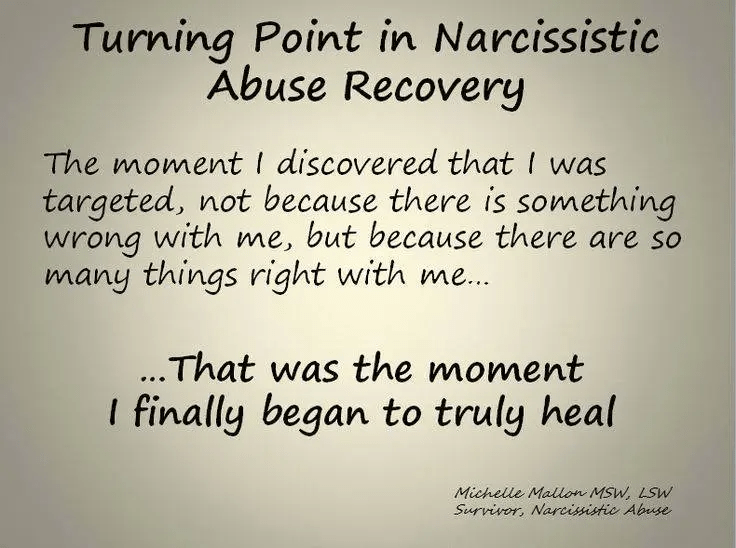
Mannerisms of A Person who Survived Narcissistic Abuse

by Ashley Cropper

Image – Your Life Lifter

Finally getting out of a relationship with a narcissist doesn’t mean you just walk away and everything resets — if only.

The way you moved, spoke, and reacted around them wasn’t random; it was survival. And even when they’re no longer in your life, some of those habits stick around for a long time to come. These mannerisms aren’t flaws, just reminders of what you had to do to get through it. If any of these feel familiar, know that you’re not alone. Keep working through your experience and finding ways to process them so that you can truly move forward without the baggage of their abuse.

1. They say sorry way too much.

Apologising becomes second nature after constantly being made to feel like everything was their fault. Even when they haven’t done anything wrong, “sorry” just slips out, like a reflex. It’s easier to apologise first than to risk upsetting someone, even if there’s no reason to think they’re actually mad. It can be for little things, like taking up space in a room or accidentally bumping into someone. The need to smooth things over before there’s even a problem is just something they learned along the way. Over time, they start realising they don’t need to apologise for simply existing.

2. They hesitate before saying what they really think.

When every opinion was once picked apart or twisted against them, speaking up starts to feel risky. They might pause before answering simple questions, trying to figure out the “right” thing to say. Even harmless opinions like what they want for dinner can make them feel like they’re putting themselves in the line of fire. It’s not that they don’t have thoughts or preferences. It’s just that, for a long time, sharing them came with consequences. Eventually, they start realising that safe people won’t punish them for having a voice.

3. They over-explain everything.

When someone’s spent years being gaslit, they get used to having to “prove” their reality. They might give way more detail than necessary when telling a story, just to make sure they won’t be misunderstood. Even when no one is doubting them, they feel the need to justify every little thing. It’s the same with making decisions, explaining why they chose something before anyone even questions them. They’re just used to having to defend themselves, even when there’s no fight to be had. Eventually, they learn that they don’t owe anyone a 10-minute breakdown of why they picked one option over another.

4. They struggle to make decisions on their own.

When every choice was once criticised, even small decisions can feel overwhelming. They might freeze up over what movie to watch or what restaurant to pick, worrying they’ll “get it wrong.” The fear of making a mistake, even when it doesn’t matter, sticks around for a while. It’s not because they don’t care or are trying to be difficult. It’s just that they got used to someone making them second-guess every move. Learning to trust their own choices again takes time, but it happens.

5. They downplay their own feelings.

After years of being told they were “too sensitive” or “overreacting,” they start believing it. They might brush off things that actually hurt, convincing themselves it wasn’t that bad. Even when something really bothers them, their first instinct is to push it aside. They might say things like, “I don’t want to be dramatic, but…” or “It’s not a big deal.” It’s just what happens when someone’s been made to feel like their emotions are an inconvenience. Eventually, they start unlearning that and realising their feelings are valid.

6. They get tense when someone’s mood suddenly changes.

People who’ve been around narcissists know how quickly things can flip. One second everything’s fine, the next, there’s tension in the air, and they have no idea why. So they get really good at noticing tiny shifts in body language, tone, or energy. It’s like an automatic response — they pick up on the smallest signs of frustration and start preparing for what’s coming. Even when no one’s actually upset, their brain still sends out a warning. Over time, they realise that not every sigh or pause means danger, but that instinct doesn’t fade overnight.

7. They can’t accept compliments to save their lives.

When someone’s been picked apart for long enough, nice words can feel… weird. Compliments don’t quite register, or they feel the need to downplay them. “Oh, this outfit? I just threw it on,” or “I got lucky, that’s all.” It’s easier to brush off praise than accept it. It’s not that they don’t appreciate it; they just don’t know how to believe it. Being treated with kindness feels foreign after being criticised for so long. Eventually, they start letting the good words sink in instead of automatically deflecting them.

8. They’re super tuned in to other people’s emotions.

Living with a narcissist means always being on high alert for their mood swings. Over time, survivors develop a hypersensitivity to other people’s emotions. They can walk into a room and immediately sense if something feels “off.” It’s not just empathy — it’s survival. They learned to read the energy of a situation to avoid conflict. But constantly scanning for signs of trouble is exhausting, and they eventually start realising they don’t have to do that with safe people.

9. They pause before answering simple questions.

Even casual conversations can feel like a test. When you’ve been with someone who twisted your words, you learn to tread carefully. Even answering “How was your day?” might come with a pause while they run through all the possible ways their response could be taken. They’re not hiding anything; they’re just used to walking on eggshells. Eventually, they get to a place where they don’t feel the need to filter themselves so much. But at first, even harmless questions can feel loaded.

10. They hate asking for help.

When someone’s been made to feel like a burden, asking for help feels impossible. They might convince themselves they should be able to handle everything alone. Even when they’re struggling, the idea of leaning on someone feels unnatural. It’s not that they don’t need support; they just don’t want to be an inconvenience. Over time, they start learning that healthy relationships involve give and take. But breaking the habit of doing everything solo takes time.

11. They get nervous when things are going too well.

For survivors, peace can feel unfamiliar. When they’re in a stable, loving relationship or things in life are actually going smoothly, a little voice in their head whispers, “This won’t last.” They’re used to good moments being followed by chaos. Even when they want to relax and enjoy things, part of them stays on guard. They seem like they don’t trust happiness because they were trained to expect the rug to be pulled out from under them. Eventually, they realise that real, healthy love doesn’t come with hidden conditions.

12. They sometimes don’t trust their own judgement.

When someone’s spent years being told they’re wrong, they start believing it. Even after leaving, they struggle to trust their instincts. “Am I overreacting?” “Am I the problem?” “What if I’m being unfair?” Making choices without second-guessing themselves feels foreign. But the more they rebuild their confidence, the more they start recognising that they were never the issue. Learning to trust themselves again is part of the healing process.

13. They feel guilty for setting boundaries.

For so long, saying “no” or putting themselves first meant backlash. Narcissists don’t respect boundaries, so survivors learned that standing up for themselves just made things worse. Even after leaving, setting limits can make them feel selfish or anxious. They might feel like they need to over-explain why they can’t do something or worry that people will be upset with them. But after a while, they start realising that boundaries aren’t mean, they’re necessary — and the right people will respect them.

14. They’re still figuring out what safe love looks like

After being conditioned to accept toxic love, healthy relationships can feel confusing. They might not trust kindness at first or feel uneasy when there’s no drama. It takes time to rewire their brain to see love as something safe, not something they have to earn. But little by little, they start recognising what real love feels like. And when they do, they realise they never have to settle for anything less again.

The Sense Hub

Valentines Day and Mental Health

by Diane Young

If the festive romance and scent of mass-produced flowers on February 14th leave you feeling more blue than rosy, you’re not alone. Here’s why, according to an expert. 

Valentine’s Day, with its hearts, roses, and romantic gestures, is often hailed as a celebration of love and affection. 

However, for many of us, the pressures and expectations associated with this day can contribute to stress, anxiety, frustration, disappointment and feelings of loneliness and even despair. 

Valentine’s Day can be a day of pain, sadness and hurt as we watch couples display affection, treat each other and exchange gifts. 

It can trigger us, impact our self-worth, make us feel more alone or like there is something wrong with us. This is especially common for those of us who have an addiction to being in love with being in love or avoidance in our intimate relationships and friendships.

The pressure of perfection

One of the primary reasons Valentine’s Day can be detrimental to our mental health is the societal pressure to create a perfect romantic experience. From elaborate dates to expensive gifts, the day is often portrayed as a benchmark for measuring the depth of one’s love. 

The fear of falling short of these high expectations can lead to stress and anxiety, as individuals strive to meet an unrealistic standard set by society. Seeing social media posts of gigantic bunches of flowers, romantic picnics, expensive dinner dates and seemingly flawless relationships on platforms like Instagram and Facebook can trigger feelings of inadequacy and comparison. 

This digital comparison game can exacerbate anxiety and self-doubt, leading individuals to question the validity of their own relationships or their worth if they are not part of a romantic celebration. It can also lead to disappointment and frustration, creating tension within normally healthy relationships and negatively affecting mental health.

Loneliness can be amplified

While Valentine’s Day is marketed as a day for couples and secret lovers, it can be an isolating experience for those who are single, recently separated or divorced, or those grieving the loss of a loved one. The emphasis on romantic relationships during this time can intensify feelings of loneliness and inadequacy. 

Single individuals may find themselves questioning their worth or feeling left out, which can contribute to a sense of alienation that can negatively impact their mental health. Loneliness, in and of itself, is an emotion we all feel. The gift of loneliness is that we learn to reach out to others, to not suffer in silence and to not ignore it. 

The toxic level of loneliness is despair and isolation and it is in this space that we begin to turn it onto ourselves with a lot of negative self-talk such as ‘I’m not enough’; ‘I don’t deserve this’; ‘I’m unimportant’ and ‘I don’t matter’. It is imperative at this point that we share how we are feeling with a close confidant or a therapist to help us navigate this painful place we find ourselves in. 

Love addiction and love avoidance 

When speaking of love addiction, it is often helpful to think of this as being the pursuer in a relationship. Love Addiction or the Pursuer can be described as people who seem to choose people to love who cannot or will not “love them back”. This is a very painful and compulsive behaviour that affects the love addict as well as their partners and children.

These patterns are rooted in our dysfunctional childhood experiences and result in us, as adults being attracted to people who reinforce:

  • our low self-esteem
  • our needless and wantless view of life – we rarely functionally ask for our needs or wants to be fulfilled, generally because we don’t know what they are
  • our perfectionism – we try to be as ‘they’ want us to be

People experiencing patterns of love addiction or avoidance can often find themselves drawn to those displaying the opposite pattern, leading to complex, toxic or dysfunctional relationships of co-dependency.

A love addict is someone dependent on, enmeshed with, and compulsively focused on taking care of another person. You may experience:

  • Low self-esteem and self-worth
  • A fear of abandonment or being alone – this is terrifying for a love addict
  • Difficulty with internal and external boundaries
  • Confusing love with neediness
  • Patterns of staying in, and returning to painful or unhealthy relationships 
  • Emotional or sexual manipulation and dependency
  • Romantic or sexual intrigue, obsession, and fantasies
  • Assigning somewhat magical qualities to others in hopes of them fulfilling our fantasies

Love Avoidance can lead to you avoiding intimacy out of fear of being drained, engulfed or controlled. Many love avoidants were enmeshed or parentified as children and consequently, all intimate relationships can potentially be smothering. You might put up walls to prevent you from feeling overwhelmed, trapped or suffocated by a relationship. Many people who are love-avoidant, recognise characteristics of Love Addiction in their partner, or past partners. You might also:

  • Feel compelled to care for needy or troubled people, seeing yourself as a ‘wonder woman’ or a ‘white knight’
  • Avoid being emotionally vulnerable or fully honest in relationships
  • Be overly critical of your partner, viewing them as weak or resenting them for being needy
  • Communicate in either passive-aggressive or overtly aggressive ways
  • Return to relationships out of guilt or fear of abandonment, or try to find a replacement for relationships once they end

It’s completely normal to experience a flurry of emotions on Valentine’s Day. Finding authentic ways to express and receive love, free from societal expectations, can lead to more fulfilling and healthy relationships. If you are single or struggling with a romantic relationship, take some time for self-care and seek support if needed.

Body and Soul

The Positive Side of Family Estrangement at Christmas

and creating a family ‘of choice’.

Is There A Positive Side to Family Estrangement?

The answer to the above question is a resounding yes. Although, as Annie Wright observes in her article, “Brittle, Broken, Bent: Coping with Family Estrangement,” many consider even approaching the idea that family estrangement can feel good to be against all they believe.

The fact is that family estrangement can mean peace of mind that the survivor hasn’t known their entire life as they become released from the fear and drama that their family of origin has wrought upon them.

There is no doubt that family estrangement is painful, and one needs to grieve, but after a time, it becomes clear that staying away from family means freedom, independence, and safety.

It is far safer for many survivors to remain away from their family of origins because they have been guilted, invalidated, gaslighted, verbally abused, and sometimes risk their physical health being in their presence.

The Best Way to Cope, Finding a Family of Choice

Coping with family estrangement, especially during the holidays, is tough for survivors to face alone. This is why it is vital to find and form a family of choice (FOC). A family of choice offers welcome support to help from people who have your wellbeing at heart.

To be clear, a family of choice need not be a literal family as society sees it. Instead, a FOC can is a group of friends or work acquaintances, anyone who wishes to support you or needs support themselves.

A family of choice doesn’t need to be large; in fact, there are no limitations to the size of a new family. The only requirement is that you gather together as a group of people who have each other’s love and share each other’s burdens. Not only this but at Christmas time, a family of choice will also share the joy the season brings.

Forming a Family of Choice

A family of choice is a group of people who will empower you to build your self-esteem and with whom you can celebrate your life. But how do you create a family of choice? While choosing a different family to spend your time with other than your original may seem overwhelming, doing so can bring the peace of mind and joy you’ve missed all your life.

The easiest way to begin is to look at those around you. Sit down and think about the people in your life who mean the most to you, including friends, acquaintances, work relationships, and associates at your place of worship.

Once you’ve identified who you might include in your family of choice, begin to share your life with them and to show how much you care for them. You might ask the people you have identified to be your family of choice offering your support and love in return.

Be cautious not to overwhelm people or to choose people that echo the terrible behaviors of your family of origin. It would be too easy to fall prey to folks who do not deserve to be your family of choice if you are not careful because survivors, like all humans, tend to go with what they know.

The Advantages of Having a Family of Choice

No matter what, the advantages of having a family of choice when your family of origin is toxic are enormous. Having someone to stand beside you through thick and thin, when you feel lost, or when you are enjoying an accomplishment is incalculable in its value.

There are at least six advantages to having a family of choice, including those listed below.

  • A family of choice will make their relationships with you a high priority and not let you down. They will not make you feel guilty, show you dispassion, or ignore your needs.
  • A family of choice will spend time with you talking about issues both big and small, plus engaging with you so that you feel you have a voice.
  • A family of choice will deliberately seek opportunities to spend time with you. These activities may include shopping and taking a meal together.
  • A family of choice will promote spiritual and emotional wellness. They will believe in you sharing their faith and offer healing actions that show they care. This promotes improved mental health and a chance for spiritual fulfillment as well.
  • A family of choice will appreciate you and show you so whenever you come together with them. They will show you through behaviors, words, and gestures that prove you are worthwhile and that they love being with you.
  • A family of choice is capable of facing times of crisis and stress together coping with difficulties as they happen.

Finding the Positive Side of Family Estrangement by Forming a Family of Choice

Family estrangement is an incredibly painful event to experience alone. By forming a family of choice, you can open your heart and allow someone else to help you conquer the loneliness and disappointment.

Forming a family of choice means allowing others into your life and celebrating their lives with them. It means not being alone during the crisis of family estrangement and trusting someone else to be there for you.

These concepts are challenging for those of us who are survivors and have had horrific experiences with our families of origin. However, to not reach out and form relationships with others, we risk allowing our souls to suffer unimaginable harm that need not happen.

I encourage you to reach out to others around you and share your life with them. Allow them to love you and show you unconditional positive regard and show them your affection freely. After all, a family is a supportive group of people who will lift you up when you are down and celebrate your accomplishments, not necessarily those whose home into which you were born.

We sincerely hope you will include the CPTSD Foundation into your family of choice

“The family is the test of freedom; because the family is the only thing that the free man makes for himself and by himself.” ~ Gilbert K. Chesterton

CPTSD Foundation

Signs of a Toxic Daughter

by Barrie Davenport

Image – Imbix Bustle

Mothers tend to see their daughters through the lens of unconditional love instead of owning up to the clear signs of a bad mother-daughter relationship. 

Having a toxic daughter isn’t about assigning blame. 

Understanding a Toxic and Mean Daughter

For every positive trait a mother tries to instill in a daughter, there’s an ugly side. A mother who spoils a child could be furiously complaining, “My daughter treats me with contempt!”

Let’s start with the obvious: you are not a bad mom. You did the best you could with what information you had. But where is all that toxicity coming from? 

Mental Health Issues: One in five adults lives with a mental illness. 20% of children with ADHD are misdiagnosed or not diagnosed at all until adulthood. A chemical imbalance in the brain could be a sickness wrongly identified as toxic.

Independence: Mothers struggle to balance raising an independent child and “helicopter parenting” their kids. A daughter who feels she doesn’t have the space to grow on her own will resent her mother for getting in the way.

Friendship vs. Parenting: Mothers who try to be their daughter’s best friend are bad at establishing boundaries. This sends the daughter into the adult world feeling entitled to whatever she wants

Neglect: A child who doesn’t think their needs are being met or their cries for help aren’t heard can resent their parents.

13 Heartbreaking Toxic Daughter Signs

Approach this list with an open mind and a place of self-awareness. Some toxic habits could’ve been learned in your home, while others could be societal influences.

Then there’s the generational gap that always fuels a fiery relationship. These are not excuses. These are discussion points. 

1. She’s Immature

The 18th birthday only makes you an adult in the eyes of the law. Turning 21 doesn’t have a magic transition to a fully independent adult, either.

The more your teenager relied on you for guidance, finances, and life skills, the more she will depend on that into adulthood. 

If she’s coming to you with the expectation you will still do things for her, despite your efforts to teach, she’s in toxic trouble that will impact every corner of her life. 

2. She Likes Someone Else’s Mom Better

Whether it’s her new mother-in-law or the mother of her best friend, toxic daughters can make their own mothers feel like crap when they are constantly praising another mother.

While you are left with memories of staying awake with her seven nights straight when she had the flu, she wishes you were more stylish “like Jessica’s mom.”

When a daughter is directly or indirectly comparing you to someone else, you really need to figure out the line between your sensitivity and her toxicity. 

3. She’s Bossy

We know, we know – calling someone “bossy” isn’t politically correct anymore. It feels like such a betrayal when you raised a daughter to have a strong voice, and now she’s telling you what to do like you’re a hired helper.

As with any pushy, bossy, or dominating personality, you control how much they get away with it. 

When toxic levels of pushiness extend to disrespecting wait staff, parking attendants, or strangers in public, you’ll really see how she lacks respect and empathy for other people. 

4. She’s Obsessed with Herself

Raise your hand if you’ve ever said, “I’m so glad social media wasn’t around when I was a teenager!” When your daughter is too focused on herself, she won’t care who she hurts along the way to the next selfie.

She can even twist that pushiness and immaturity onto you as she tears down your makeup routine or fashion choices.

Self-obsession can be formed in childhood with constant praise from parents and the social circle that demanded a picture-perfect lifestyle. Extremely toxic egotistical daughters will even tear others down to put themselves higher on their own pedestal.

5. She Plays You Against Your Husband or Ex

A daughter who uses her manipulative techniques to get her way can play one parent off the other. She might outright call you on the carpet in front of your hubby or secretly tell her dad that you are being mean to her. 

Keep in mind your daughter has built up this practice over the years, and it’s not a trait that will go away on its own. 

Toxic goes into overload when she outright tells you she likes her dad/mum or step-dad/step-mum better than you.

She might even treat you poorly while praising your husband, making you wonder if you did something wrong.

6. She Doesn’t Respond to You

It’s been days, and your daughter hasn’t called or texted you back. You are torn between being hurt and wondering if this is the start of a Lifetime Movie, “My Daughter Is Missing.” 

She could up the ante by answering the phone when you call with a hefty sigh and demanding you don’t respect her busy schedule.

It’s normal for a daughter not to have the same time to spend with you as she transitions to the adult world. It’s not normal to act like she doesn’t see you in the grocery store.

7. She Got Married and Divorced You

As if your daughter leaving the nest wasn’t hard enough, now she’s married and busier than ever. It’s especially challenging for a mom who spent months planning the wedding with her daughter (if they havent already married without your knowledge). 

A daughter who dismisses a mother after getting married likely lacks empathy and is too self-absorbed to know that it hurts. 

A mother can also have a hard time letting go during this transition. Your new son-in-law could also be more controlling than you realized.

She could be separating herself from the reliance on you and your (awesome) advice. 

8. She Makes You Feel Stupid

The power of the eye rolls when parents ask kids about TikTok could fuel New York City for two days. Toxic daughters have no interest in helping parents learn about trending technology.

They seem to forget how it took them six months to tie their dang shoes while you patiently helped.

A toxic daughter will make no qualms about embarrassing a mother at every opportunity, mostly to make herself look better. If she keeps doing it even when you’ve been honest about how you feel, she’s toxic times two. 

9. She’s Always the Victim

Your daughter comes crying to you that she got fired for “only” being late to work five times in the past month. She might even blame you for not teaching her how to change a flat tire and “she almost died” when her car broke down late at night. 

A mother’s nature is to calm and coddle an upset daughter, but you could just be feeding the beast. She gets extra toxic points if you become the enemy when you disagree with her latest victim volume of social posts. 

10. She’s a Liar

As an adult, your daughter is far beyond claiming her eyes are red because of allergies and not the joint she smoked at a party.

Toxic daughters lie for many reasons – to get their way, to gain an advantage, to play to your sense of guilt, and to avoid talking about a topic. 

Toxic daughters who lie will only keep doing it if it benefits them. By confronting her, you do run the risk of her giving you the silent treatment. 

11. She’s Overly Emotional 

You’ve been given the silent treatment before, so you’re likely not too upset about that. Suppose your daughter’s emotions are always toxic, and every discussion ends with her yelling, crying, or slamming your cabinets.

In that case, she’s definitely lacking respect for you and dealing with some mental health issues. 

You should also examine how often her emotional outbursts get her to manipulate you. You can’t control her reaction, but you can control your response. 

12. She Has an Addictive Personality

Overachieving daughters likely have a knack for becoming obsessed or addicted to the chemical rush of something positive.

That tenacity was great when she was studying for the LSAT, but her addictive behaviours can also lead to eating disorders, substance abuse, and loss of reality. 

Especially if her addictive personality pairs with an overly emotional mindset, you could experience her wrath when you ask simple questions about sudden weight loss or slurred speech. 

13. She Never Apologizes

You’ve likely made some motherhood mistakes that you’ve beaten yourself up over for years.

Mothers are quick to apologize, even if it’s not their direct fault. Toxic daughters feed into this by assuming mom is always to blame and escape any fight without owning up to their role.

Even if your daughter will make up with you after a fight, ensure you get the apology before you part ways. If she refuses to apologize, her toxic trait could be as permanent as that tattoo you don’t know about.

Live Bold and Bloom

Abusive Adult Children and its Effect On Parents

by Sheri McGregor MA

Abusive adult children influence parents’ self-image

Image – Wikihow

Abusive adult children: a scary reflection

Have you ever looked in one of those magnifying mirrors that highlights every imperfection? Fine facial hair looks forest-thick, and skin pores appear as large as craters. But there’s a value in looking closely—even if, as a friend says, “Those magnifying mirrors are scary.”

Whose Mirror?

The perverse opinions of abusive adult children can make parents see themselves in a warped mirror. One that distorts them so much they no longer recognize themselves. This might have happened over time, or overnight.

“All I could see were my failures,” recalls Barbara. “My own daughter told me I ruined her life, and she had a million detailed memories of how I did everything wrong.”

Imagine waking up one day and seeing a monstrosity reflected. That’s how parents can feel when an adult child’s abuse includes blame, accusations, and twisted memories.

In the beginning, Barbara spoke up. “It was as if my daughter woke up one day and had brand new memories,” Barbara explains. “She recounted her life with a black cloud of doom over her head, and the cloud was me.”

Because the vast majority of parents want their children’s happiness above all else, they reevaluate themselves through the son or daughter’s perspective. They’re willing to look at how their choices may have been seen through their child’s eyes. All parents make mistakes. Also, it’s possible a child didn’t understand a parent’s choices, the motivation driving them, or what might have been happening behind the scenes. Those sorts of things can be discussed and worked out by willing parties.

Unfortunately, of the one hundred or more emails I receive from parents of estranged or abusive adult children each week, many of them have tried—unsuccessfully. Barbara certainly did. Offers for mediation, counselling, or to just sit down and talk, have been met with such things as flat-out refusals, silence, or more abusive rants.

Seeing the real you

Many parents are surprised to find that there are so many like them who have suffered from cruelty, abandonment, put-downs, and endless blame. And because it’s a controversial subject, they’ve been afraid to tell anyone for fear of judgment. Or, as is often the case, they’re keeping quiet to protect their adult child’s reputation.

Barbara knew she had done her best. She’s like other parents whose self-image can get lost to a flawed reflection provided repeatedly by abusive adult children. I routinely hear from parents convinced they’re failures, deserving of the pain or abandonment their sons and daughters inflict. After all, they reason, if they were a good mother or father, their children would love them.

They may try everything to maintain a relationship. Barbara’s daughter threatened to keep her grandchildren away, so she walked on eggshells.  “If I said anything out of line, which could be anything depending on her mood, then the tirade would begin.” Eventually, Barbara’s then 36-year old daughter began posting lies on Facebook about her. At the time, Barbara was recovering from surgery. At her breaking point, she replied, publicly asking her daughter why she’d lied. The postings were deleted, but Barbara’s daughter went no-contact. “It wasn’t the first time,” says Barbara. “But it has been the longest estrangement so far.”

With a health scare that became a turning point, Barbara knew she had to make a change. That’s when she began to look for help. But after years of warped opinions from an abusive adult child, she had little self-confidence.  “If I raised this person who turned out to be so cruel, then how could I be a successful mother?” she asks.  “My daughter had reminded me what a failure I was every chance she got.”

Take a closer look.

When suffering parents discover my book, they tell me they’re shocked to read so many experiences that mirror their own. And although it’s sad to know there are so many suffering, the knowledge is also heartening. They’re no longer alone. In reading other parents’ accounts, they get a clearer view. They see themselves in others’ stories, and recognize they were also good parents who did their best.

Once parents have a clearer reflection, they can explore positive changes to help themselves move forward in their own lives. One of the first steps is to look more closely at how much an abusive adult child has affected their lives. The inflicted suffering entails more than sadness and grief. Bitterness, lack of confidence, anger, fear, and anxiety have often crept in. In Done With The Crying: Help and Healing for Mothers of Estranged Adult Children, there are many exercises, and one designed specifically to help with this vital step. Holding the magnifier up to examine changes in themselves is one of the first steps to making positive, concrete plans to regain confidence, find meaning, and happiness again.

Take action.

One woman who found this website and my book after 20 years of grief described her life as a “living death.” Now, she’s glad to have found a way out of the roller-coaster of emotions, the shame and sorrow, and to stop crying and to start celebrating life.

Barbara says it’s too late to reconcile with her daughter. There has been too much heartbreak, and her daughter has refused any sort of counseling or mediation. “I miss my grandchildren,” she says, “but I’m hoping to one day see them again.”

Barbara’s expresses the sentiment of many grandparents who, due to estrangement, have lost touch with precious ones. But I sometimes hear from grandparents who have received their wish. There’s a knock at the door one day, and it’s a grownup grandchild with that same sweet smile, wanting to reconnect. When that happens, you’ll want to be ready, so take care of yourself. As one grandmother recently advised, “Get dressed and put on lipstick every day.”

Don’t wait and hope, mired by inaction that only adds to your grief. You can clean the mirrors of guilt and shame and see yourself for the loving parent you have always been. Like thousands of parents who are learning to accept what they cannot change, and see their goodness again, you can be done with the crying. Take action for yourself and your happiness by reading more of the articles at this site, getting Done With The Crying: Help and Healing for Mothers of Estranged Adult Children and committing to the included exercises. Subscribe to my email newsletter (below) and take the survey. By taking action, you can be like so many parents who have recovered from the sadness and pain caused by abusive adult children, on-and-off or full-on estrangements. Treasure your life. You can find happiness and meaning again.

Rejected Parent

When Adult Child Turns Against you in Favour of a Narcissist Parent

Image – Quotesgram.com

Isnt it bad enough, that after you get the strength and courage to leave your narcissist, and after youve already lost your self-worth, your youth, your time, lots of your money, your sanity, and whatever else you lost because of being in a narcissistic relationship, now you have to lose your kids too? It just isnt fair; and it isnt right.

Youve watched your narcissist manage to convince joint friends and other community members and sometimes even family members that you are the crazy one and he/she is the victim, by his/her masterful manipulation strategies. People are hoodwinked and dont even realize it. Your good name is slandered. You feel alone, humiliated, discouraged, disheartened, and vengeful.

Now, your kids are subjected to the smear campaign against you and you find it is actually working. It is enough to make you either curl up in the fetal position and give up, or rage with anger like an erupting volcano. Of course, to do either would confirm the reality of the premise of the smear campaign that you are deranged and crazy.

And if you talk about the situation, others will not understand and will simply conclude on their own that the other party must be right you are psychotic. Its a no win situation. Say nothing and your name is tarnished. Say anything and your craziness is confirmed.

And if you talk to your own kids about the situation you are drawing them into the middle of your relationship problems with their other parent which is a big no no.

Does going no contact include going no contact with your own children as well?

When you seek help from a therapist, you often find that he/she is just as much at a loss as you, because those in the counseling community are often not well-equipped to handle such relationship dynamics. No one is, really.

The courts rarely help and often exacerbate the problem. And if your children are not minors, then court involvement is pointless. Besides that, you cant legally force anyone to see the truth. Denial is denial and brainwashing is not easily countered.

So, what is a parent to do under these circumstances? Here are some helpful suggestions:

Do not be defensive. I know this is hard, but it is essential for your own peace of mind. Remember, during your entire relationship with the narcissist you were always put on the defense. Dont let him/her continue to keep you on that course, even through your children. You dont have to defend yourself. You dont have to be a perfect human being, always showing others why you are worthy.

In practical terms, the way you do this is to change course whenever you have the feeling of defensiveness. If you feel defensive, then dont talk, dont try to get anyone else to see the truth. Go for a walk. Write in your journal. Call a friend and vent. Do something else until the feeling is no longer pressing you.

Be strong. Do not give into the feeling of hopelessness and defeat. You have no leverage if you give up and give in to your weakest self. Your children are best served by feeling your strength and by not seeing you being manipulated by the other parent. You are best served by remaining steadfast, stable, strong, and resolute.

Do not give in to the need for approval from your children. Hustling for the approval of any person is not healthy or wise, even if the person happens to be your offspring. Once you need your children to approve of you then you have given your power away to them (and by proxy, to the other parent.)In order to do this you must keep validating yourself and getting external validation from your safe relationships and from your spiritual resources.

Realize you are not alone. Other parents struggle too. While, being among company with other parents is not a solution to the problem, it is important for keeping a proper perspective. What I mean by this, is that other parents, even those not in narcissistic relationships, also struggle with relationship (and other) problems with their children.

Many parents have children that reject them or turn to drugs or unhealthy relationships despite their parents desires. Adult children often choose a lifestyle or belief system that is against everything their parents stood for while raising them. There will be no good end to trying to force your children to see things your way.

Many parents also struggle with other difficult parenting conditions, such as having their children face some personal problem where the parent was unable to help such as a health problem, bullying or criminal or other out of their control situation.

Keep a healthy perspective.As mentioned above, it is important to keep the proper perspective. Having a balanced perspective is necessary for keeping your sanity. The best way to do this is to not react on your feelings, but rather to think things through with balance and maturity.

In essence, don’t horriblize the situation, remain calm, and be a problem solver. Reacting with strong emotions will not help you, thinking things through unemotionally will help you in the end. Look at the big picture, and resist the urge to join, “The War of the Roses” with your ex.

State your position once and then move on. It is fair for you to state your position on a matter to your children in order to shed light on the truth. Having your own voice is important for recovery from narcissistic abuse. That being said dont be a broken record; state your position once, and move on.

Practice Acceptance. Dont dwell on the negativity of it all. Narcissists do nothing but create a vortex of drama that leads your life into a cesspool. Drag yourself out of the cesspool and land on solid ground, where peace and sunshine abound. Dont allow the narcissist to steal your joy, even if he/she manages to manipulate your children into his/her web of deception and ugliness.

Psych Central