When Mothers Day is Painful

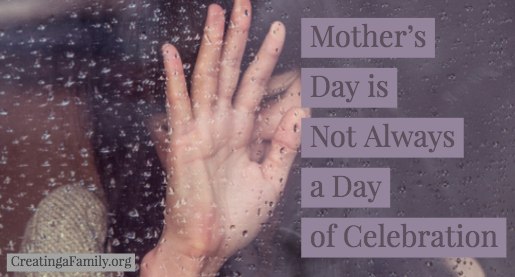
Mother’s Day is Sunday. Will you be celebrating, hibernating, or going through the motions? For so many people for so many reasons, Mother’s Day is not always a day of celebration.

A couple of years ago, about this time of year, I was talking with a pastor friend of mine.  I mentioned how hard Mother’s Day is for women who are struggling with infertility and for birth mothers who have placed a child for adoption.  I suppose I thought I might be helping to educate her on the complexities of this day of celebrating motherhood.  It turns out that she needed no education on these complexities.

My pastor friend sighed and surprised me by saying that Mother’s Day is a nightmare for the church and that she was always thankful when it was over.

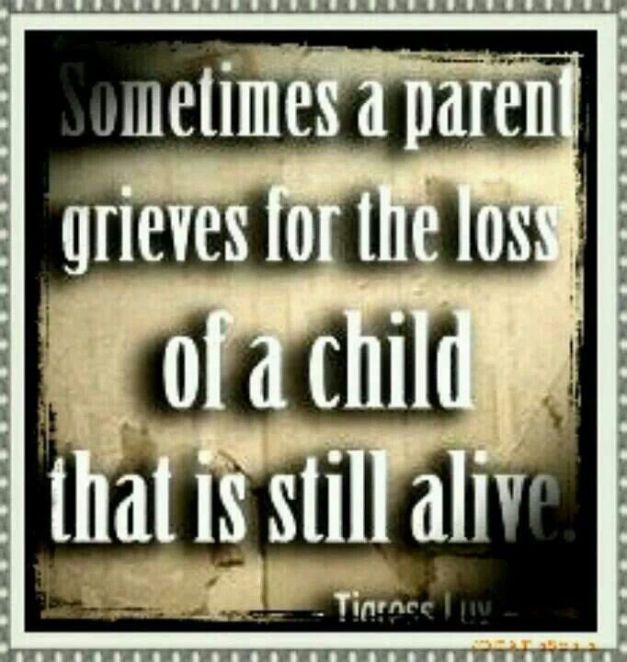
It’s not just the infertile who find this day painful, but also anyone who has lost a child or is estranged from a child.

Women whose children are struggling with addiction or are in jail often find Mother’s Day sad too since some feel like failures as a mother.

Single women who want to be a mom and feel time passing them by feel their loss more intensely on this day set aside to celebrate the joys of motherhood.

Moms who have placed their children through adoption may feel their empty arms more intensely on Mother’s Day.

And then there is the view from the other side of the mother/child relationship: women who have lost their mothers or are estranged from their mothers may dread this day that reminds them of their loss.

Suffering Silently Through Mother’s Day

I thought of how myopic I’ve been. As a daughter, I liked having a day to honor my mother. As a mom, I liked having a day where my kids and husband honor me. As someone immersed in the world of infertility and adoption, I was aware of how Mother’s Day affects the infertile and birthmothers. If I had taken the time to think it through, I would have realized of course, that they aren’t alone in their suffering, but honestly, I hadn’t taken this time.

So many who suffer through Mother’s Day are invisible. Other than your close friends, you don’t know who has had three miscarriages, or hasn’t spoken to her mother in years, or doesn’t hear from her grown son other than once a year, or who placed a child for adoption years before.  But then pain is often invisible unless you’re the one feeling it, isn’t it?

So as you sit in church this Sunday or at a restaurant surrounded by your family at your celebration lunch, look around you.  Really look at the people who are there and recognize that not all are celebrating.  Also notice who isn’t there; who is holed up at home watching a Law & Order marathon with a gallon of Ben & Jerry’s because it is simply too painful to participate.

Read more here: Creating a Family

Understanding Fear Based Media

by Deborah Serani

With the fear and panic surrounding the Corona Virus at the moment, its advisable to understand how the media can be responsible.

News is a money-making industry. One that doesn’t always make the goal to report the facts accurately. Gone are the days of tuning in to be informed straightforwardly about local and national issues. In truth, watching the news can be a psychologically risky pursuit, which could undermine your mental and physical health.

Fear-based news stories prey on the anxieties we all have and then hold us hostage. Being glued to the television, reading the paper, or surfing the Internet increases ratings and market shares — but it also raises the probability of depression relapse.

News programming uses a hierarchy of if it bleeds, it leads. Fear-based news programming has two aims. The first is to grab the viewer’s attention. In the news media, this is called the teaser. The second aim is to persuade the viewer that the solution for reducing the identified fear will be in the news story. If a teaser asks, “What’s in your tap water that YOU need to know about?” a viewer will likely tune in to get the up-to-date information to ensure safety.

The success of fear-based news relies on presenting dramatic anecdotes in place of scientific evidence, promoting isolated events as trends, depicting categories of people as dangerous and replacing optimism with fatalistic thinking. News conglomerates who want to achieve this use media logic, by tweaking the rhythm, grammar, and presentation format of news stories to elicit the greatest impact. Did you know that some news stations work with consultants who offer fear-based topics that are pre-scripted, outlined with point-of-view shots, and have experts at-the-ready? This practice is known as stunting or just-add-water reporting. Often, these practices present misleading information and promote anxiety in the viewer.

Another pattern in newscasts is that the breaking news story doesn’t go beyond a surface level. The need to get-the-story-to-get-the-ratings often causes reporters to bypass thorough fact-checking. As the first story develops to a second level in later reports, the reporter corrects the inaccuracies and missing elements. As the process of fact-finding continually changes, so does the news story. What journalists first reported with intense emotion or sensationalism is no longer accurate. What occurs psychologically for the viewer is a fragmented sense of knowing what’s real, which sets off feelings of hopelessness and helplessness — experiences known to worsen depression.

Read more here

Shunning and Suicide

Shunning, one of the most abusive practice of high-pressure groups, is often the most obvious sign that a group is abusive. It tears families and communities apart, forcing many to choose between their faith and their loved ones. Whether it is called Shunning, Disconnection, Ostracism, or De-FOOing, the harsh reality of alienation ensures that those who leave the group are cut off absolutely, often losing their entire community – friends, relatives, and their complete support system.

For one woman in Michigan who had left the Jehovah’s Witnesses, the strain of losing her community was too much, and, struggling under the weight of the shame her abusers had taught her to assume, she drowned the family dog and shot her husband and two adult children, before turning the gun on herself. According to family friends, Lauren Stuart and her husband had left the organization because their children wished to attend college – something the Jehovah’s Witnesses strongly discourage – and she wished to pursue a modeling career. Because she could no longer be a member of the group in good standing, former friends ignored her, looking the other way when seeing her in town, refusing to speak with her or acknowledge her presence. In a small community, such treatment can make life intolerable, and although the Jehovah’s Witnesses have claimed in court that shunning is a “personal choice” and never absolute, their own internal convention videos show a harsh reality, where parents are coached to ignore their own children if they are disfellowshipped.

Read more here: Open Minds Foundation

Leaving a Cult and Living with Purpose

About the Series

Flor Edwards was born into the apocalyptic cult Children of God. Throughout her childhood, she lived in 24 different locations preaching the cult leader’s narrative, which was: all of its members, like Flor, were “chosen” martyrs charged with saving the world from the Antichrist before a supposed apocalypse in 1993. When this date came and went and the world didn’t end, Flor went from anticipating death to facing the possibility of life.

In this eye-opening series, you’ll learn what it was like for Flor to grow up in the confines of a cult and how its narrow constructs initially shaped her beliefs about life, love, and relationships. You’ll discover what it was like to leave the only world she’d ever known after the cult disbanded, and how she navigated the tricky road of reconstructing her belief system as a teenager. Above all, you’ll understand how she faced the mental health impacts that resulted from each stage of her journey.

Unlike most media coverage of stories like Flor’s, this series doesn’t sensationalize. It educates. Flor’s journey is extraordinary, but it’s relatable. We all have obstacles to overcome and the ability to learn from them in order to create the life that we want, just like Flor has. Flor has rewritten her narrative since leaving the Children of God. This series provides real insight into this authentic narrative – not the one sensationalized by most media outlets.

View the video here

Parental Estrangement

Image – Lifestylebody

Many clients consult us concerning family problems and this particular subject is a common problem, The following article looks at the reasons for it.

Oscar Wilde once warned that children begin their lives loving their ­parents, then grow up to judge them. If so, surely there is no harsher judgment of a ­parent than to be deliberately cut out of a child’s life for ever. Parental estrangement by adult children is a national epidemic, and it’s not always the parent’s fault.

Psychologist Dr Ludwig Lowenstein believes this ­generation have been ­empowered to judge their parents. He hears from up to six parents a day, a third of them women, ­asking advice because they fear ­estrangement from their children.

There are no official statistics to show that the problem is increasing. But numerous leading ­psychologists claim it is, and online chatter ­suggests it is.

Read more here:

Children Who Break Your Heart – Huffington Post

Understanding Scapegoating

Image – Fortune

This is another subject clients consult us about and we have had the experience and ability to help them.

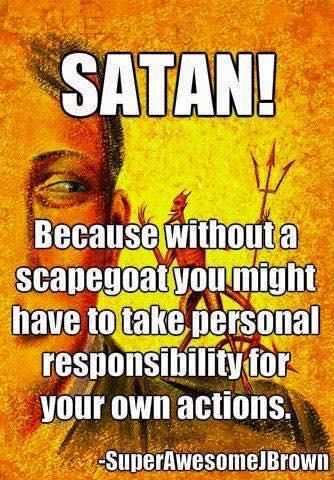
The ego defense of displacement plays a role in scapegoating, in which uncomfortable feelings such as anger frustration envy and guilt are displaced and projected onto another, often the more vulnerable, person or group. The scapegoated target is then persecuted, providing the person doing the scapegoating not only with a conduit for his uncomfortable feelings, but also with pleasurable feelings of piety and self-righteous indignation. The creation of a villain necessarily implies that of a hero, even if both are purely fictional.

Some would say that Satan the Devil was used as a Scapegoat for sins and interestingly they also depict his image as half man half goat.

Read more here:

Psychology Today.

Causes of Suicide

Image -The Guardian

Suicide is newsworthy because life is precious. In 1993, a 6-year old girl living in Florida stepped in front of a train. She left a note saying that she “wanted to be with her mother” who recently died from a terminal illness.

This is the power of the human mind. A small girl thinks of the past and imagines a future that is so bleak, so devoid of meaningful moments without her mom, that she takes her own life. The same mental tools that distinguish us from other animals, the same mental tools that allow us to solve problems and produce creative works that give us symbolic immortality are the same tools that allow a 6-year old to contemplate a future that is terrible enough to physically leap into an oncoming train. If a 6-year old has the cognitive capacity to kill herself, then we need to step up our efforts to understand and prevent it from happening.

Read more here:

Psychology Today

Why People Commit Suicide

Understanding why people commit suicide and what is causing the need for such drastic measures may help you prevent a suicide attempt before it happens.

Bullying and Suicide

Bullying is ongoing aggressive or abusive behavior from one person or a group of people who harm and threaten another either physically or emotionally or both. Bullies come in many varieties and are not always physical in peer groups. Sometimes the popular or older adults band together to ostracize the person. Maybe they were once friends. They will pick on the person or ridicule them over social media such as Facebook and Twitter with harsh words and criticisms aimed at making them feel bad about themselves.

Read more here:

No Bullying

Family Dynamics

Understanding Family Dynamics

Can’t we all get along? That’s a tall order when your limelight has been snatched away by your adorable new little brother. Family, you love them and you hate them. There are so many things to consider when you think of family: there’s birth order, rivalries, the only child, to name a few.

So what is a functional family? How do we know if we have one? How would you define a functional family?

Read more here:

Psych Central.

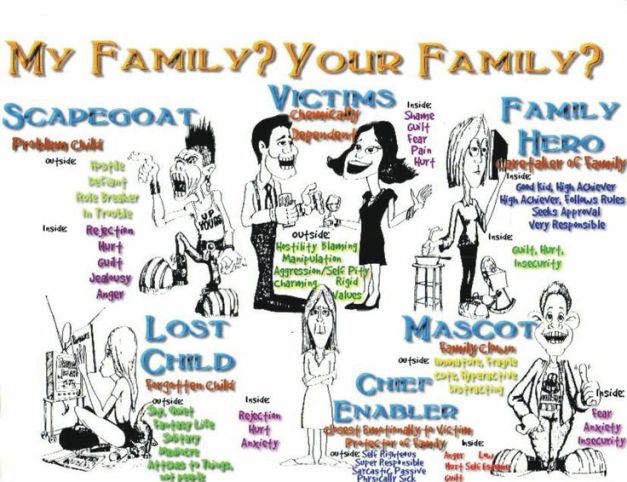
Roles in Families

Were you considered the responsible child while your younger brother or sister was the rebel or ‘Mummy’s little one’?
According to experts as children we all played a specific role in our family, although which role was not always within our control. It may be due to gender, family culture or the order in which we were born. However the legacies of being the model child or the baby may continue to help or haunt us in our adult lives and understanding these silent family agreements can help us break behavioural patterns which could at times be disabling. Flavia Mazelin Salvi explains the four different roles:

 The Mind Journal

Image – The New Yorker

Dan Edmunds – Psychology Today

Coping with Terminal Illness

Saying Goodbye- Coping with a Loved One’s Terminal Illness

Image – Bright Focus Foundation

Lingering terminal illnesses are becoming more common than sudden deaths, and this process has many stages. It’s important to point out that the grieving process is borne by families, not just individuals.

Read more here:

Help Guide

Preparing for Passing

All About Counselling

Terminally Ill Parents

Joseph Nowinski PhD – Psychology Today

Understanding High Functioning Autism

Autism is a widespread condition and I have clients, friends and family who have been affected by this condition. Researching this subject and how to deal with the individuals affected can assist in coping with difficult relationships. Read more here:

Very Well Health

The following article is written by the mother of a son with Aspergers. High Functioning Autism and I am sure many can relate to this:

“There is a dark side to raising a child with these challenges. My son’s honest expressions can be downright mean. He will say that I am lazy. He will say that I don’t ever do anything. He will say that I am selfish or a hypocrite. Of course, he is a teenager and I am sure from his narrow perspective what he says is truth.

Meltdowns are more frequent now than in the past. The physicality associated with his meltdowns now reminds me of when he was 3, more than when he was 10. These meltdowns are more disturbing and scary in the body of a 5’11” young man than they were in a small child. The glimmers of the sweet boy I remember are few and far between.

There are a lot of aspects of life that we as humans do not include in the stories we pass down. We don’t talk about the messier and darker aspects of common life occurrences. A great example is our tendency to remain silent on the terrifying nature of postpartum depression and psychosis. We don’t want to admit that even the most joyful parts of life can come with a dark lining.

As a parent of an Aspergers child, I live in a strange world. Strangers do not understand and even from friends and family there can be a lot of judgment. I have been told that I am not consistent enough with my son. I have been told that I am not disciplined enough. Even when there is no overt comment, there is the change in body language, tone of voice and the distancing by people who are affronted by my son.

On the other hand, my son judges me as inadequate, unfair, lazy and hypocritical. He expresses hatred for the help that I sacrifice to give him. I stand in the middle making the decisions as best I know how. This is an emotionally draining position.

My NT son sees all of this and so he asks if I regret having my Aspergers Son.

“No!” I responded without hesitation, “Raising him is challenging and there are times that he can be such a jerk but I have learned so much about myself and life through this process. I have learned to look beyond the external and set aside a lot of my preconceived judgments. I have learned to make my decisions based on who I am and who I want to be, not based on what that decision will get from others in the way of approval, acceptance, etc. It has made me so much stronger. I am proud of the person I have become and if this is the road that it took to become this person, well that is fine. I love him because he is my son, not because of what he can give me and I believe that he is an amazing person traveling his own tough road.”

That statement reflects the decision I have made. I don’t always feel the feelings that would inspire that statement therefore I don’t despise the mother that said she hated her son. I am thankful that my NT son didn’t ask me 20 minutes earlier. I don’t know that I would have regained my balance enough to answer the way I did. Just because I don’t act on the dark moments doesn’t mean they don’t exist.

My Aspergers son is mismatched to the world we live in. It seemed that My son is the round peg to the outside world’s square hole. I thought I was accepting this fact.

I have realized that I my acceptance was conditional on a belief that I could fill in the gaps between the outside expectation and my son’s reality. I believed I could make the world accept my son and acknowledge his successes. I had a distorted perception of who I needed to be in my son’s life.

I can never do or be enough to make my son and the typical world’s expectations mesh. Accepting my limitations, opened a new path. Instead of seeing the world as rigid, I saw flexibility. As I expanded my view beyond the world of the public school structure, I could see the endless variations that our world allows. My role is to guide my son as he creates his path in this world and finds his purpose.

My Aspergers-son is an important part of my life, but he is not my whole life. I did not cease to exist when he was born. Additionally, there are other small lives in my care. The loudest need cannot drown out the other needs. My son and my typical children learn from how I live. How can I tell my son that I believe that he can be an independent adult and then do everything for him?

When I give my focus to the moment at hand, I honor all the parts of my life. My time with my husband is for him alone. My time with each of my children is sacred and preserved. The time I set aside for caring for myself is spent doing ONLY that. This is a practice I have yet to perfect but the practice alone has increased my self-awareness and increase the balance between the various aspects of my life.”

Asperger’s Mum.