

by Brighton and Hove Psychotherapy.
Indoctrination from an Early Age
The indoctrination of children in cults differs from that of adults in that children are extremely vulnerable to adult influence – the people they look up to, especially their parents. Children’s brains are still developing, and they are like sponges, absorbing the world around them, the world of adults who create the environment they exist in. A child will absorb the world view of those around them and accept this as their reality because this is all they have known.
The Cult Leader’s Demands Always Comes First
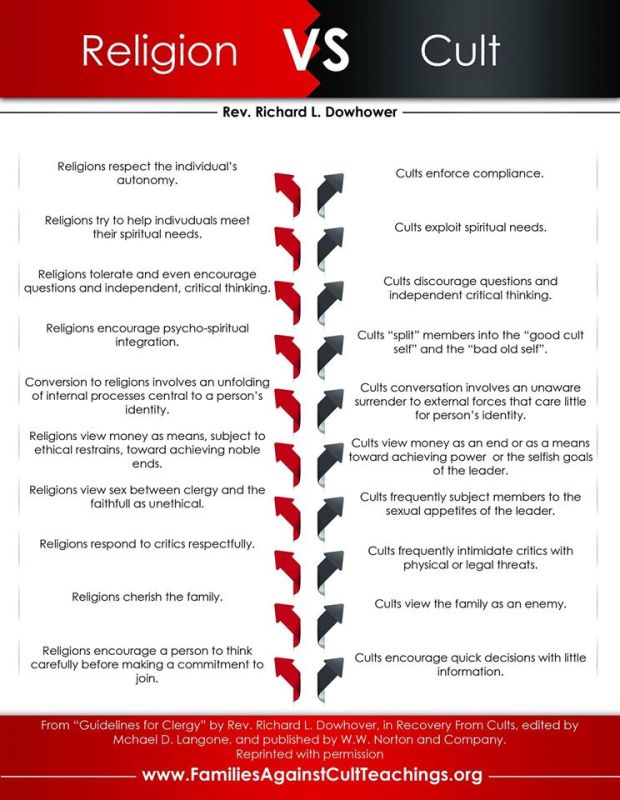
In cults, the cult leader or doctrine always takes priority over anything else. The child who grows up in a cult will never be the centre of attention in their parent’s world because they will most likely be totally self-absorbed with the cult leader and the cult demands. These demands are usually great and unattainable because the leader is likely to be highly perfectionistic, insatiable, and persecutory of those who do not meet their ideals. Moreover, a cult leader will employ fear tactics with their disciples and keep them in a state of perpetual adoration towards them and shame towards themselves. In this state of fear, shame and total preoccupation with another, there is no room for the age-appropriate demands of a child who actually needs their parent’s care and attention.
“Have No Needs”
A child who grows up in a cult learns to have no needs because they quickly learn that they do not matter. To survive in the cult and gain some crumbs of attention from their parents, they will have no choice but conform to the leader’s demands, try to fit in as much as possible and override their natural developmental needs. This means the child will miss out on normal stages of development, if not also on education and normal peer interactions because of the insular and isolated nature of most cults.
Isolation and Abuse
Sending a child to school means interacting with the outside world, which most cults find threatening. Depending on how isolated a cult becomes, they will supply their own schooling, have children interact only with other cult children and make sure there is no outside influence that could lead the child to question their upbringing.
Keeping a child isolated from society also makes them vulnerable to abuse – sexual, physical, spiritual, emotional, and psychological. Isolated groups create their own rules and decide what is right or wrong. In the cult I grew up in for instance, children and teenagers were conveniently seen and treated as adults. This meant that we were required to work long hours, worship and meditate with the adults. This also meant that schooling was minimal and there was no age-appropriate censorship to adult-only stuff. The cult leader – a self-proclaimed enlightened master – was seen as an expert in raising children, despite him not having any children himself or knowing anything about child development. If the cult leader condones inappropriate, harmful, or even criminal behaviour, then his disciples collude because all that matters is what the leader thinks. His truth matters above all truths, and they are always above societal rules and norms, including the law. Under these circumstances, children are extremely vulnerable to predators.
The Objectification of Children
In cults, children are either seen as an inconvenience or used as means for growing the cult. In both situations, children are seen as objects and not encouraged to develop their own identity. In cults, nothing is in the best interest of a child. Everything is in the best interest of the leader and the organisation. Despite this well-known fact, cult leaders will make it seem that everything they do is for your good and the good of your children, even if there is plenty of evidence to the opposite (see ‘Gaslighting’ below). They will make you quash your doubts, question your sanity, and give up everything you have, including your children, in the service of “the greater good”. This “greater good” has very few winners, which are usually the leader and his inner circle.
Gaslighting
A central feature of cults is gaslighting – a term coined from the movie ‘Gaslight’ where it a young woman is manipulated by her husband into believing that she is descending into insanity. Cults do this on a large scale, which is designed to keep its disciples or followers in a state of perpetual doubt about their opinions and follow the opinions and ideas of the cult leader. It is an exercise in maintaining power over others and abdicating any responsibility for one’s actions. For instance, in the cult I grew up in the self-proclaimed enlightened master would attribute all personal suffering to his disciples and never take any responsibility. This extended to the sexual, financial, and psychological exploitation of ‘his people’ including children. When questioned, he would say that you had not surrendered to him enough and that this was your reason for suffering.
Leaving
When the child grows up and is lucky enough to leave the cult, they will have to contend with a long process of rebuilding or recovering their own identity. Everything that they are has been attributed to the cult or exists because of the cult. Sometimes, when a former child choses to leave, their family will want nothing to do with them. Or they may need to cut contact with their family to survive psychologically.
The Recovery Process
Cult recovery is a long and challenging process which requires the right support. Finding a group of like-minded individuals who share similar backgrounds is advisable, as well as finding a therapist who is experienced and knowledgeable about this type of work. Explaining to people what you have gone through is never easy. Former cult members and those who grew up in cults can feel a lot of shame about their past and have difficulty articulating what they have been through. Most people lack an appreciation of what it is like to live in a high control group and its effects.
Regaining One’s Mind and Setting Boundaries
Those who were born or grew up in cults will often need to learn or re-learn how to live in society. Although cults range in terms of how isolated and restricted their members are, the indoctrination of children is so deep that it will take a very long time to regain their own mind, learn to think for themself and have their own opinions. This extends to knowing one’s own preferences, wishes and needs. Because having own thoughts and opinions was frowned upon or even dangerous, it takes time to regain a sense of safety in doing normal things, having personal preferences, and even feeling entitled to personal space. Growing up in an environment where nothing belongs to you, all the thinking is done for you and personal space is not a thing, has big implications in later life when it comes to setting personal boundaries.
Sam Jahara is a UKCP Registered Psychotherapist and Clinical Superviser. She is experienced in working with the psychological impact of high-control groups and cults on individuals, families and organisations. She has also spoken about her personal experience of growing up in a cult in recent public interviews.

 Taking The Helm